Skip to content

Chess Culture

Chess Thriving in Montgomery County

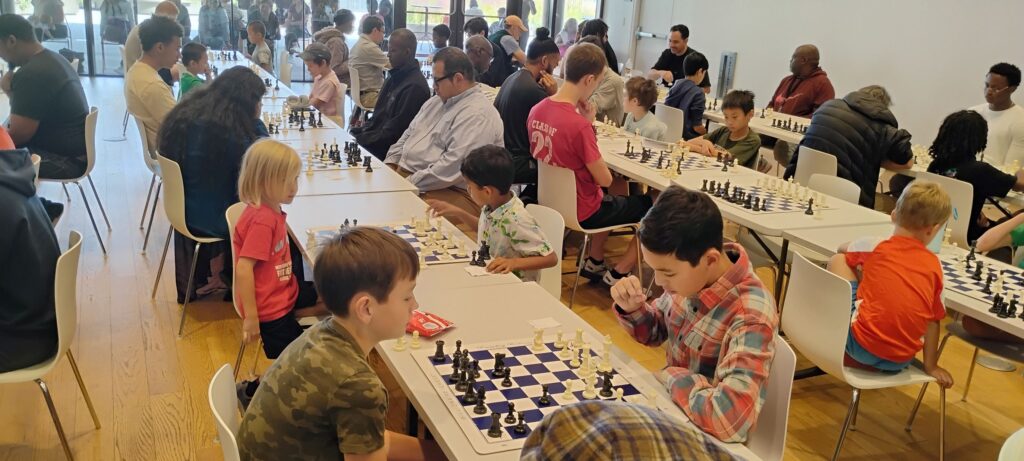
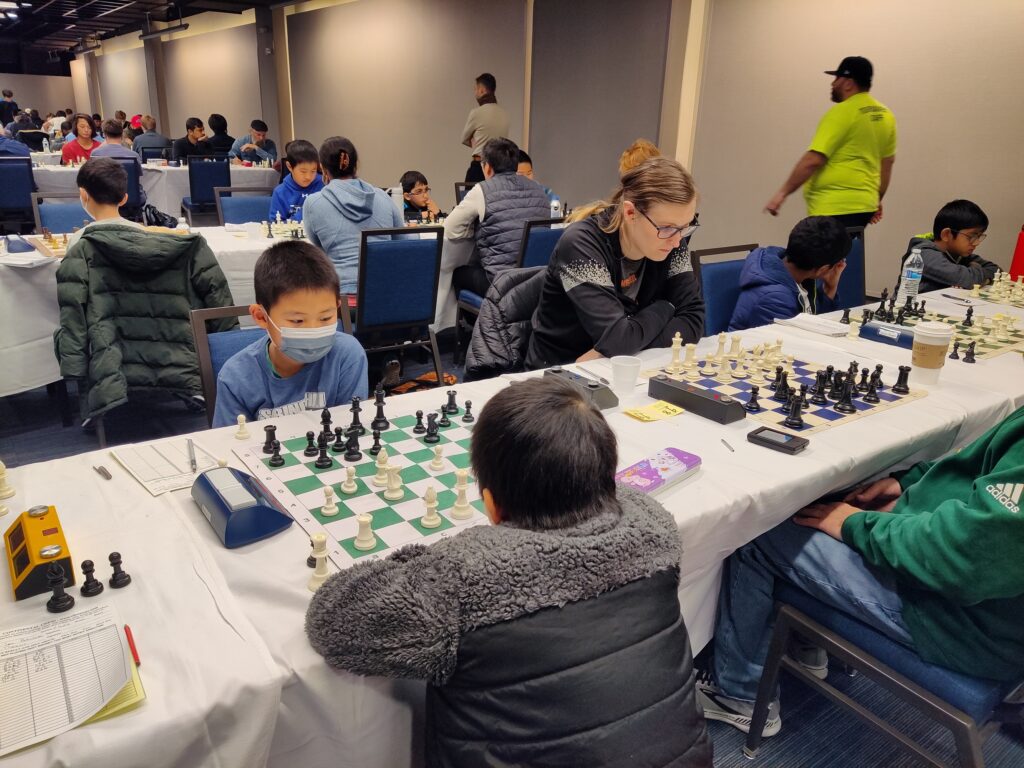
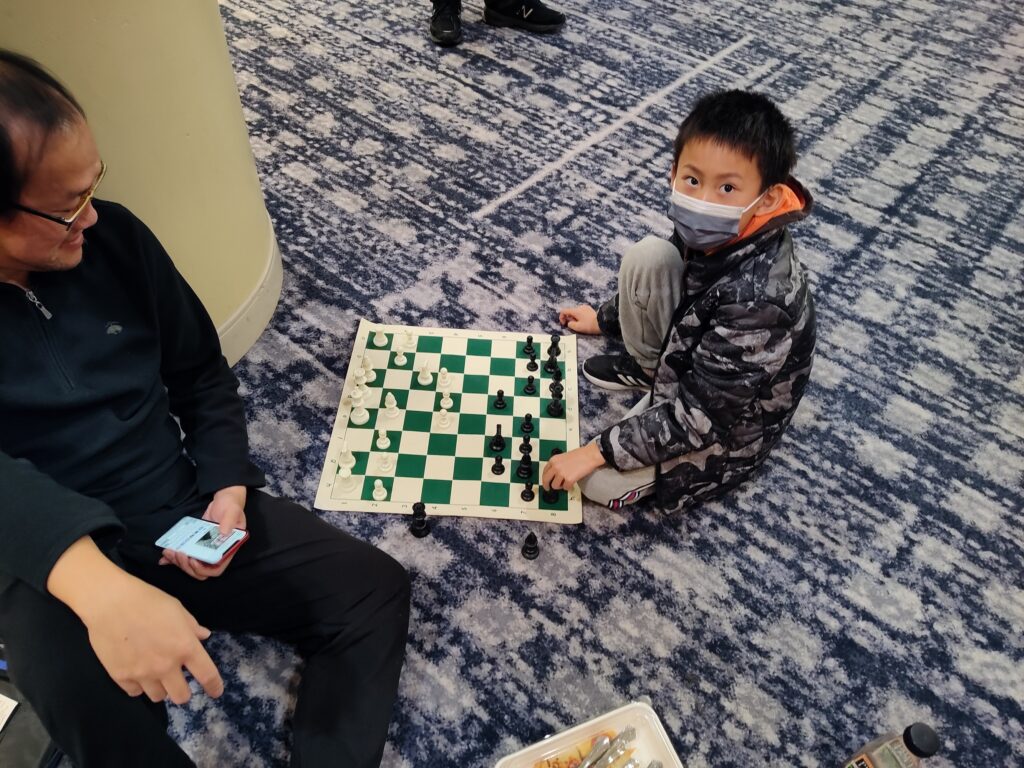
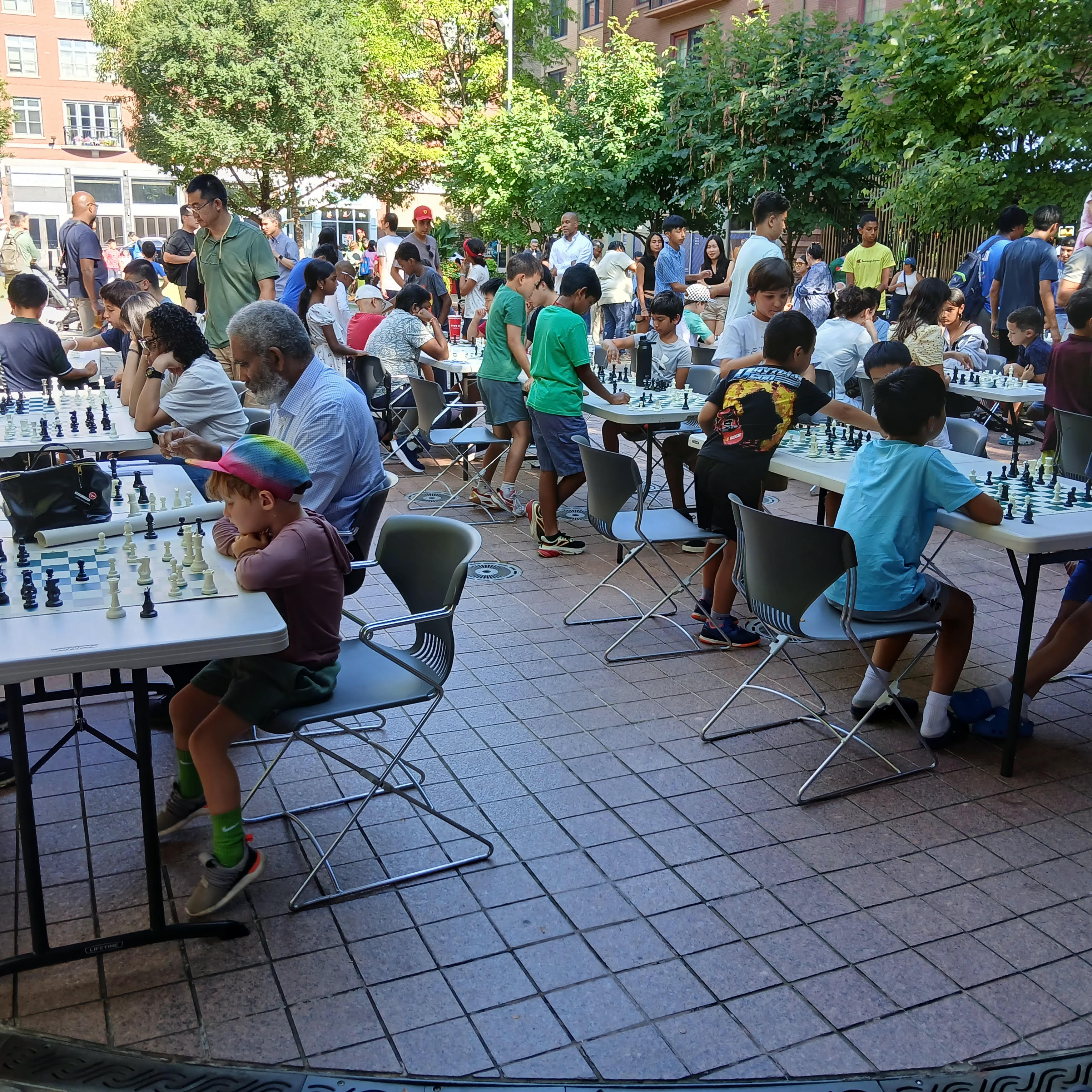
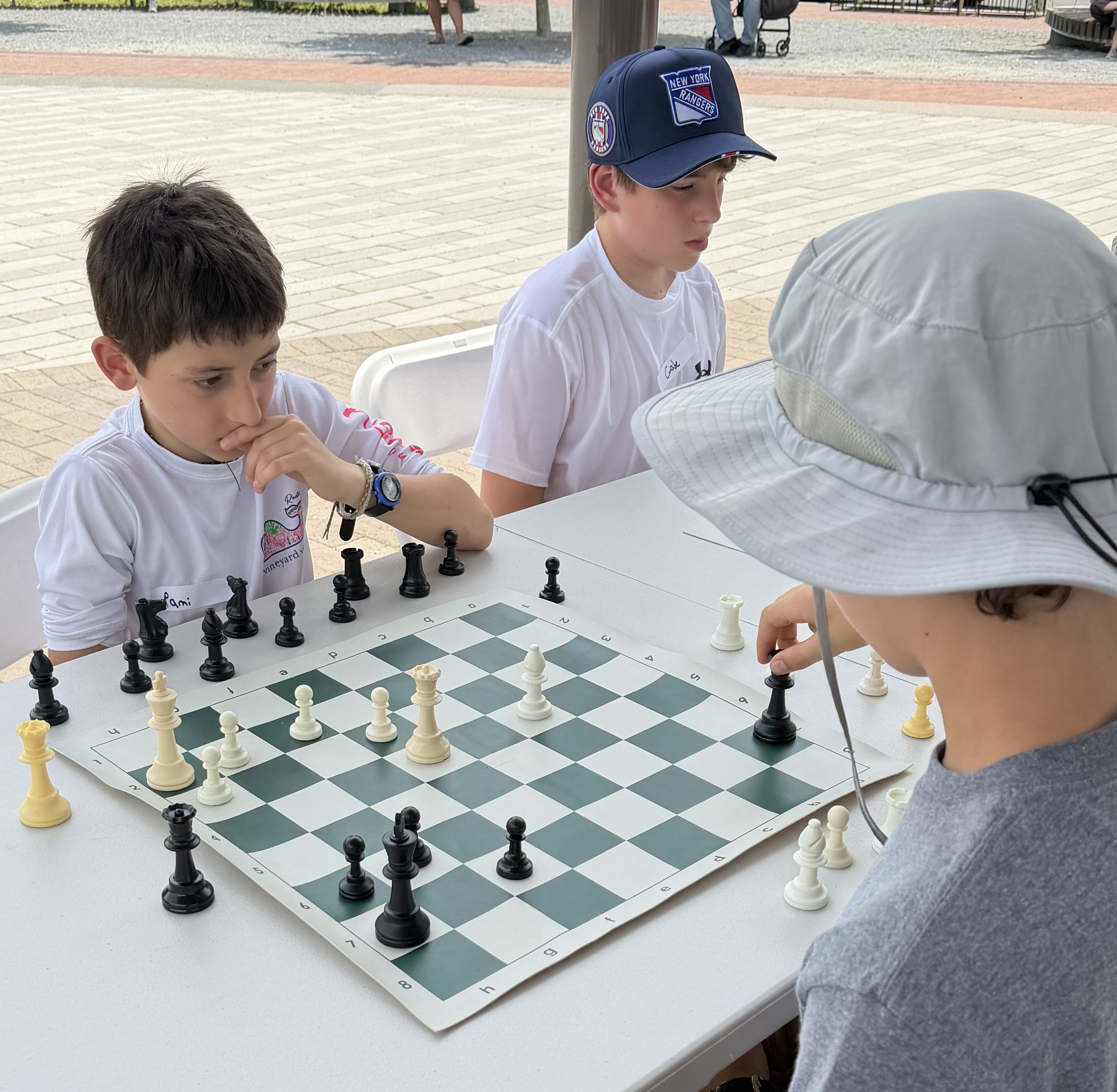
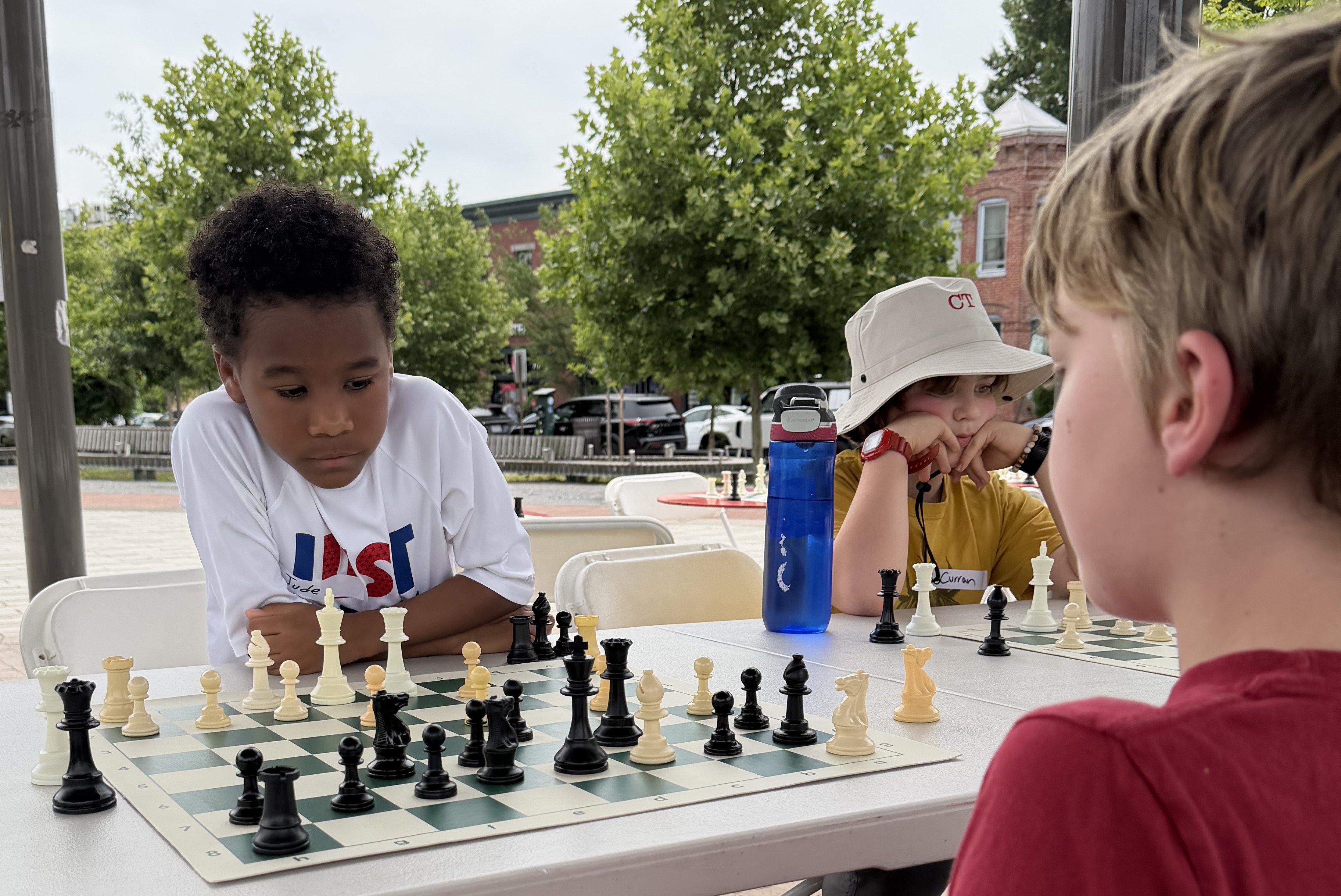
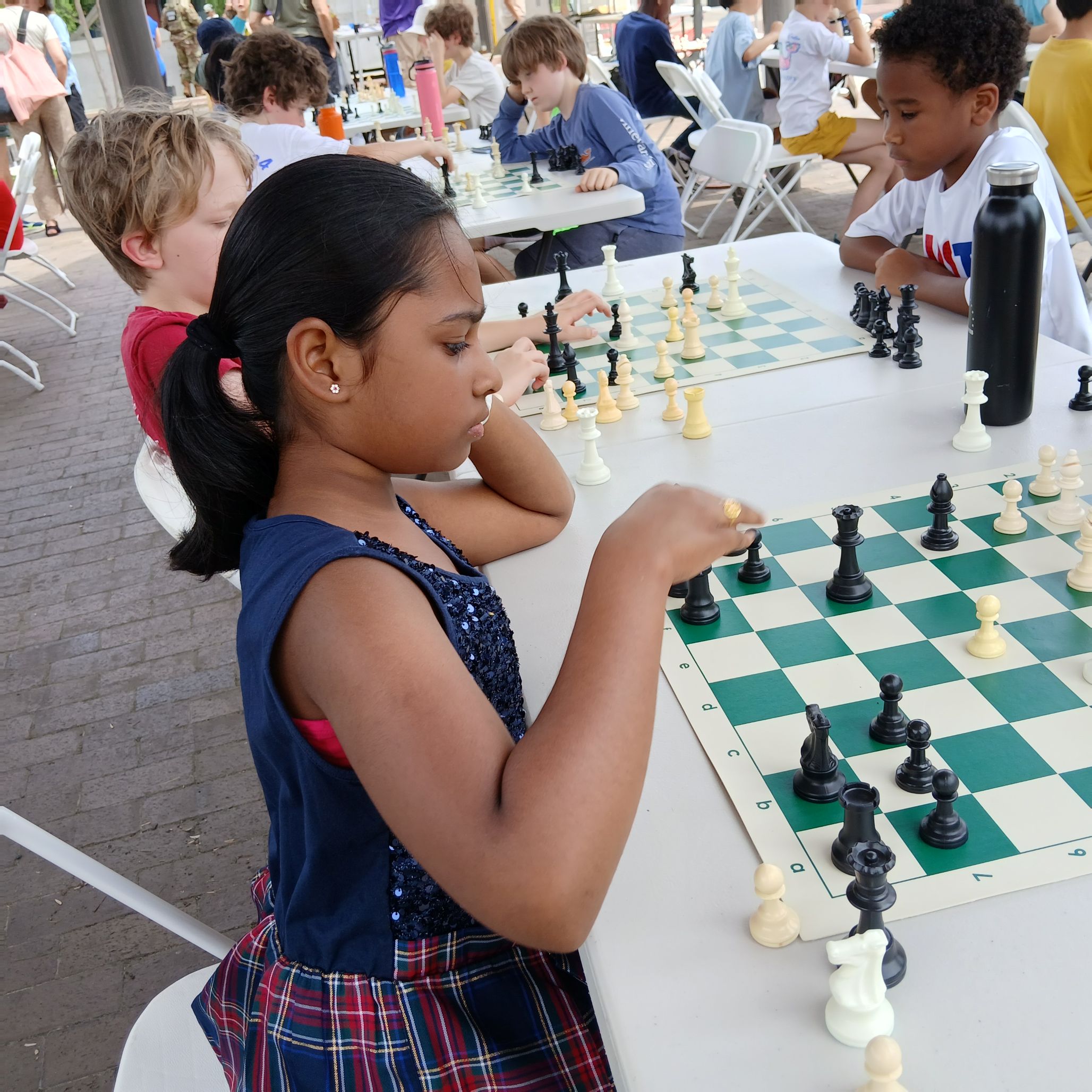
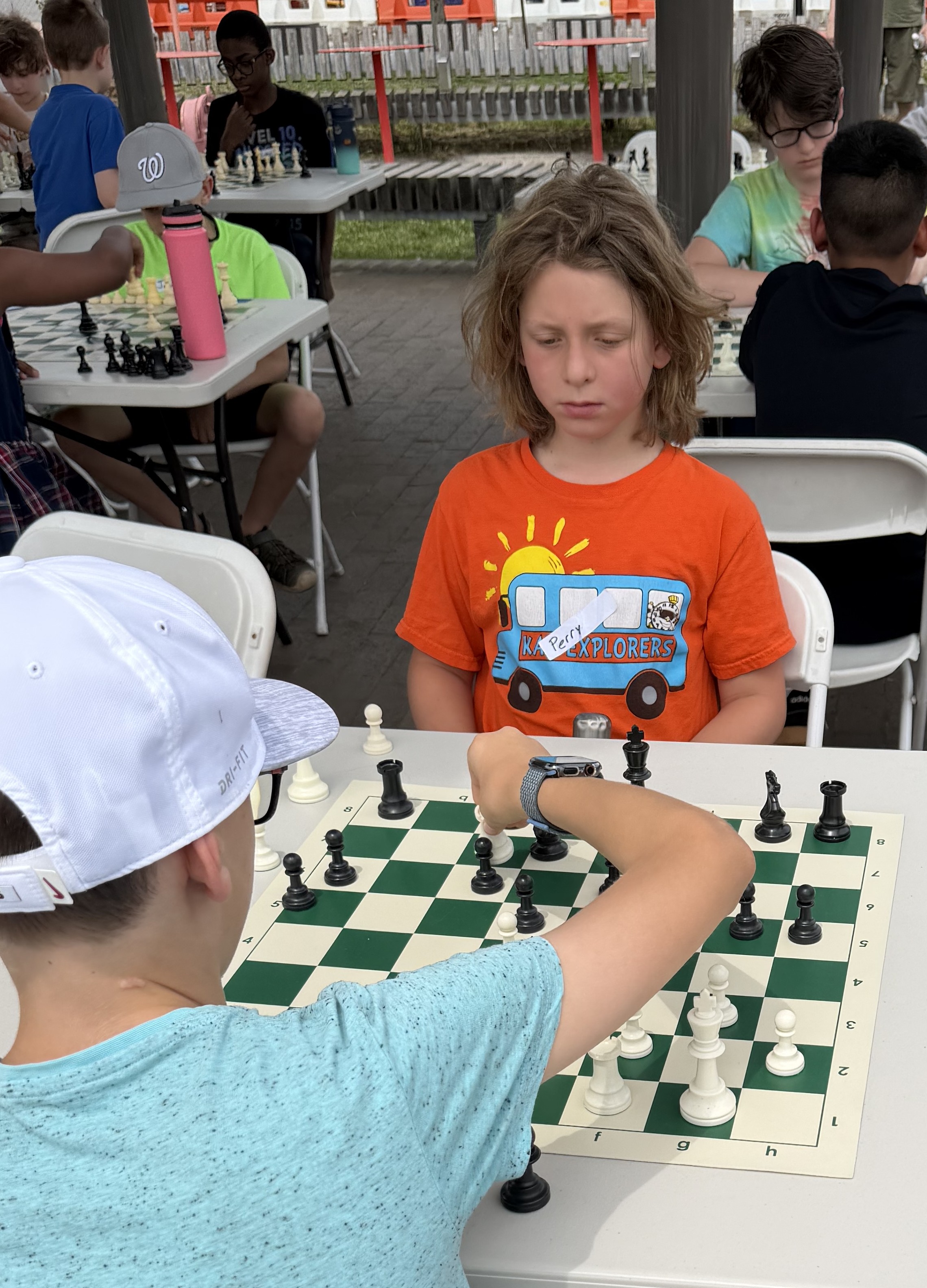
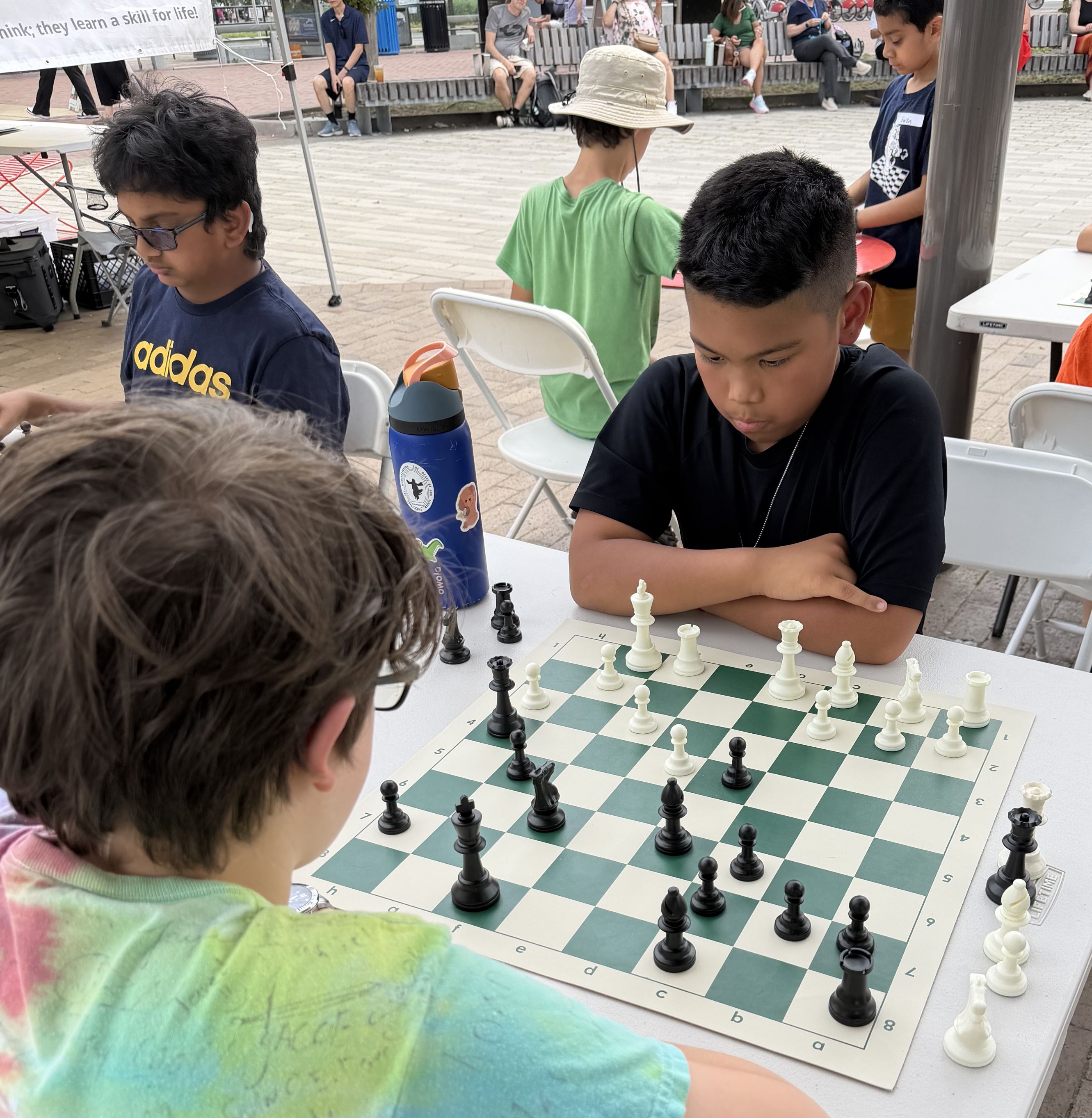
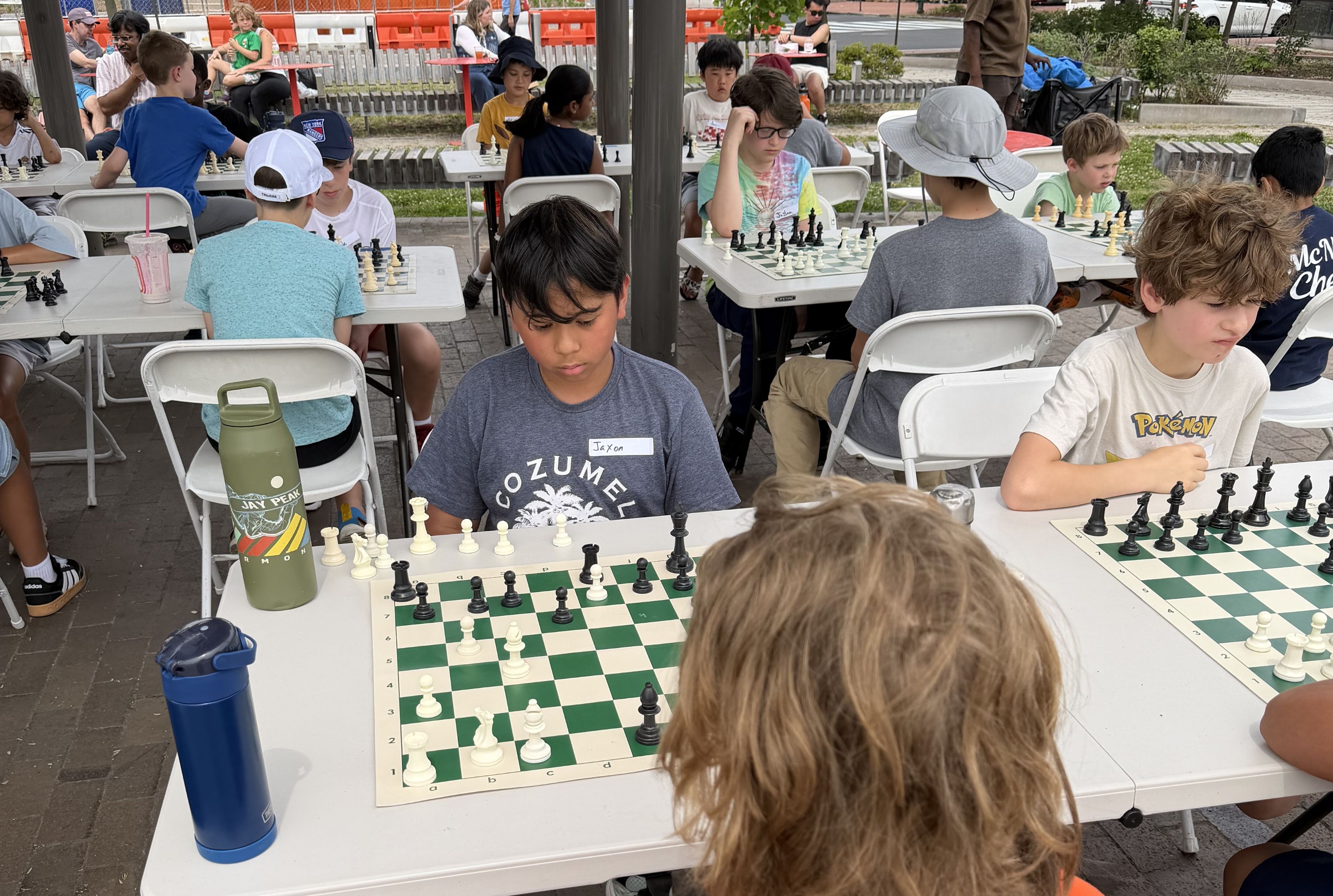
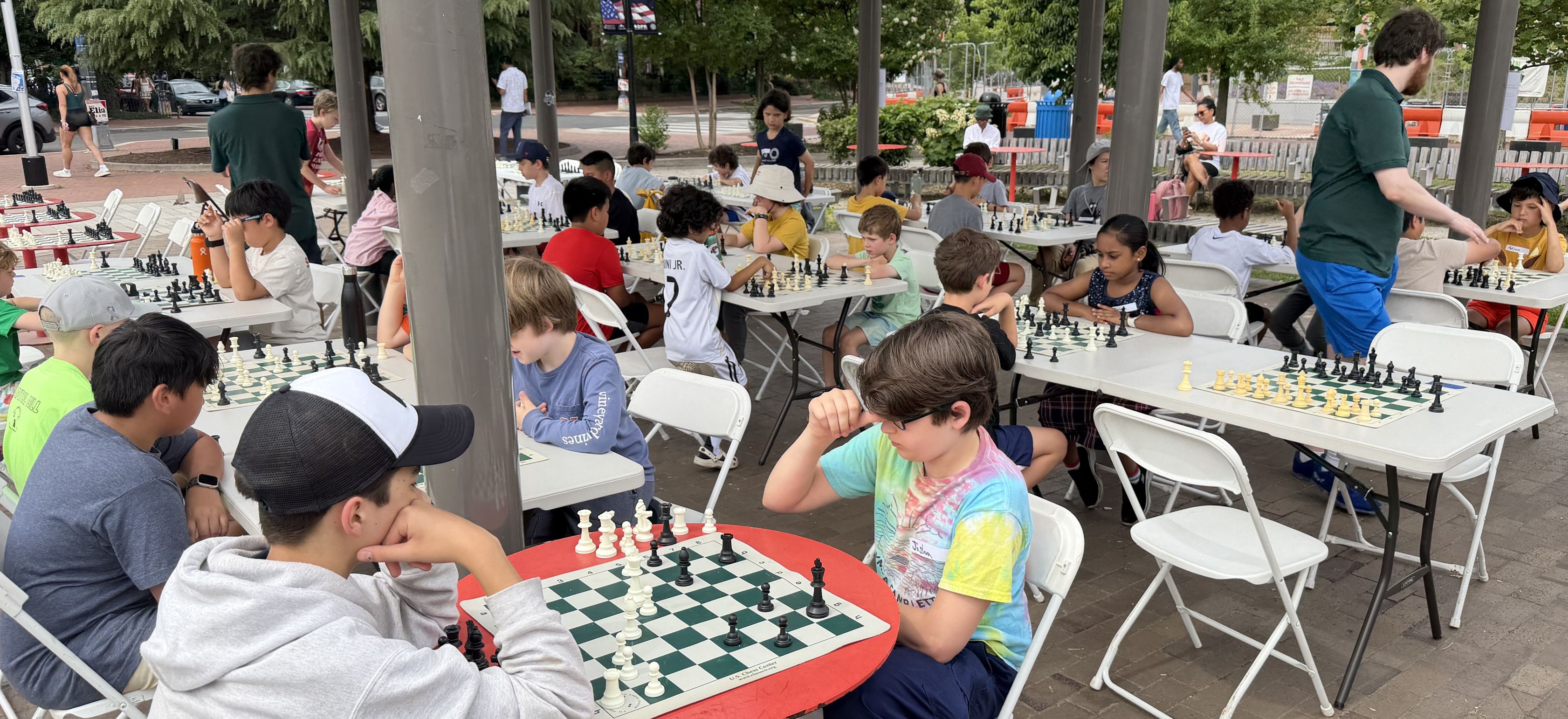
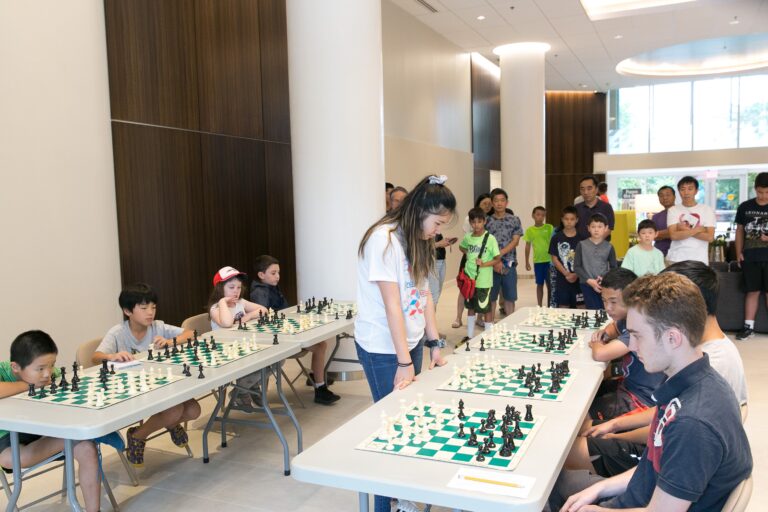
About 250 people interested in chess came to the Rockville Town Square on Sunday. Sponsored by the Montgomery County Public Schools Chess League, the Rockville Chess Club, and the Rockville Public Library, Chess in the Square brought children from throughout the county to play chess.

This was not a tournament or anything formal. This was a beautiful afternoon during which kids and adults could enjoy the sunshine while participating in one of the most engaging activities the world has ever produced.

Players found their own partners to play. Some played with family members; others challenged the strong players present from the Rockville club, which offers free play in the library every Sunday afternoon. The club has activities on Monday and Thursday evenings.

We at the Chess Center hope to see the students join the high school league (Metro Area Chess League) and the middle school league (Potomac Youth Chess League) which will start in the fall and winter.

Integrity Wins

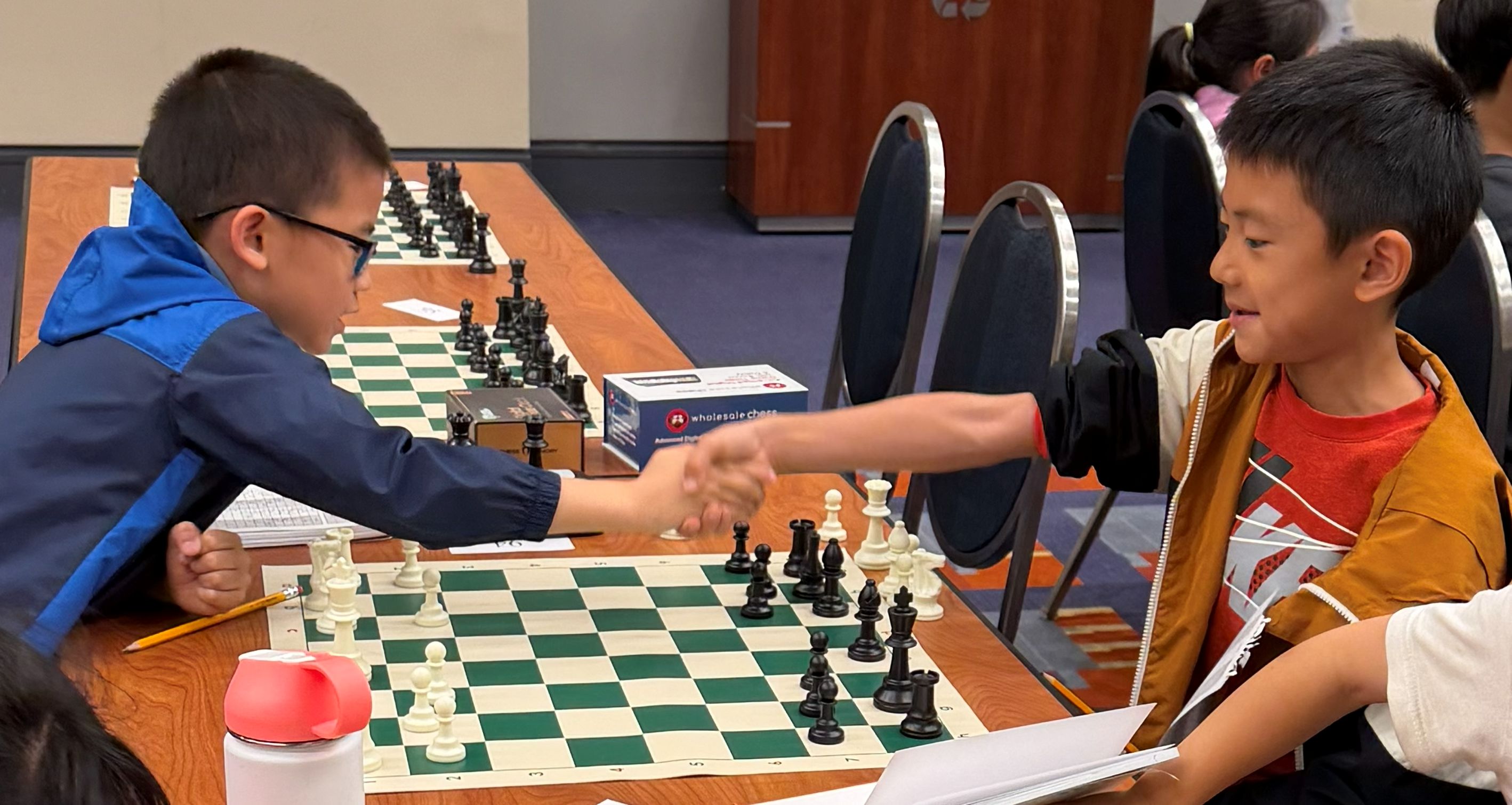
Integrity has practical benefits. That’s why we put such a strong emphasis on sportsmanship during our camps, clubs, and tournaments. 

It is much harder to reach the higher levels of chess without the ability to honestly evaluate one’s own play. Those who believe that they had a winning advantage until they inexplicably had a momentary lapse and lost are often unable to correct the defects in their game. 

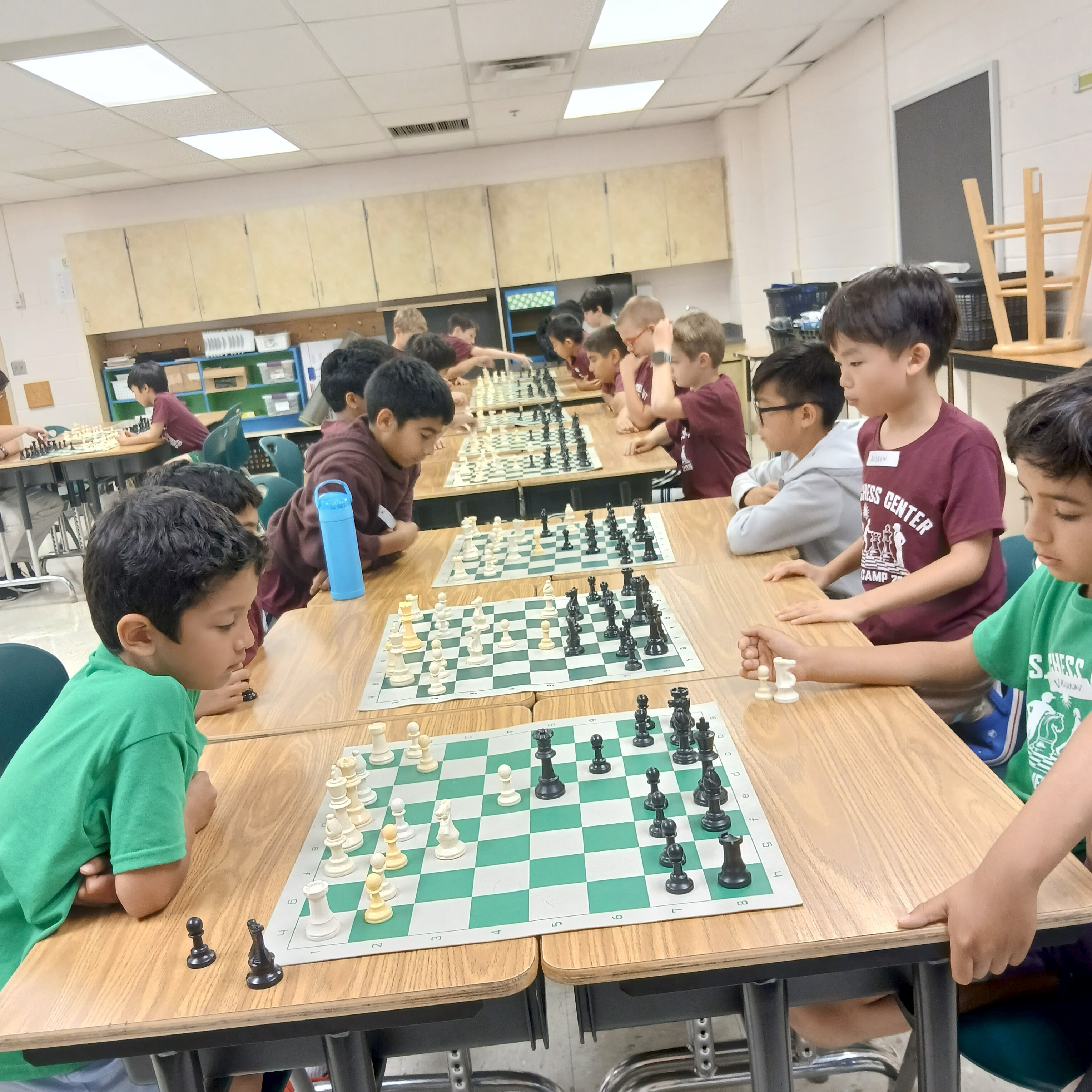
In camp this past week, we were pleased that the students exhibited excellent sportsmanship. As a result, every student made substantial strides towards becoming an excellent player.

The disappointments in losing games were tempered by their subsequent wins. The students know that practicing doing their best will pay off. Our discussion during the week revealed that improving one’s skills is the surest way to have fun, and that the result is the least important part of each game.

Our students this week showed great resilience, not giving up when things were not going well. They were gracious both in victory and defeat, making the camp a pleasure to lead.

Integrity and Hard Work Makes Students Successful

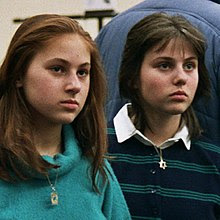
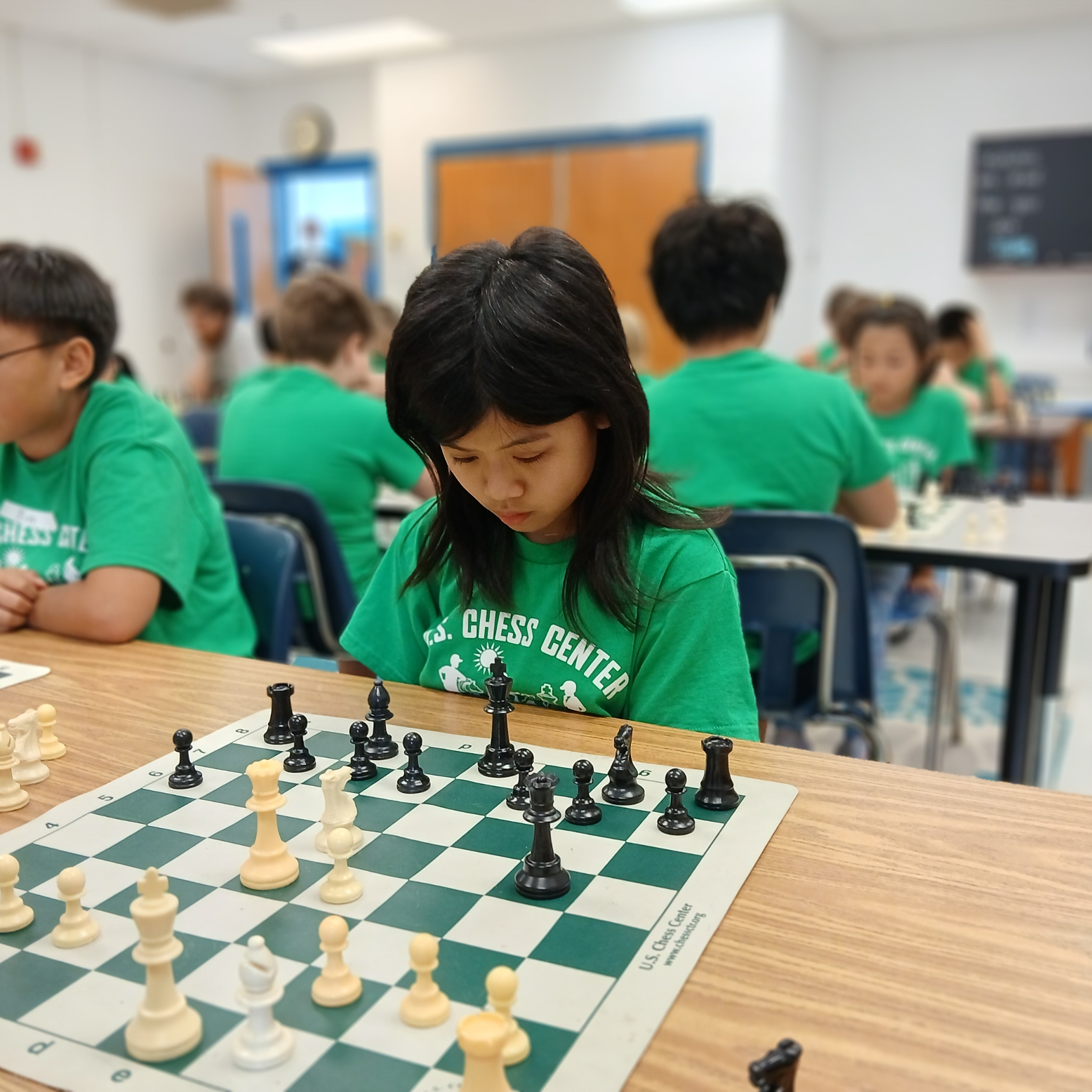
It was fitting that the camp we ran during the occasion of Judit Polgar‘s 50th birthday attracted the strongest female players we taught this summer. Emily, who had a spectacular week, would have won the camp championship had she won her final game on Friday.

That she came up short in that game against Alex, the winner of all nine tournament games he played this week, was not a letdown. This was a week about integrity and hard work, and how those two concepts combine to make chess fun.

During the week, we discussed how these character traits define Judit Polgar, the strongest female player in history. Hungarian Prime Minister Peter Magyar recently offered Polgar the Presidency of her country. She declined this high and prestigious honor, understanding that her life as a chess professional did not give her the qualifications to unite a divided nation.

It is not enough to be honest; chess players learn the value of integrity. Evaluating a position accurately requires accepting that every player makes mistakes and must find ways of adapting to unfavorable circumstances as well as finding ways to exploit advantages that opponents sometimes provide.

Thinking through positions often is difficult. Students such as Emily found great pleasure in figuring out hard things. Having fun by working hard makes a student successful, and we take immense satisfaction in watching great young people mature into leaders.

No Non-Player Characters in Chess

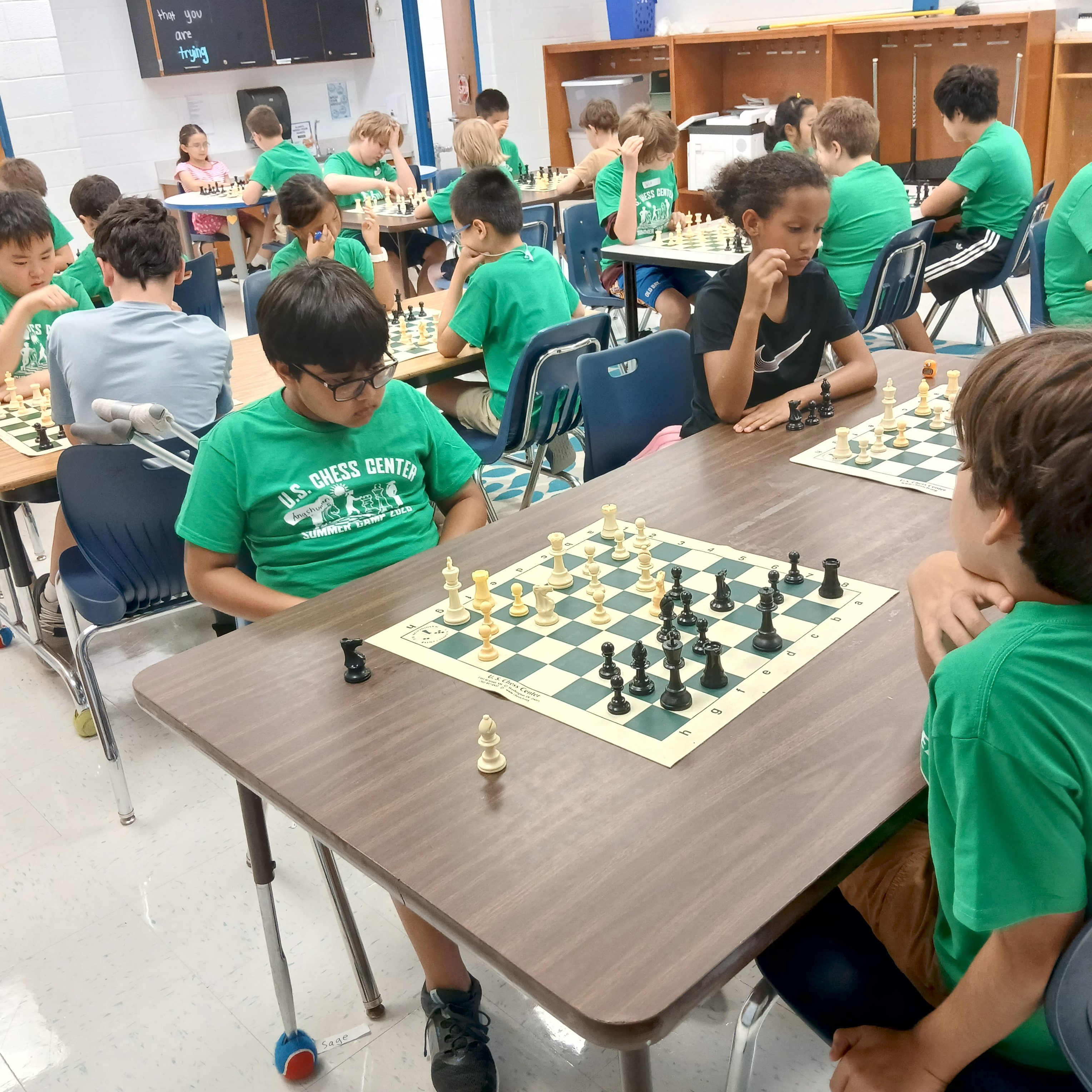
Last week’s campers learned how much fun meeting peers over the chess board should be. Instead of watching others play a sport on television, these students learned to compete with every move they played.

So much of life for this generation involves looking at a screen. There is none of that in chess camp. Our students learn social skills as they develop the ability to think for themselves about the moves they will make in an effort to win.

Chess does not accept Non-Player Characters. Chess players learn what it means to plan ahead. They incorporate general strategic principles into a framework of rules and tactics in order to find ways to win. They see that nothing good comes from giving up and the more effort they put into the activity the better their results.


All players lose about as much as they win. Learning to accept failure is an important skill, and players who can view losses as challenges to overcome have developed a skill they will use throughout life.

By participating in all of our activities in summer camp, the children learn to fully engage their natural talents. They become engaged citizens, avoiding the Non-Player Character label all of us should want to avoid.

Summer Chess – What a Great Idea

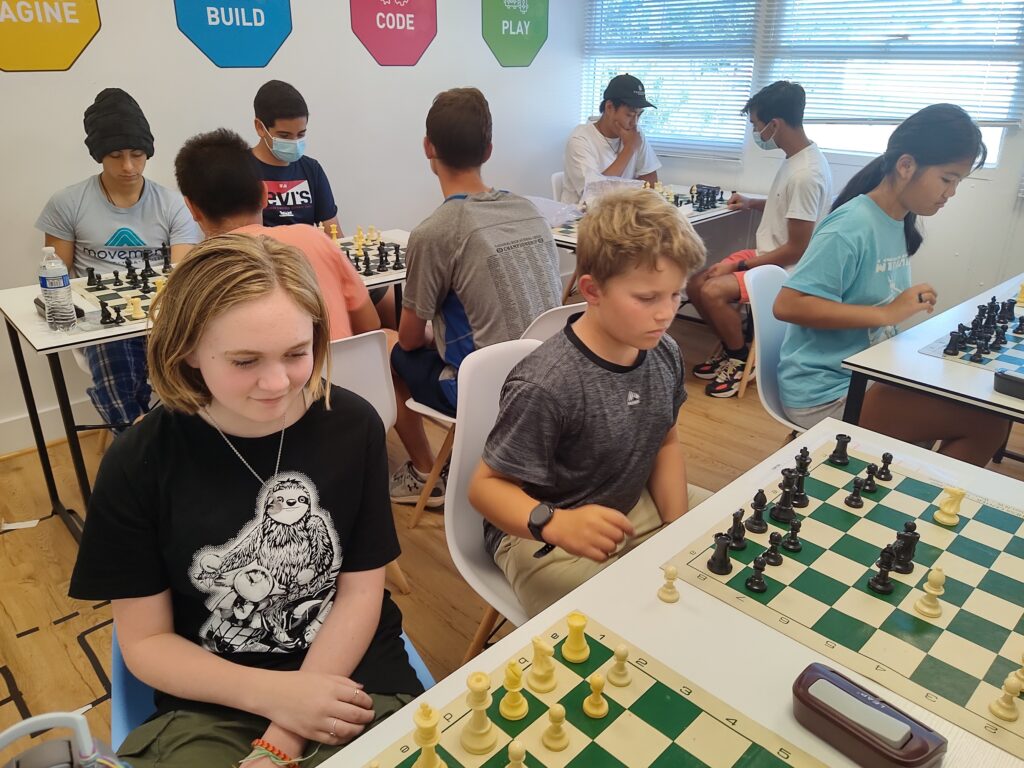
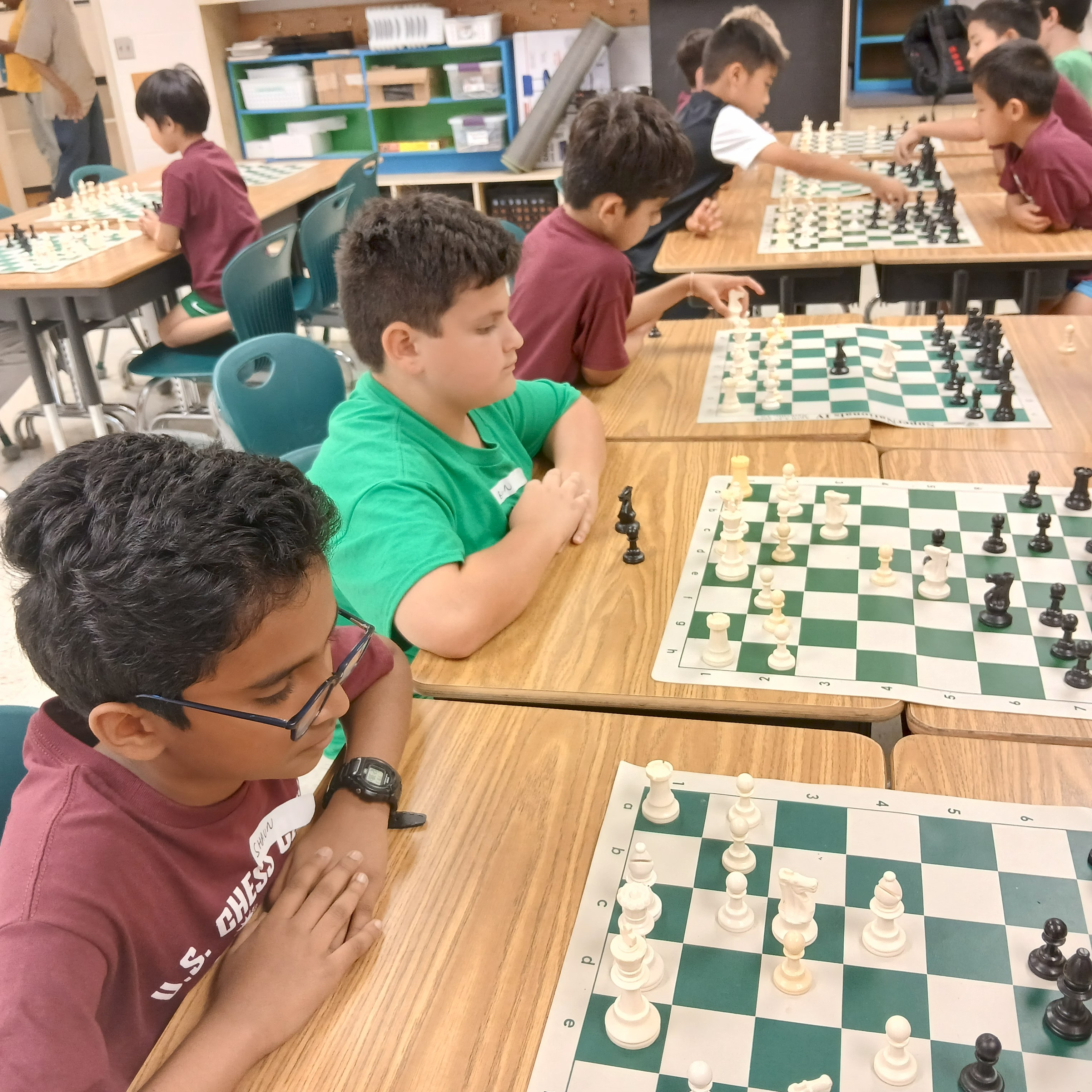
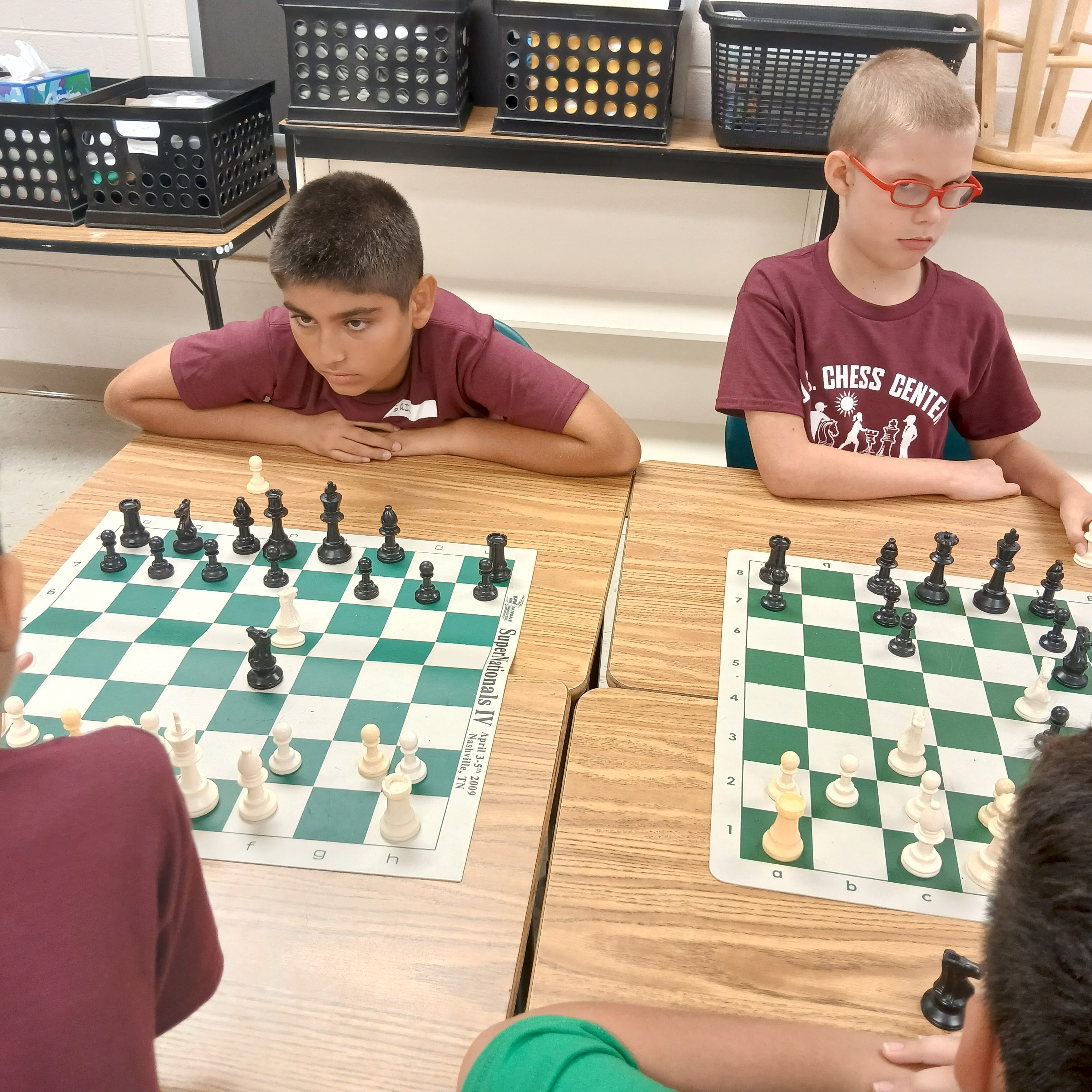
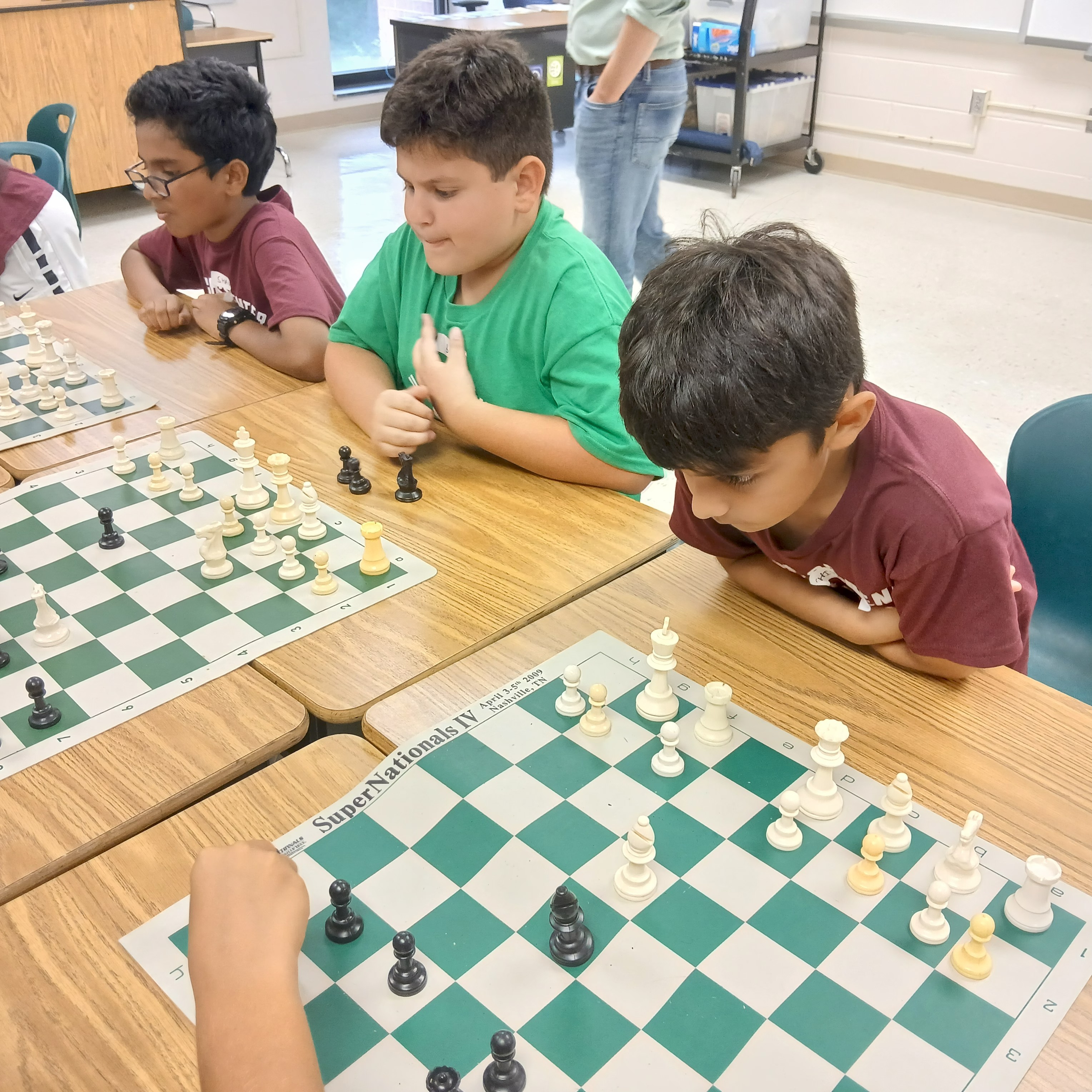
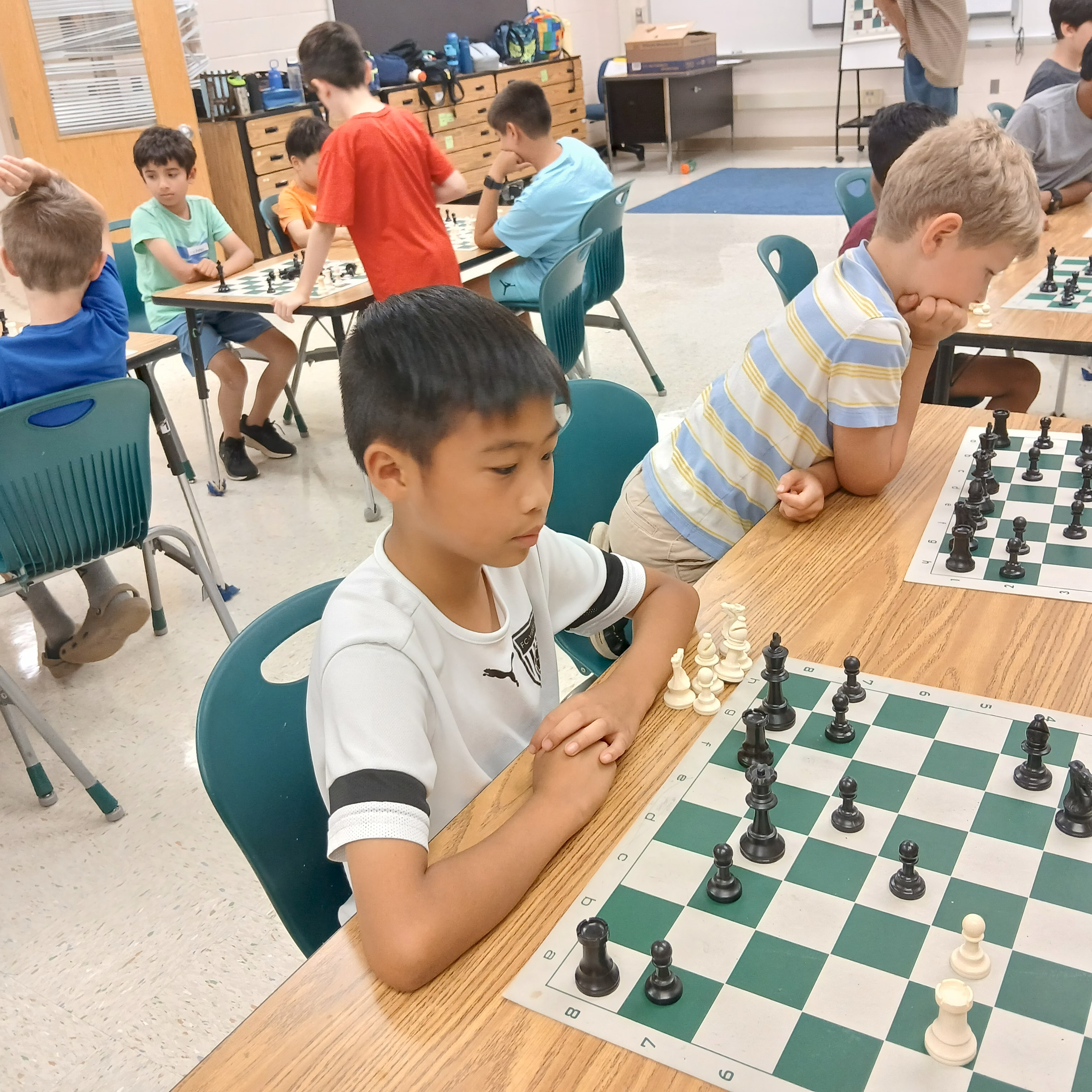
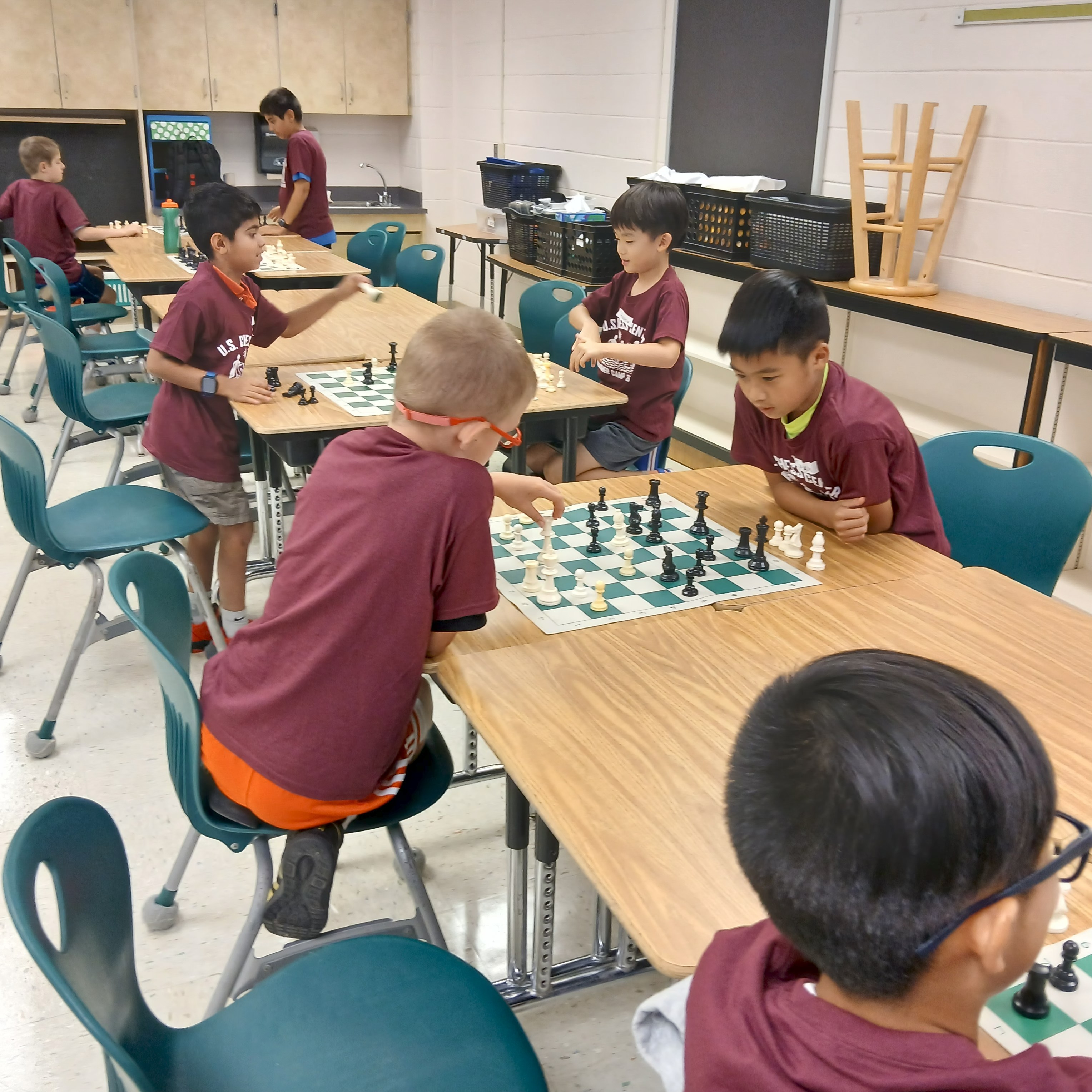
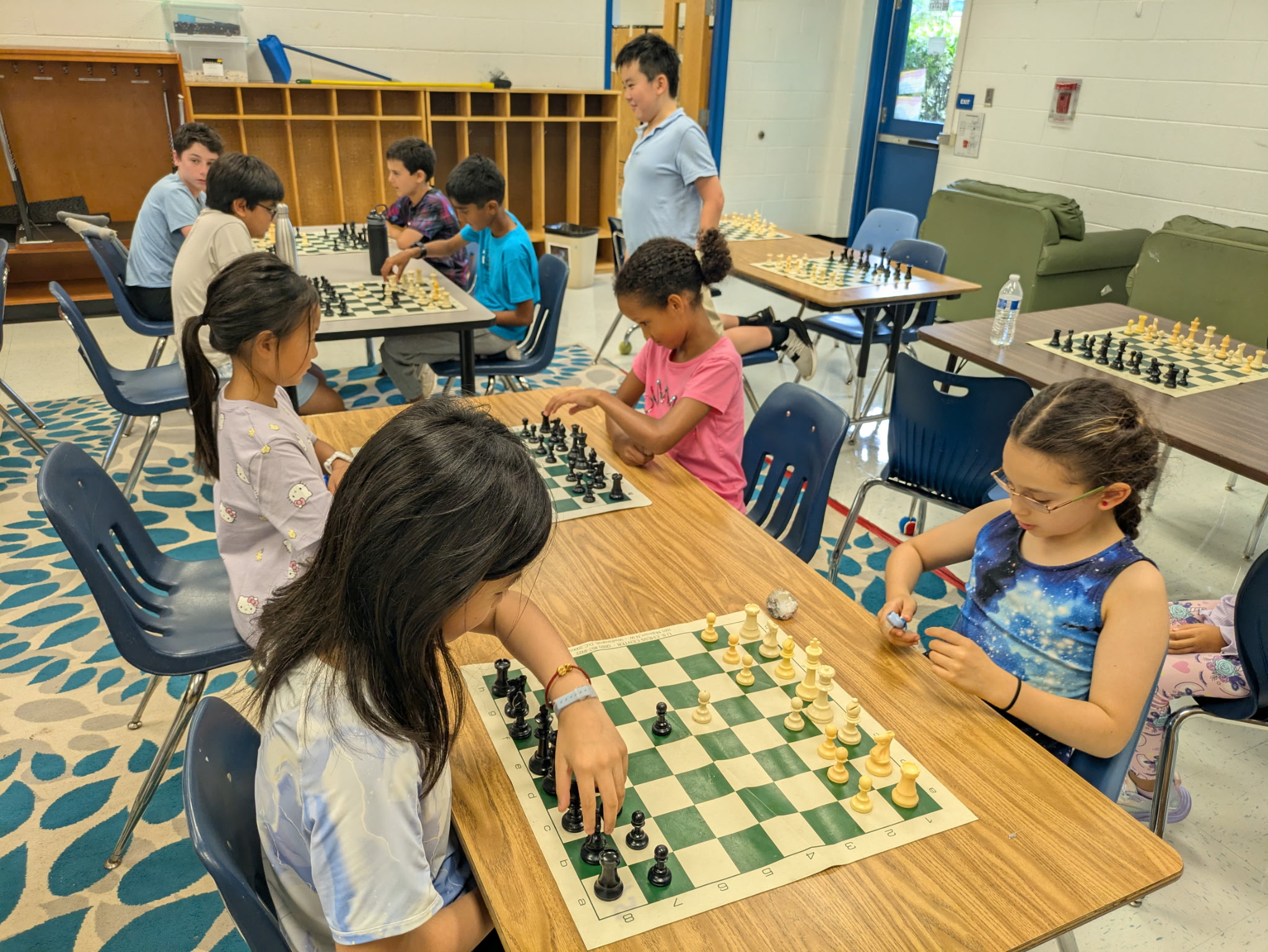
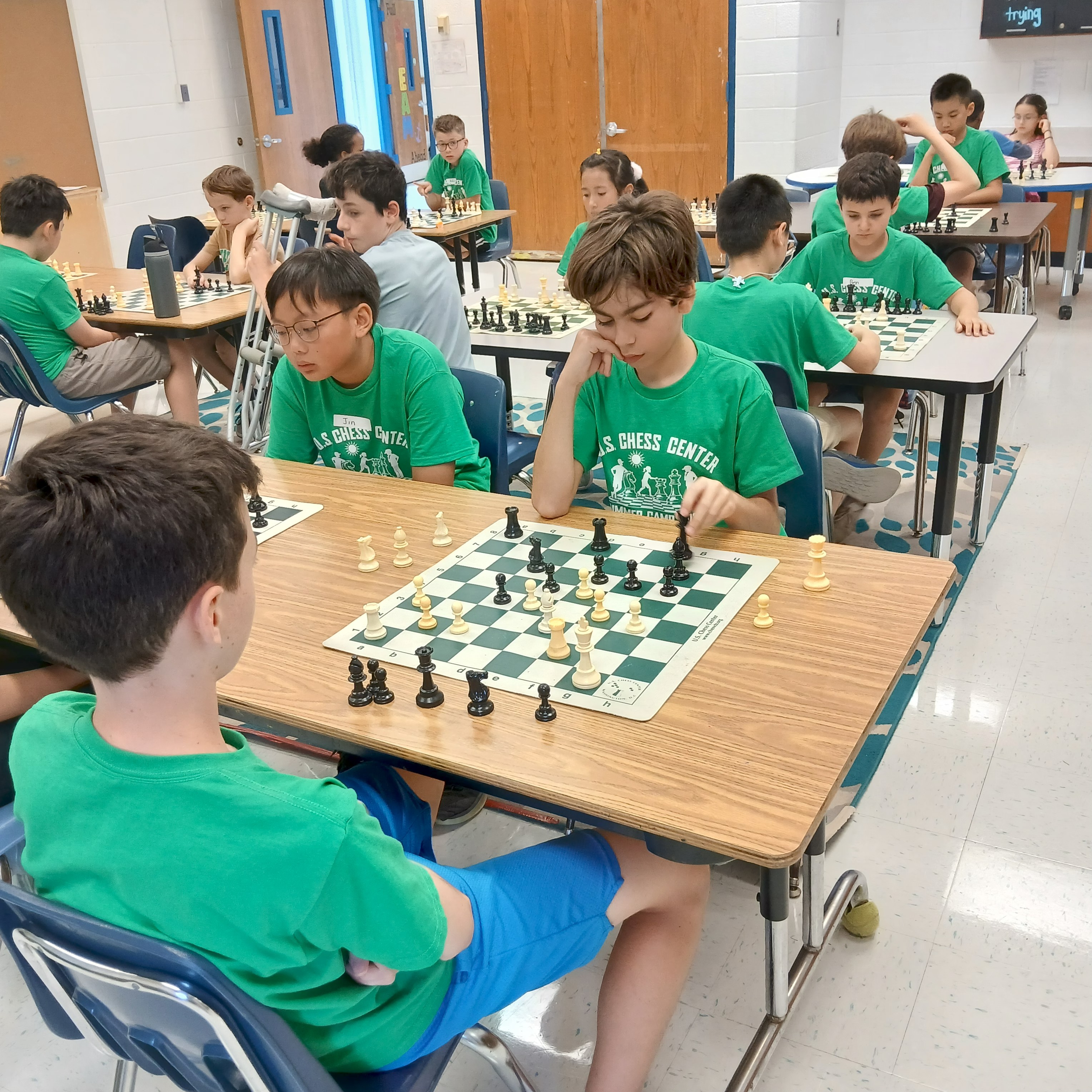
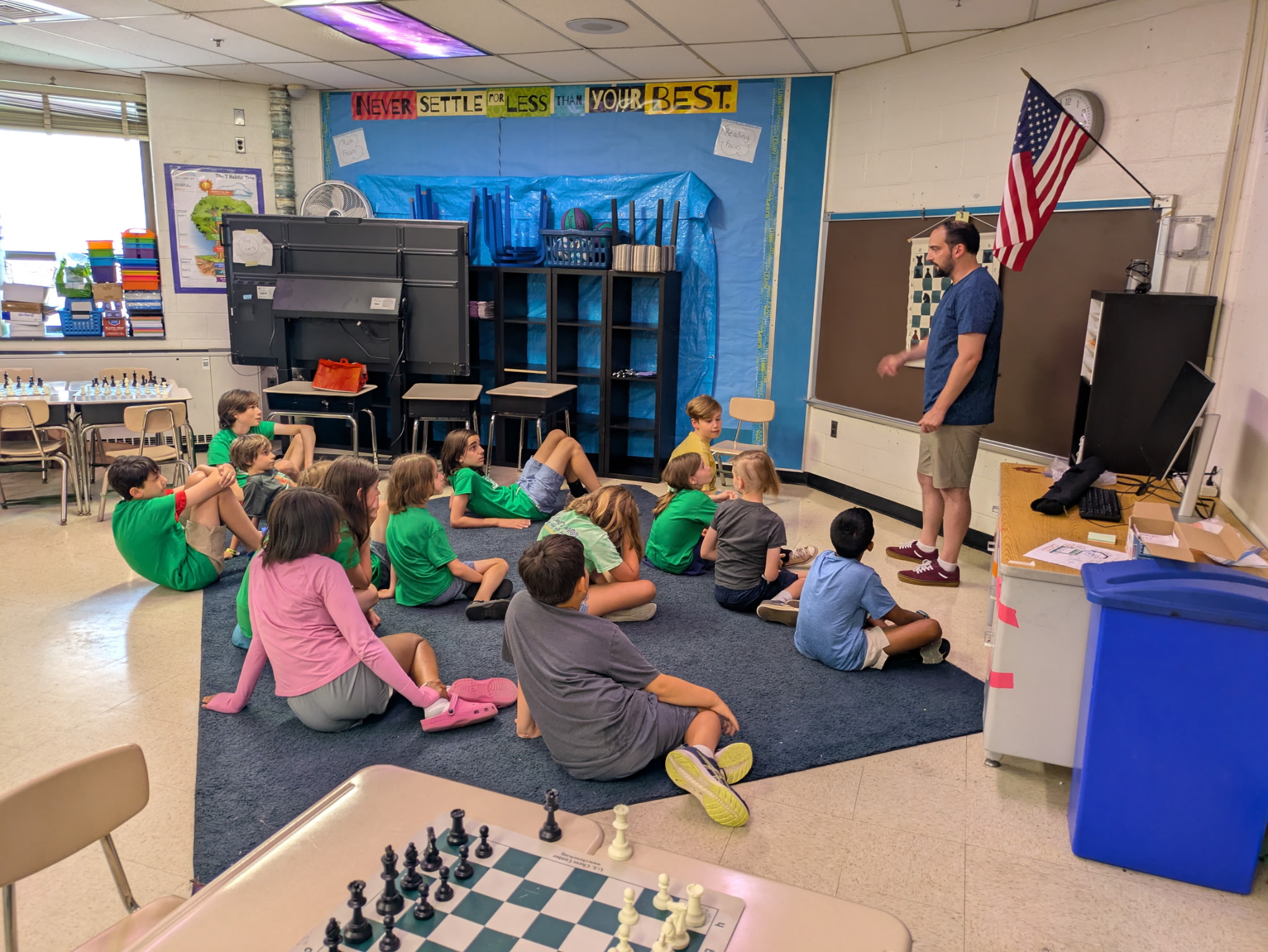
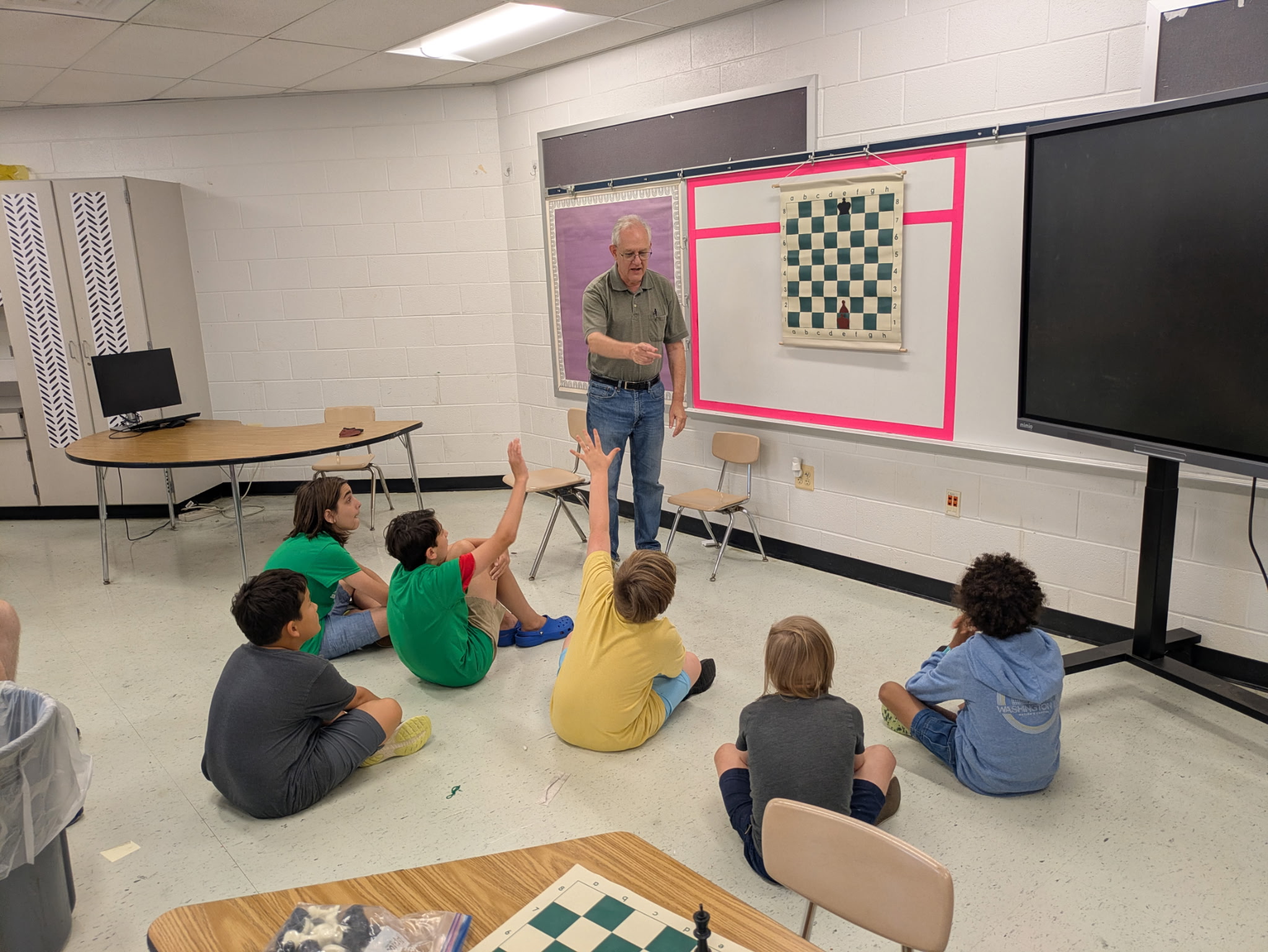
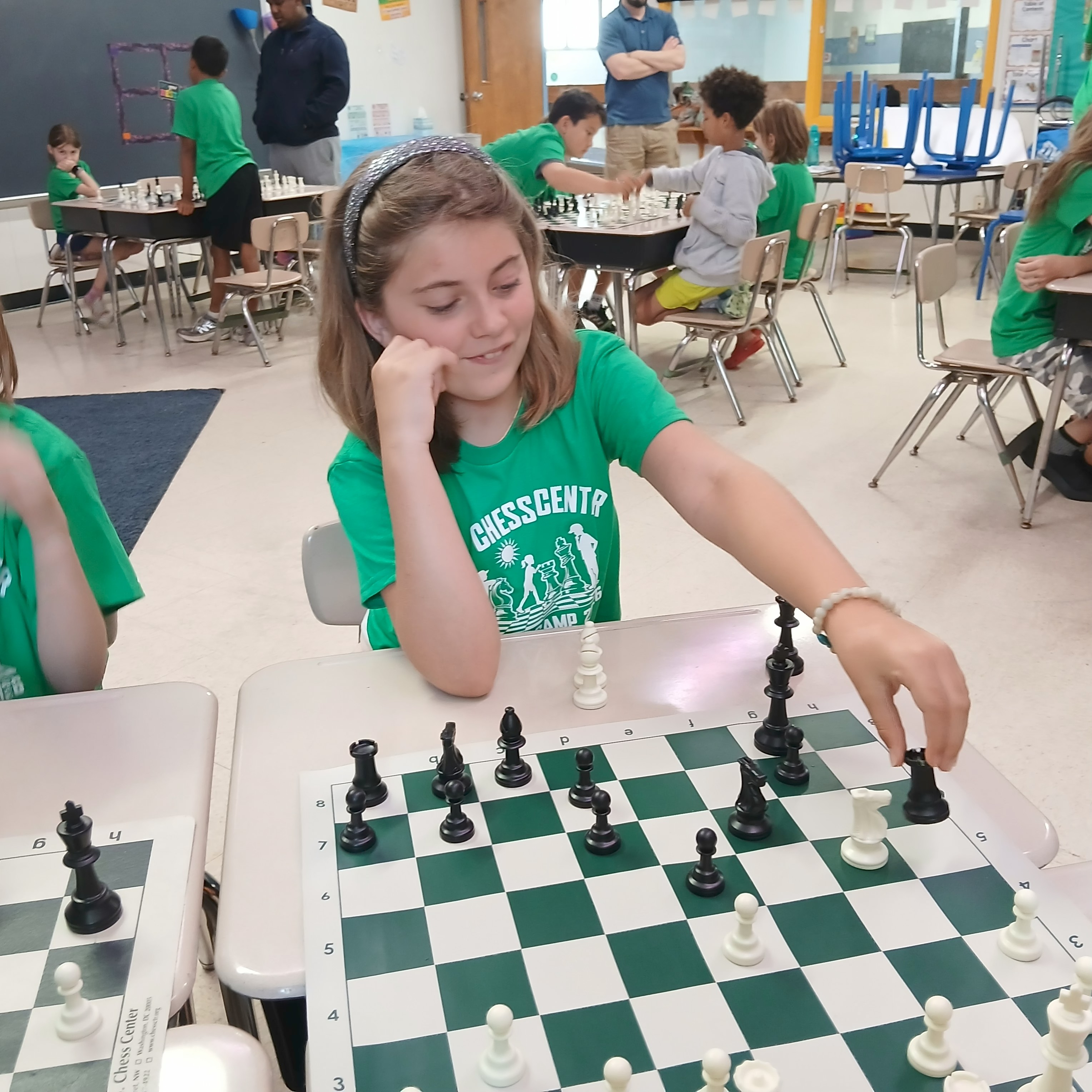
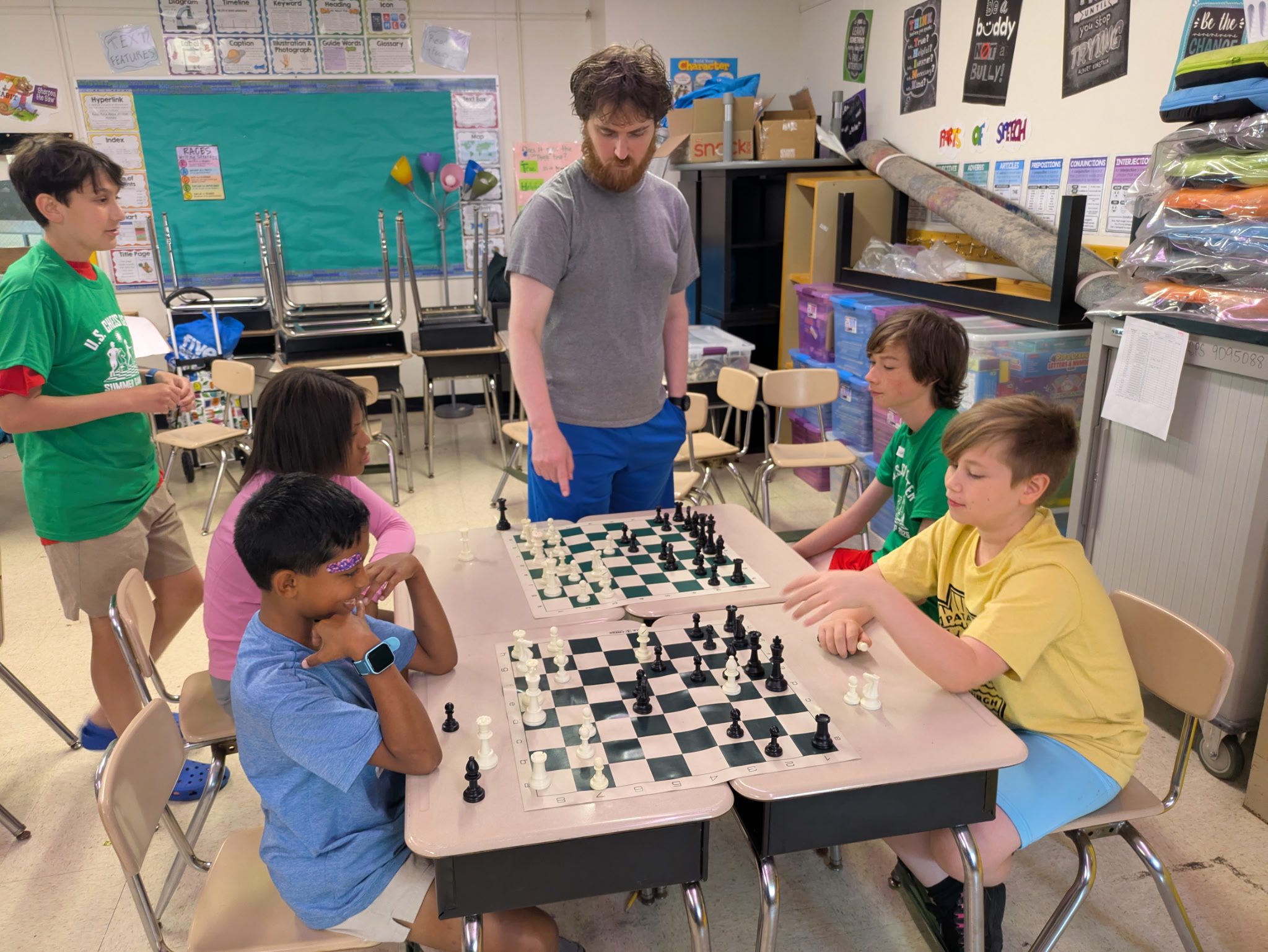
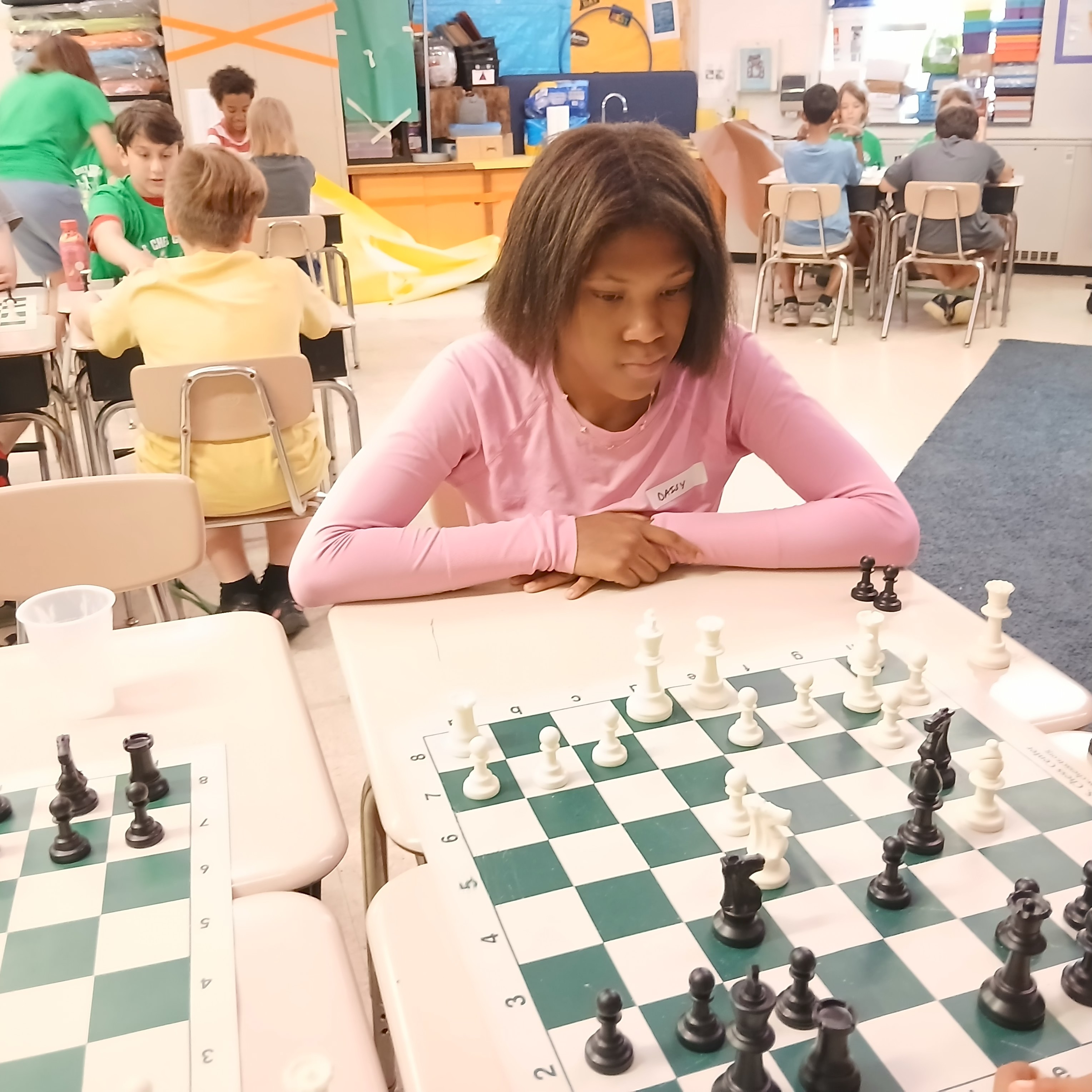
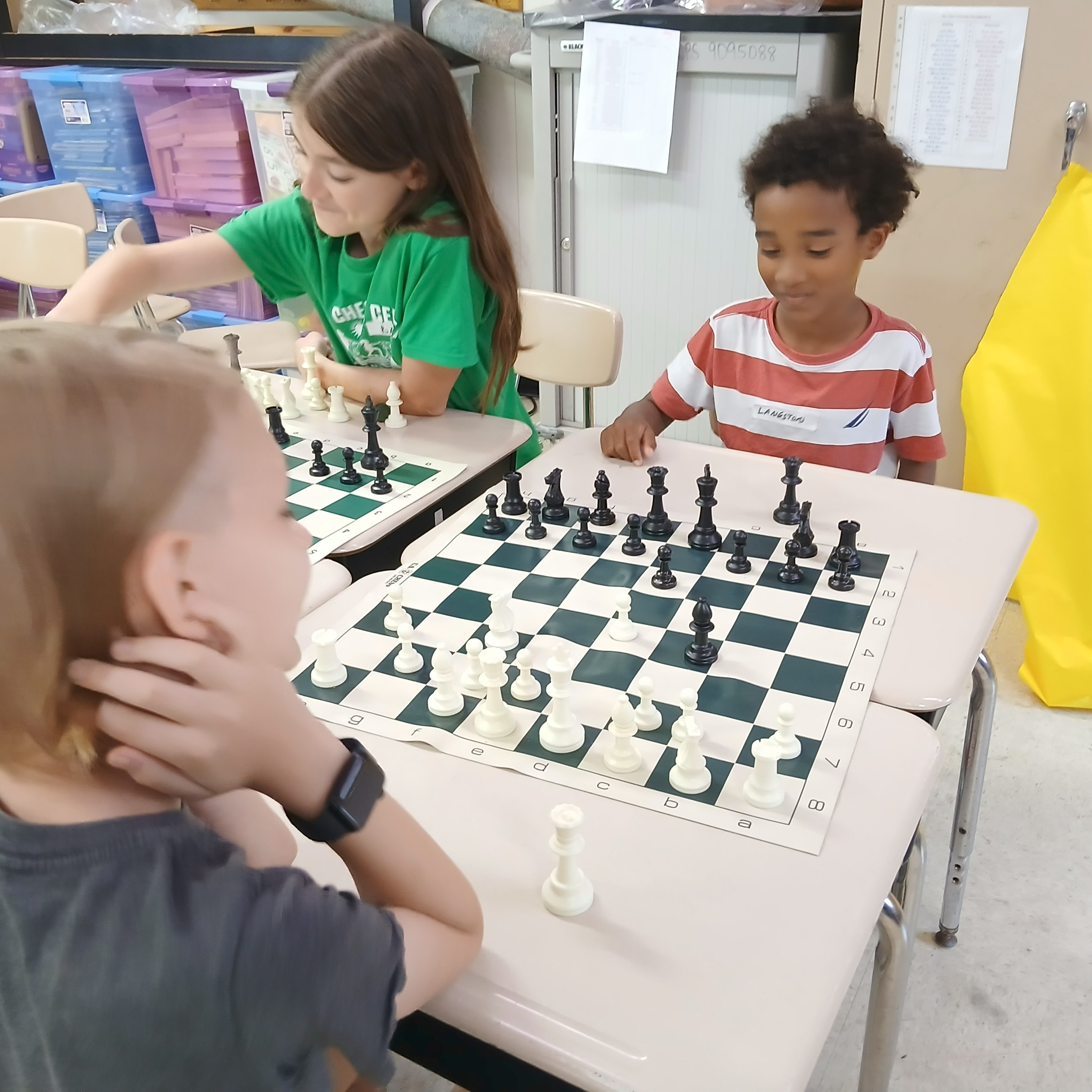
The U.S. Chess Center’s summer got off to a great start with the camp at East Silver Spring Elementary. Students ranged from third grade to ninth, and all left knowing a lot more than they did when they arrived.

Our camps, unlike our after-school clubs, feature students receiving one-on-one instruction every day with our adult teachers, in addition to small-group and large-group lessons based on our observations of the games the students play with their peers.

All of our camps emphasize the important endgame skills, and all of the students came away with greater understanding of the techniques they need to succeed in their games. Most of the campers at this camp also needed to internalize basic opening principles, and we had several lessons over the four days focusing on that topic.

We also had discussions about the immense value of good sportsmanship. Players improve their skills by taking enough time to find the moves that allow them to win in the fastest way. Several students have been playing chess online, and that provided us with the opportunity to learn the differences between online and over-the-board games. While both games use the same pieces, there are major emotional considerations when sitting at the same table as another player who also wants to win.


It seems that knowing less about an opponent would not be an advantage, but in chess it often is better not to have an opinion of the strength of the adversary. People often play worse when they believe they are stronger or weaker than the person sitting across the table. Young people, in particular, can become discouraged when facing someone they perceive as a strong player. Many people do not concentrate as well when they believe they can win without maximum effort. Because the most effective method of improving at chess is to practice doing the best a player can, doing anything less than one’s best is a waste of a chance to get better.

Improving Chess Skills by Playing

Sai Arjun came to Chess in the Park with a goal: win nine games. Three weeks earlier he had won the first place trophy with a near-perfect 8.5/9 score, and he wanted to improve.

The U.S. Chess Center stresses that the fun part of chess is improving. Winning happens when players get better, and we also stress that good sportsmanship includes always playing one’s best. It was gratifying that Sai Arjun’s goals were not achieving a rating (events like this always are unrated) or winning a trophy, but instead he wanted to improve on his previous impressive result. He succeeded, and in doing so again took home the first place trophy.

We were pleased that 42 children representing 28 schools in the District of Columbia, Maryland, and Virginia were brought to Eastern Market Metro Park. Well over half the players live in DC, with the remainder pretty evenly split between Maryland and Virginia.

At the beginning, the temperature was comfortable, but when the cloud cover dissipated the heat became oppressive. The games were played in the shade of the pavilion, but most of the parents sat on the nearby benches that were, unfortunately, not covered. It was nice that politicians campaigning in the park were distributing bottled water.

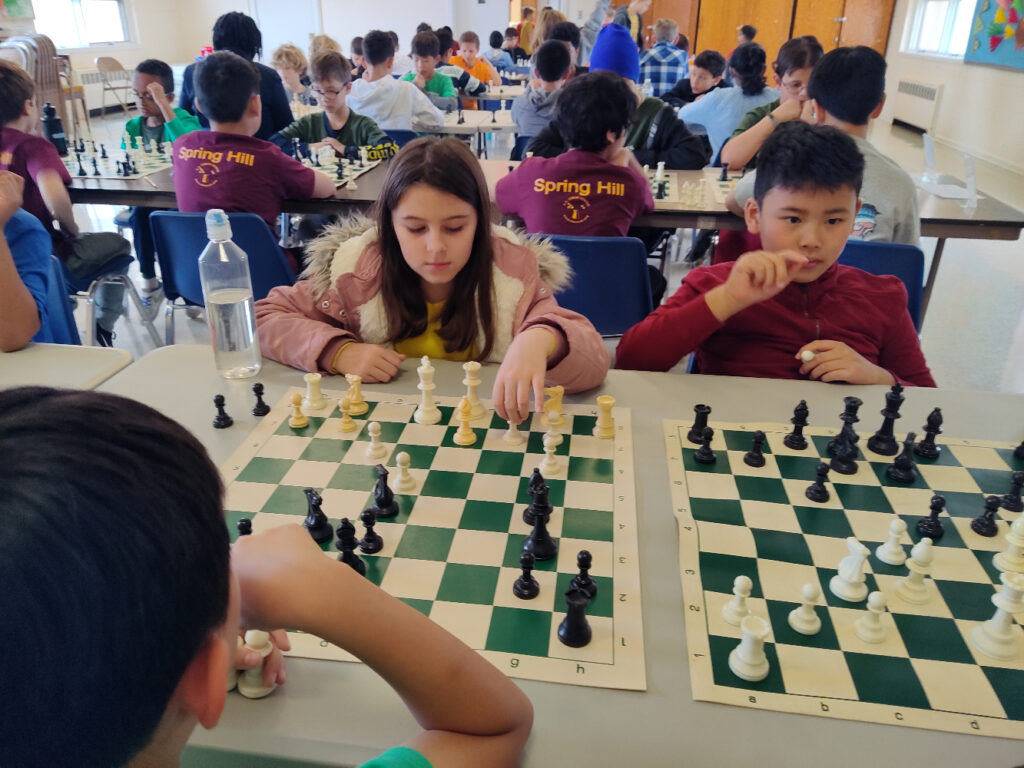
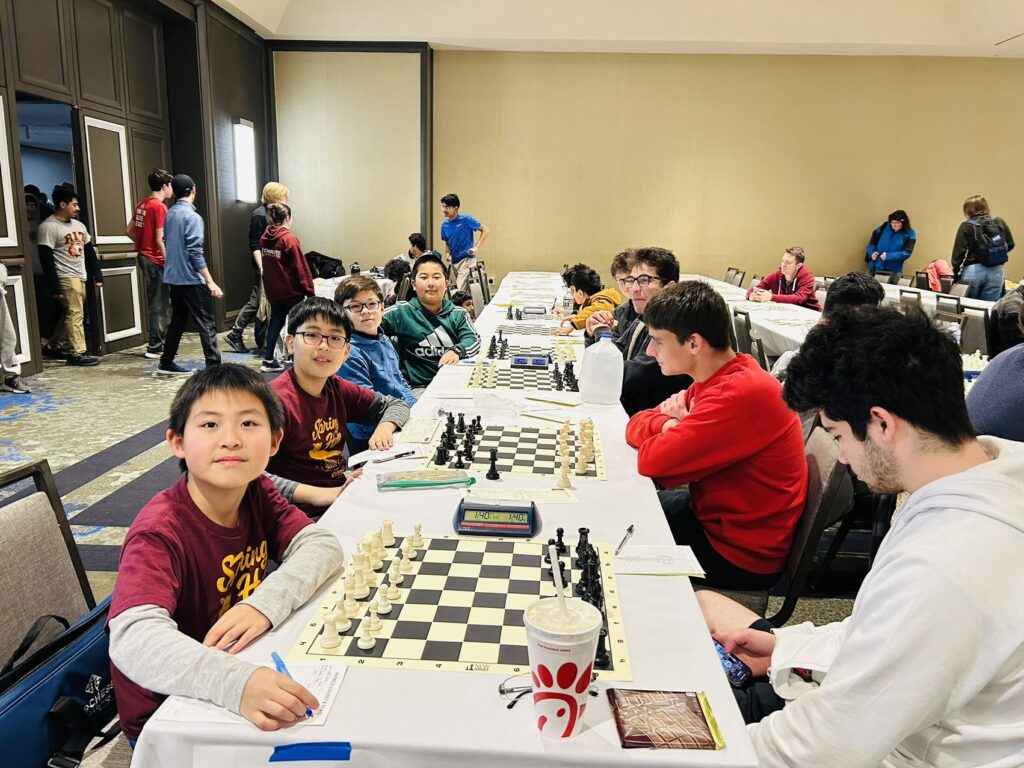
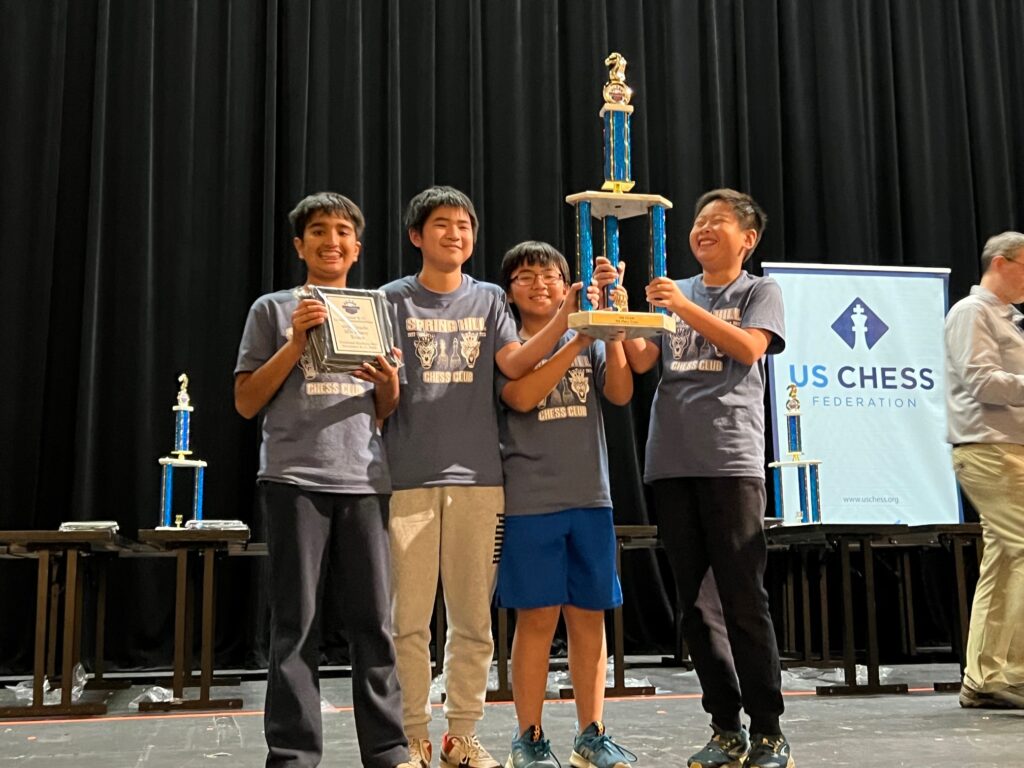
Heat did not slow down the contestants. They played chess, ran around, and made friends. Spring Hill Elementary in McLean, VA won the top team award, while BASIS DC won the trophy for the top DC school.

Barracks Row Main Street sponsors these events two or three times each spring. Discussions have started about running chess competitions for adults in the fall.

Area-Wide Scholastic Is a Huge Success

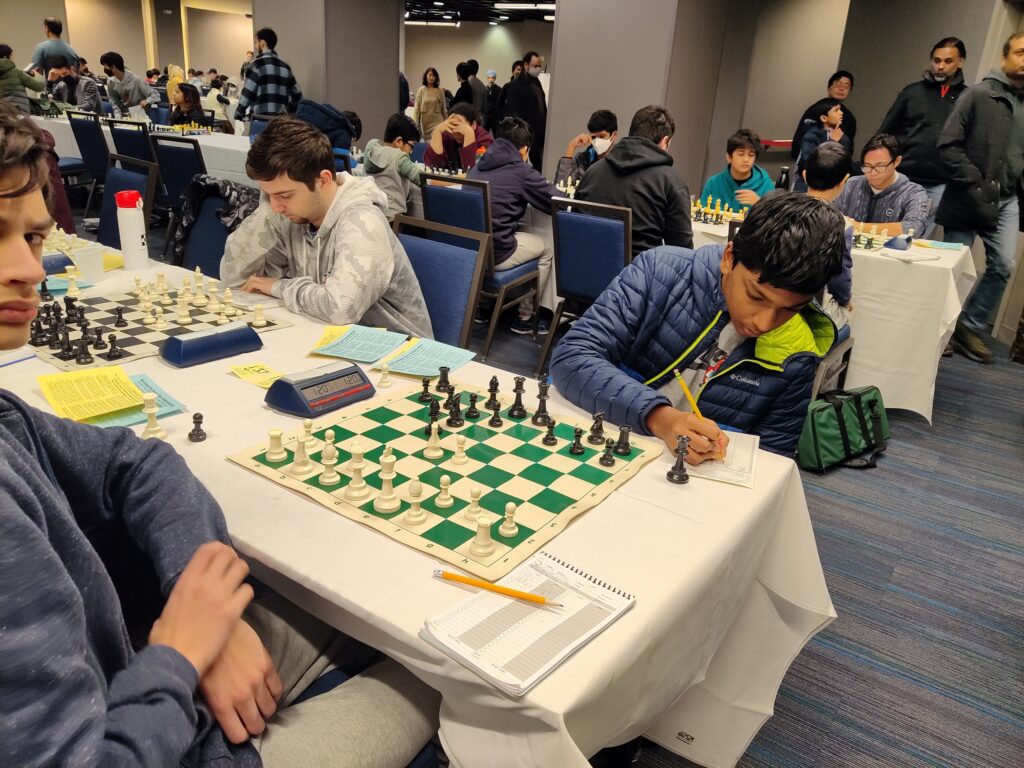
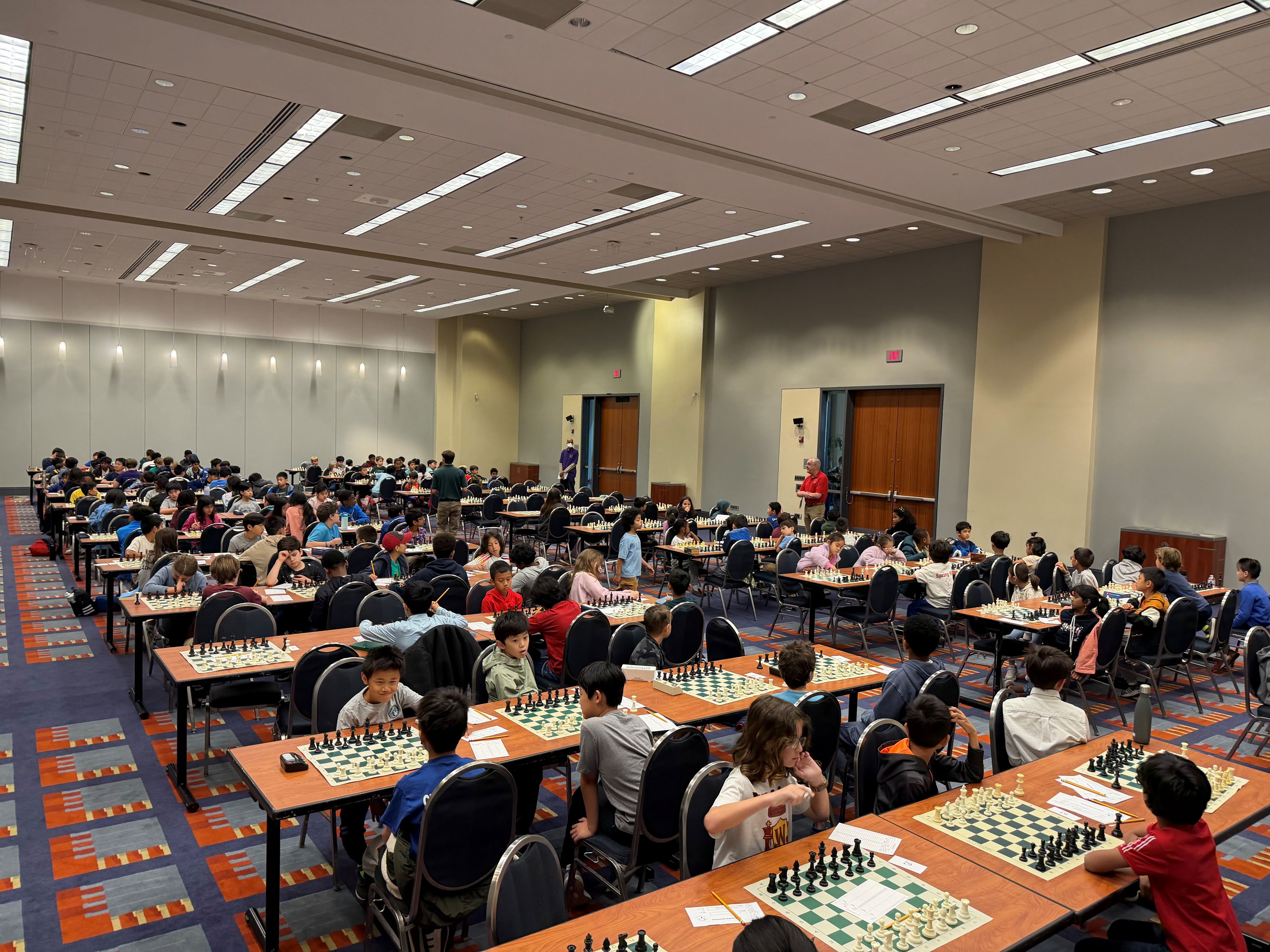
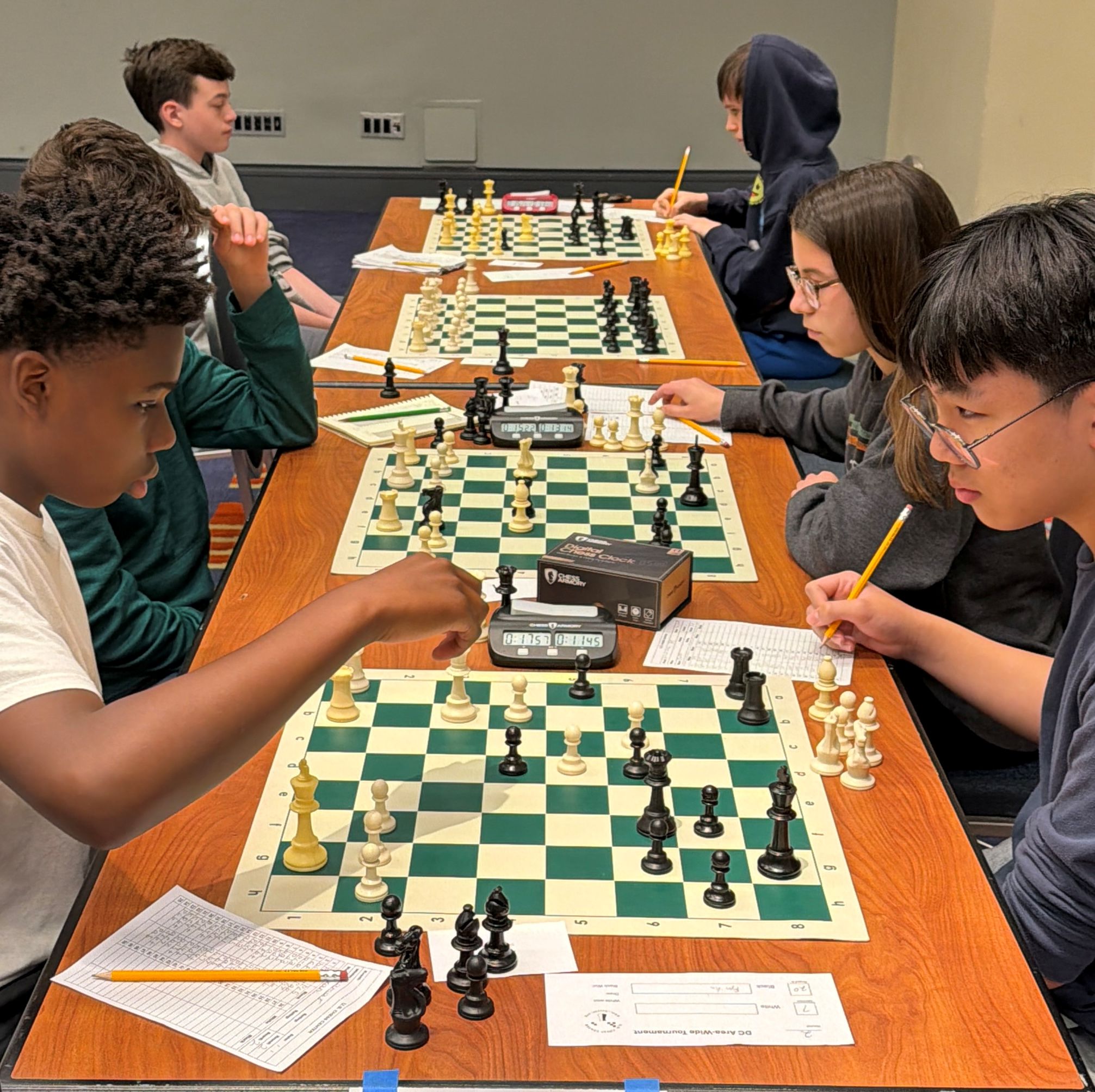
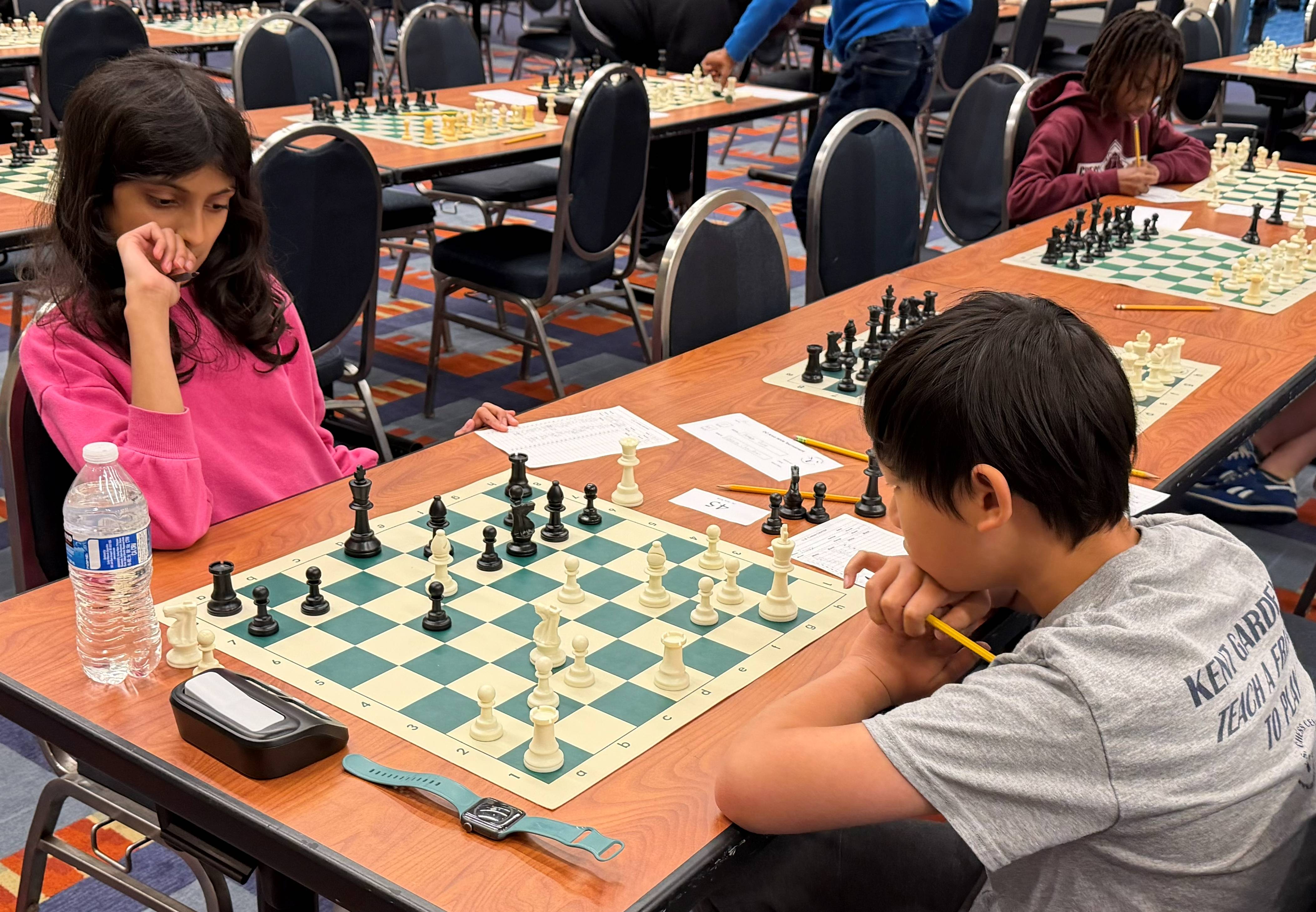
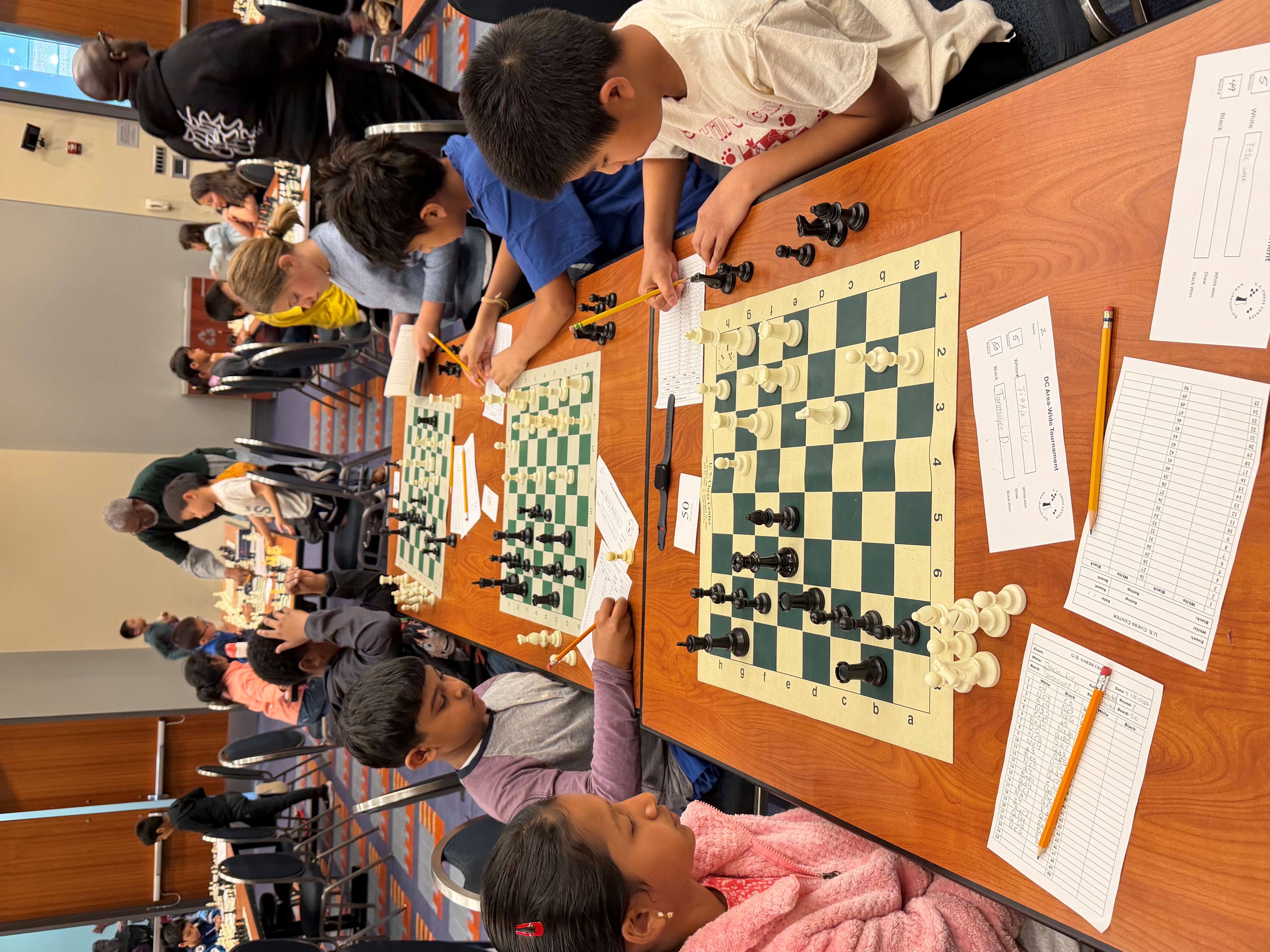
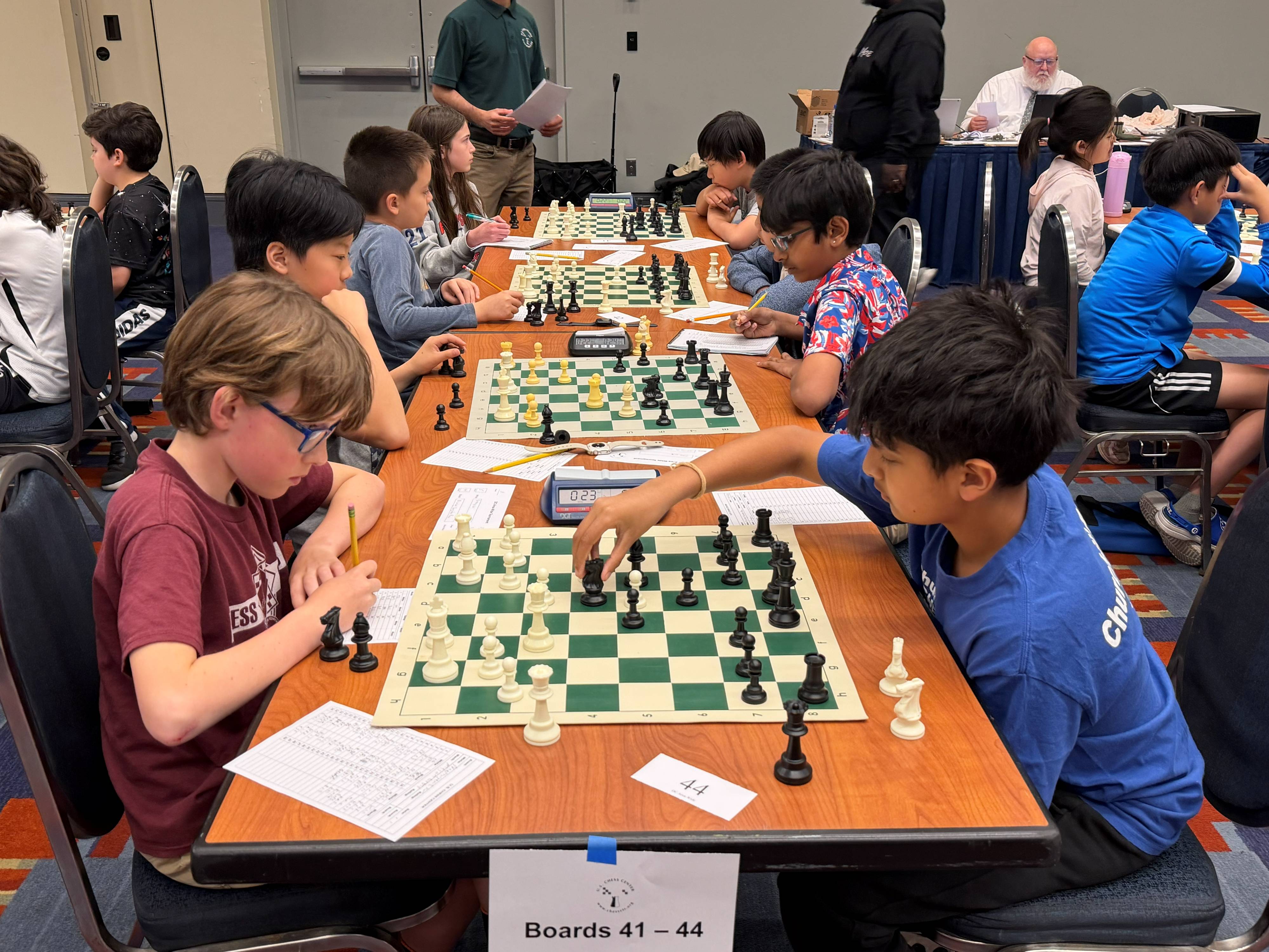
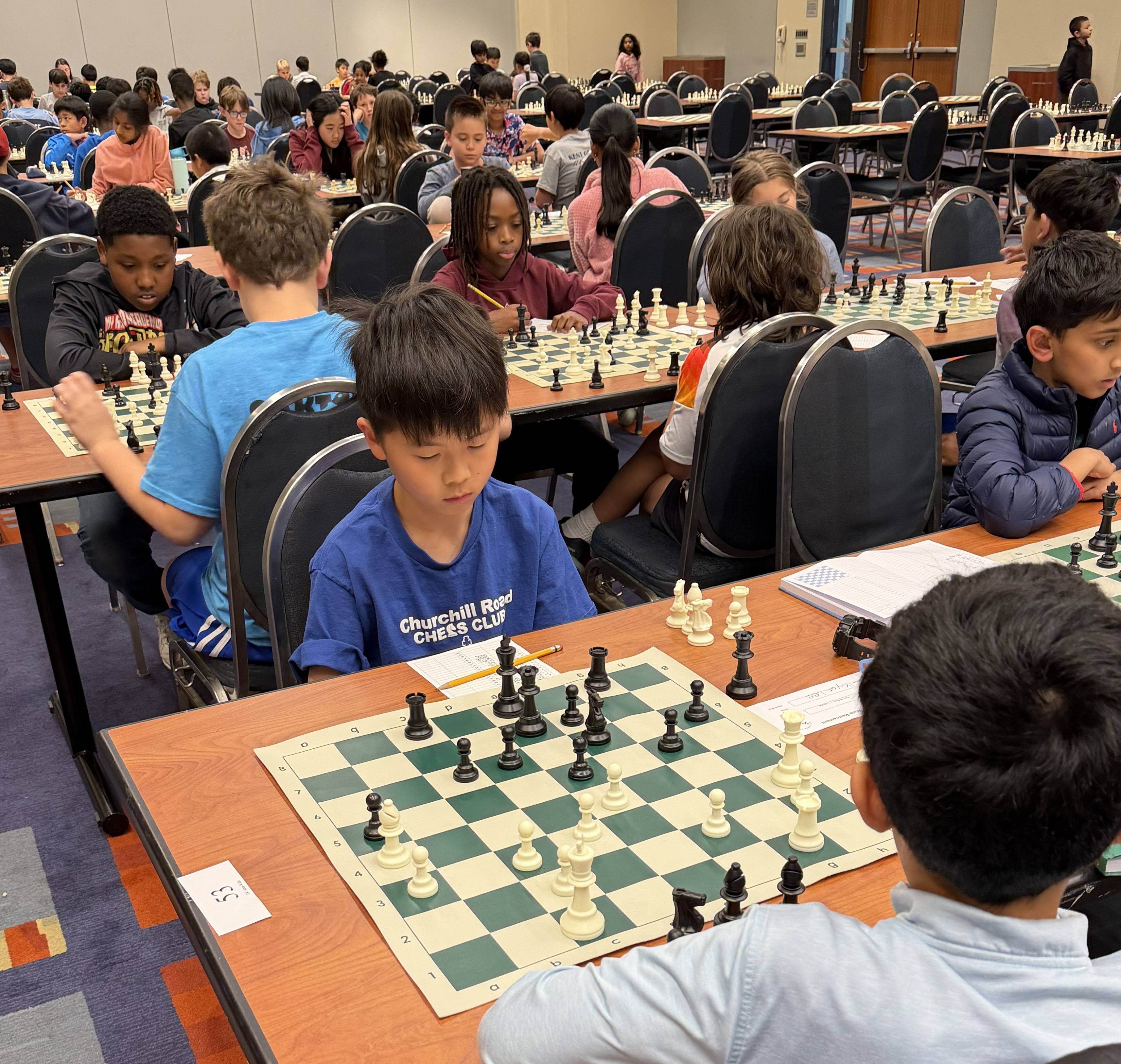
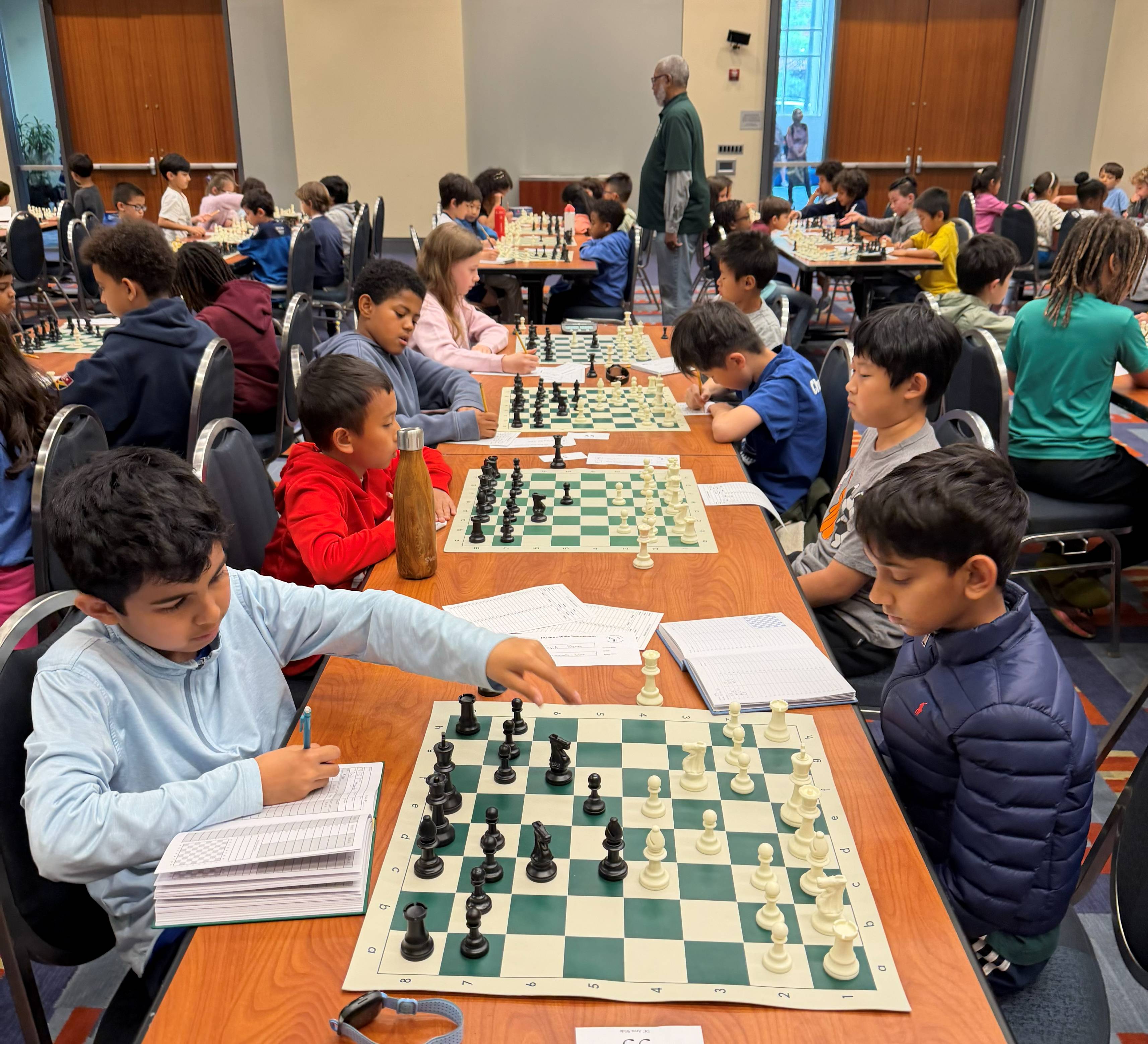
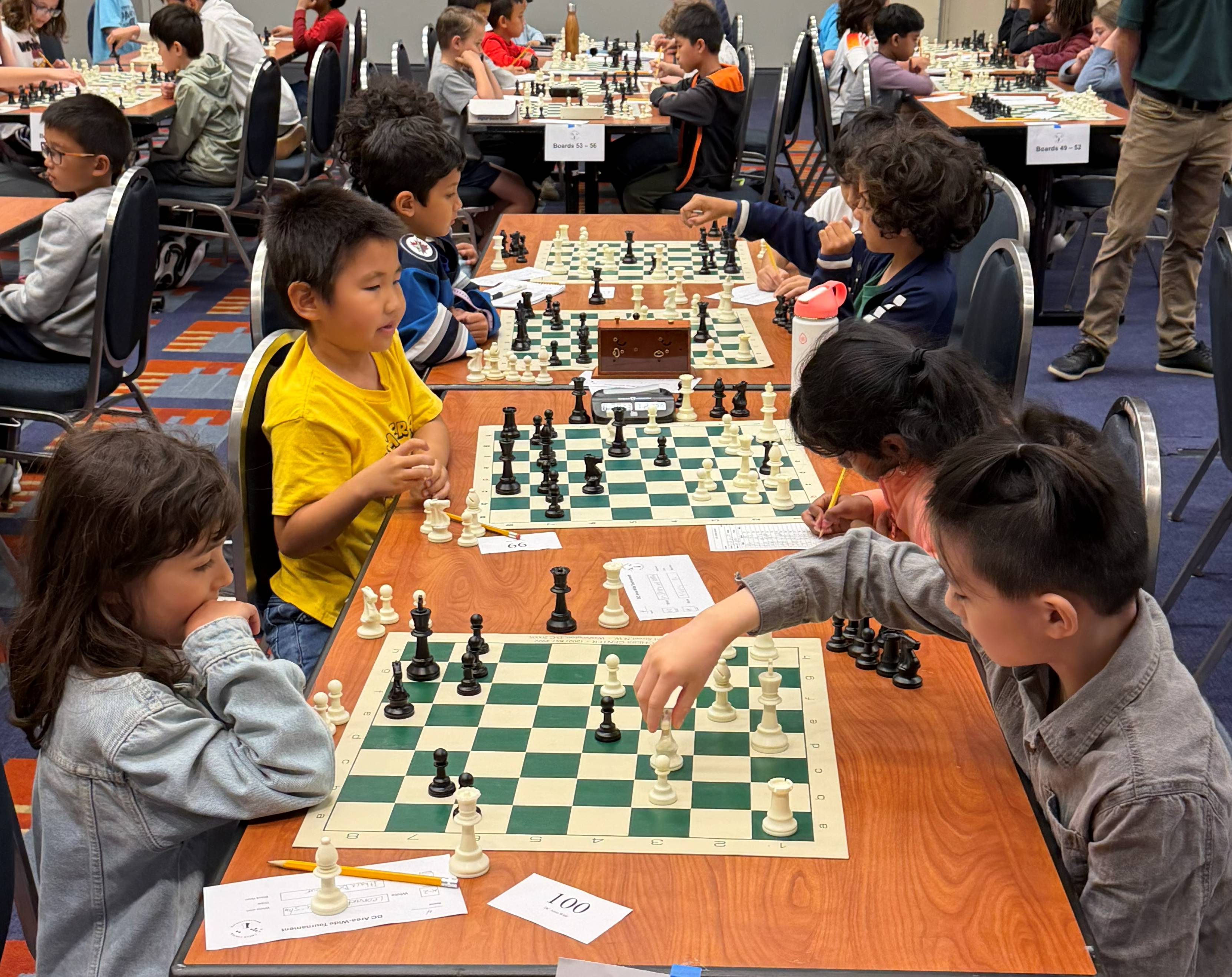
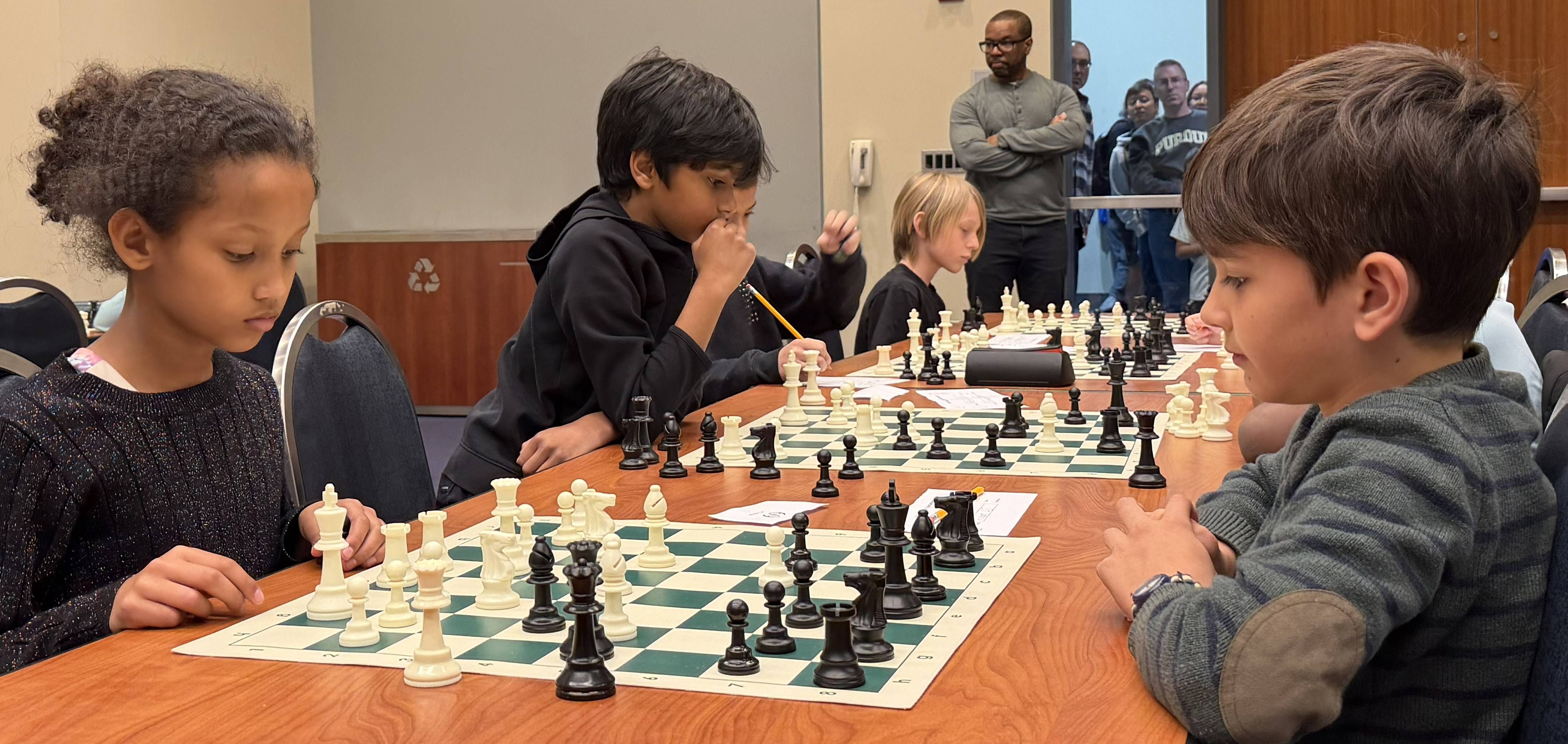
We were pleased to sponsor the D.C. Area-Wide Scholastic Tournament, held on Saturday, April 25, at the Washington Convention Center downtown. It was nice that the Big Chair Chess Club and the D.C. Chess Association contributed to the effort.

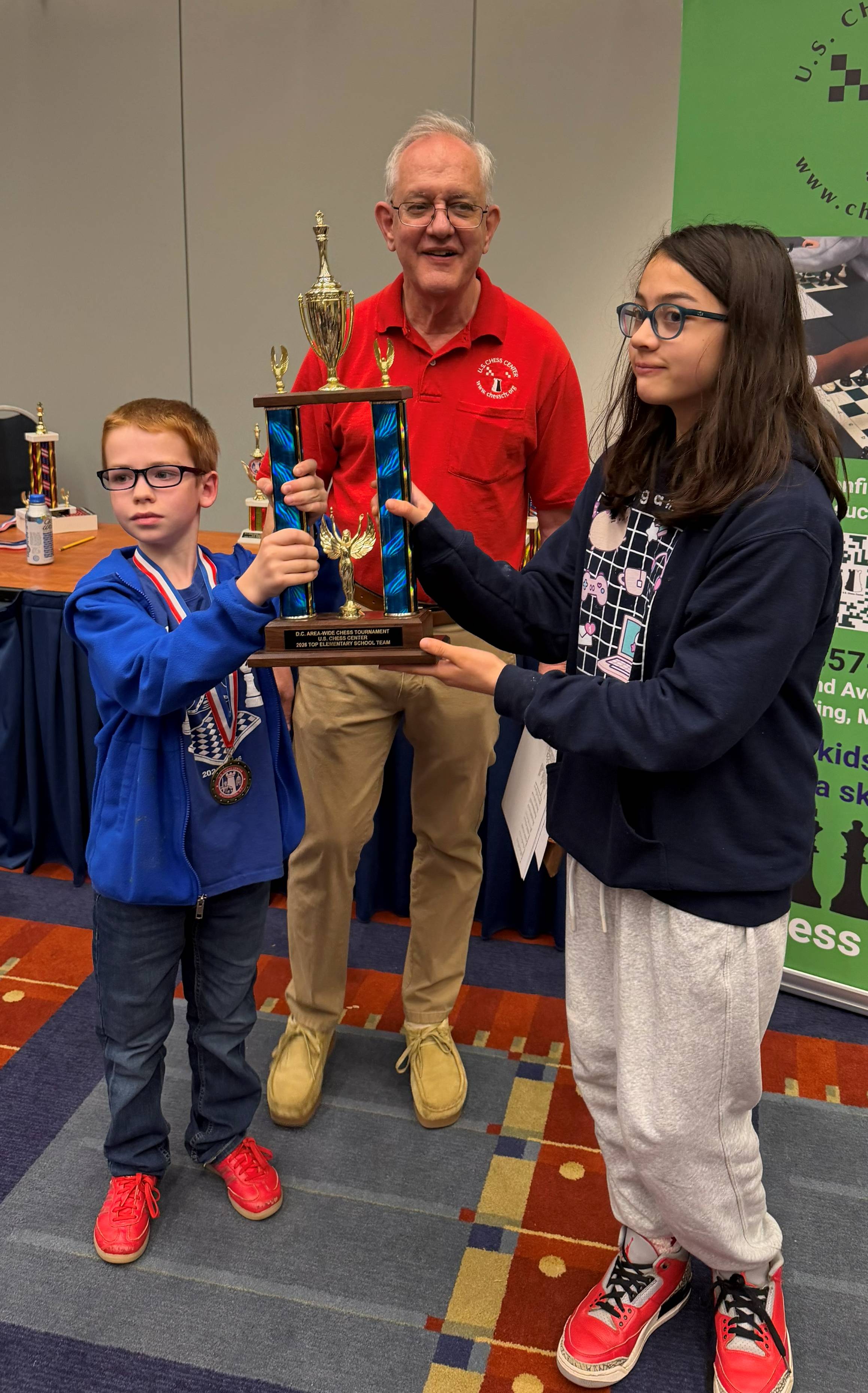
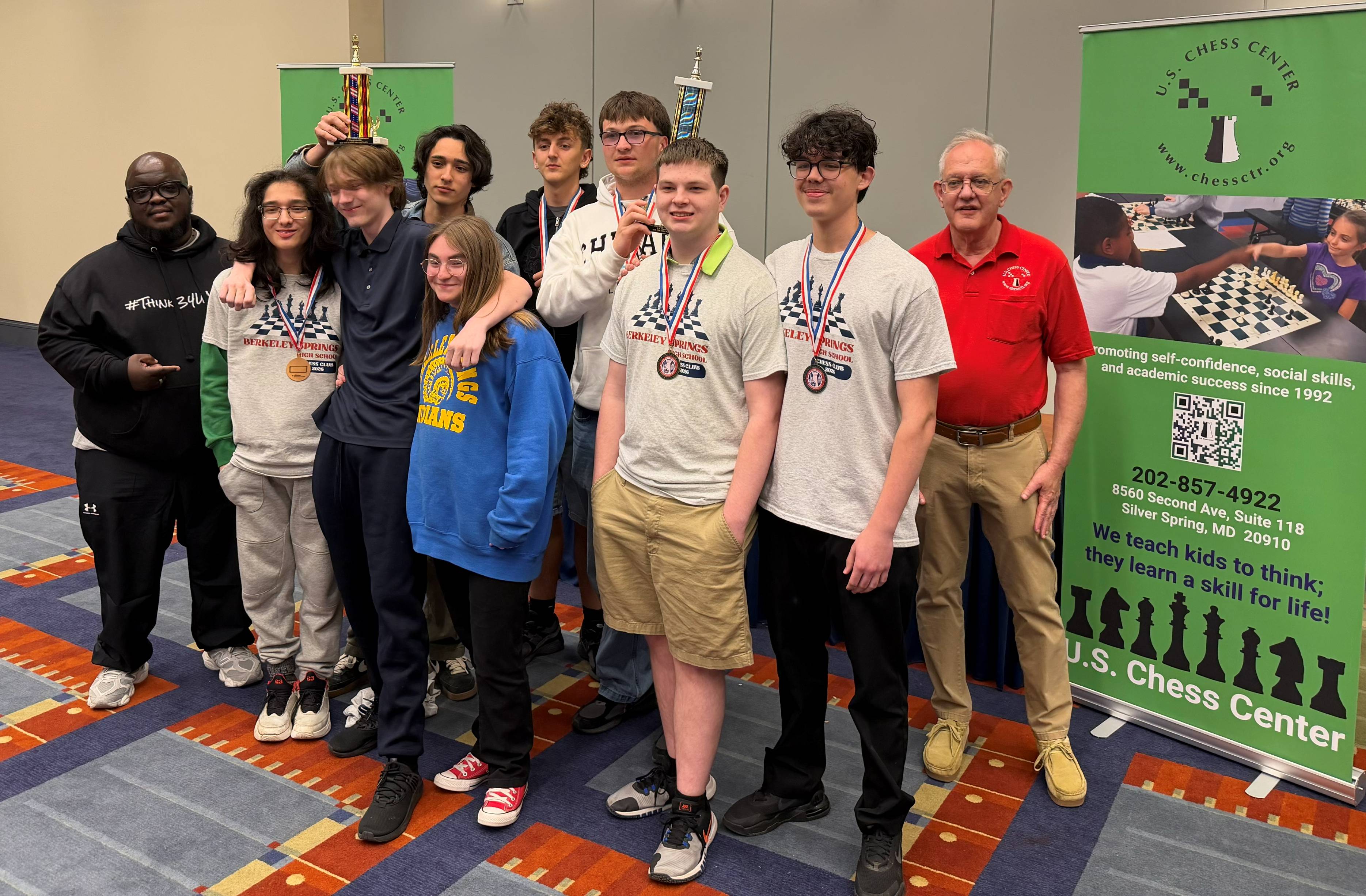
Nearly 200 students representing more than 100 schools registered for the event. Not only were DC, Maryland, and Virginia represented, nine students from Berkeley Springs, West Virginia, made the trek to compete. Berkeley Springs High School won the trophy for the top high school. Georgetown Day School in the District of Columbia was the top middle school, and Churchill Road Elementary in McLean, Virginia, took top elementary school honors.

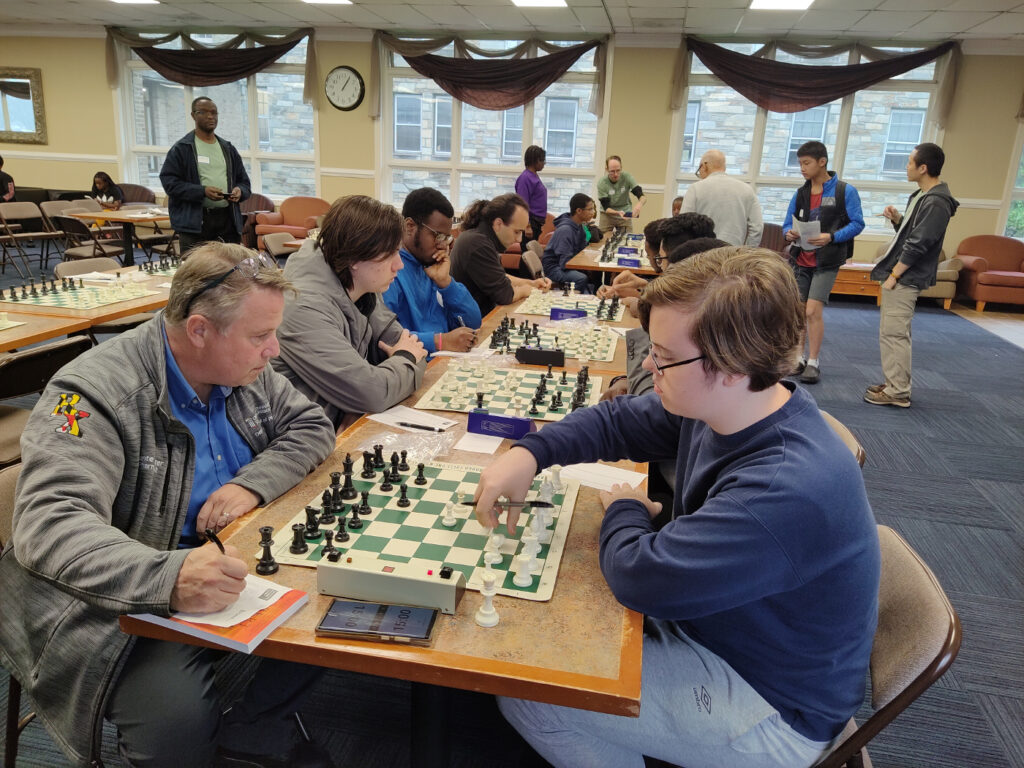
The playing venue was terrific. Players were close enough to others that a sense of community was created, yet there was adequate elbow room for players to be comfortable. The skittles room, similarly, was large enough to accommodate the hundreds of players, family members, and teachers between rounds while not being so cavernous as to allow isolation.

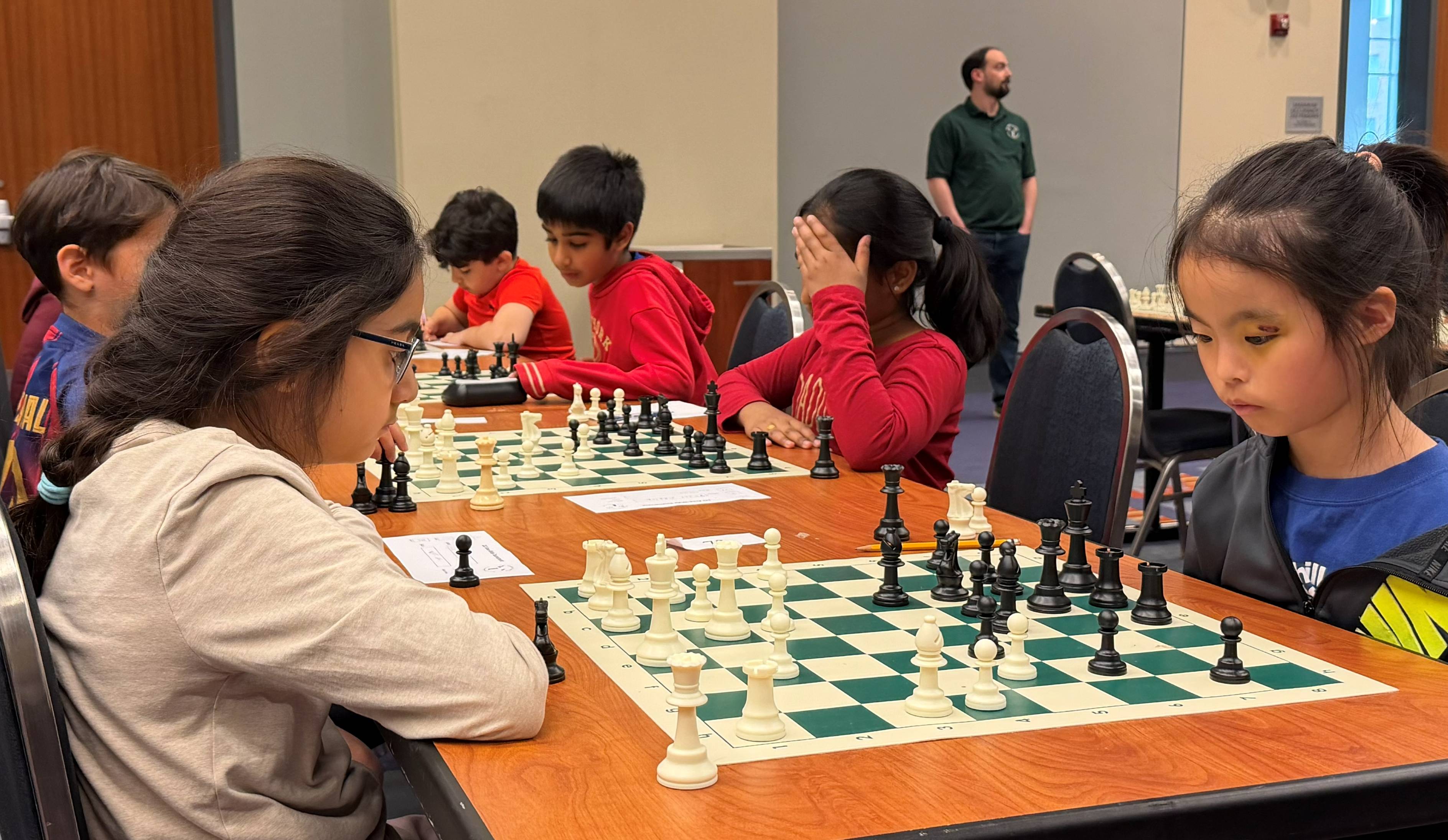
The event was divided into eight sections by grade. The youngest section, for students in kindergarten through second grade, was the largest. There were 34 children vigorously competing, with an Oyster (DC) second grader and a kindergartner from Spring Hill (VA) tying for first place. In the third grade, two Churchill Road friends won all four games. In the fourth grade, another Churchill Road student took clear first place. The fifth grade section ended with another tie, with a student from Prince George’s County’s New Hope Academy tying with a student from Fairfax County’s Kent Gardens Elementary School, each winning all four games.

A D.C. resident attending St. Albans School took clear first in the sixth grade section, a Falls Church student from Henderson Middle School won the seventh grade section, a D.C. International Middle School student won the eighth grade section, and a Montgomery Blair freshman won the high school section.


A student visiting Washington from Estonia entered the tournament and extended the event’s cultural and geographic diversity. The diversity was the point of the tournament. Chess appeals to people from every background. The Chess Center brings together people from many locations and cultures to play. We have been proud to lead a chess trip to another country, and to arrange for internet matches with players from many other countries on four continents.

We expect this to become an annual event.

Camaraderie with Cuban Players
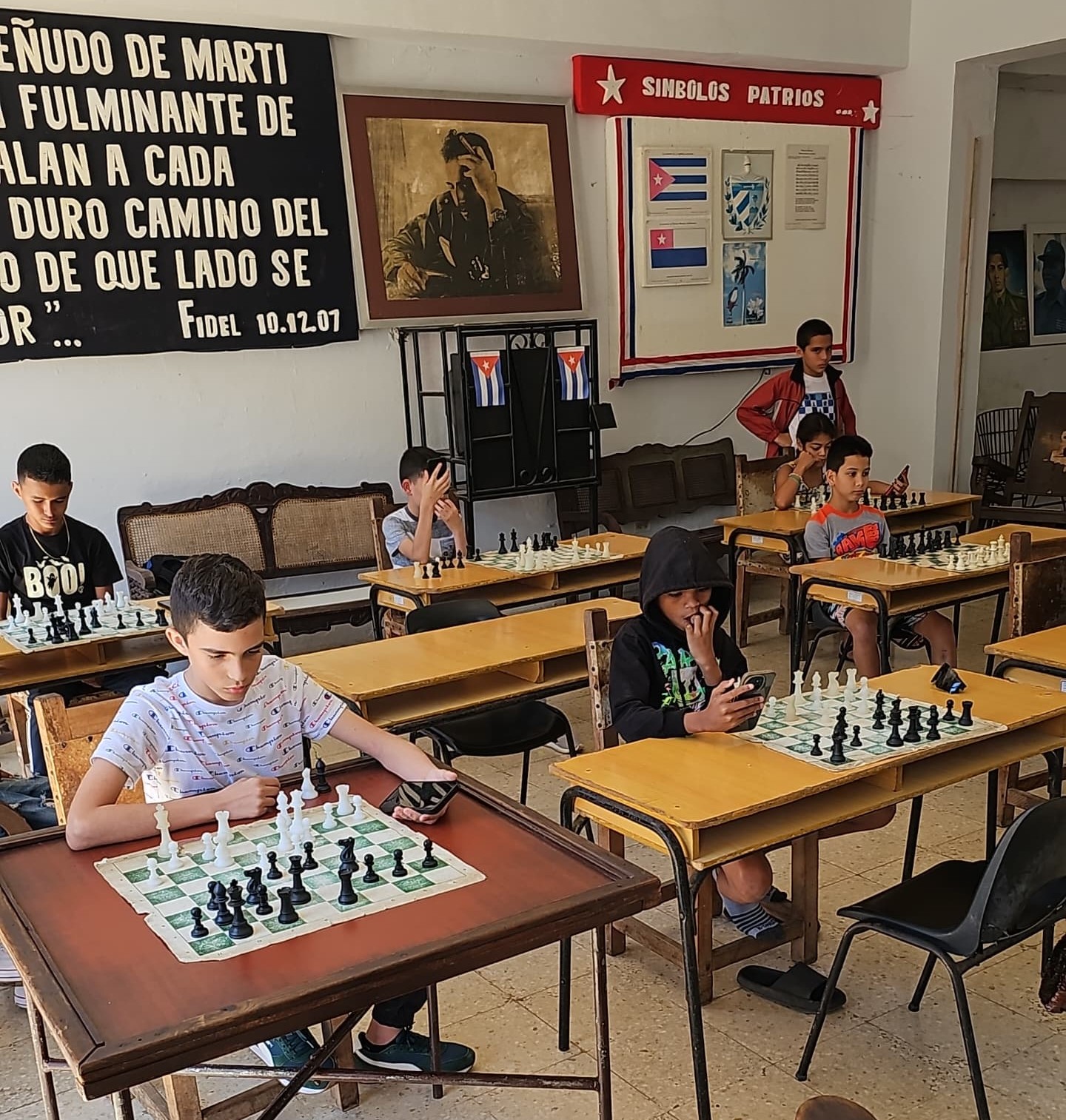
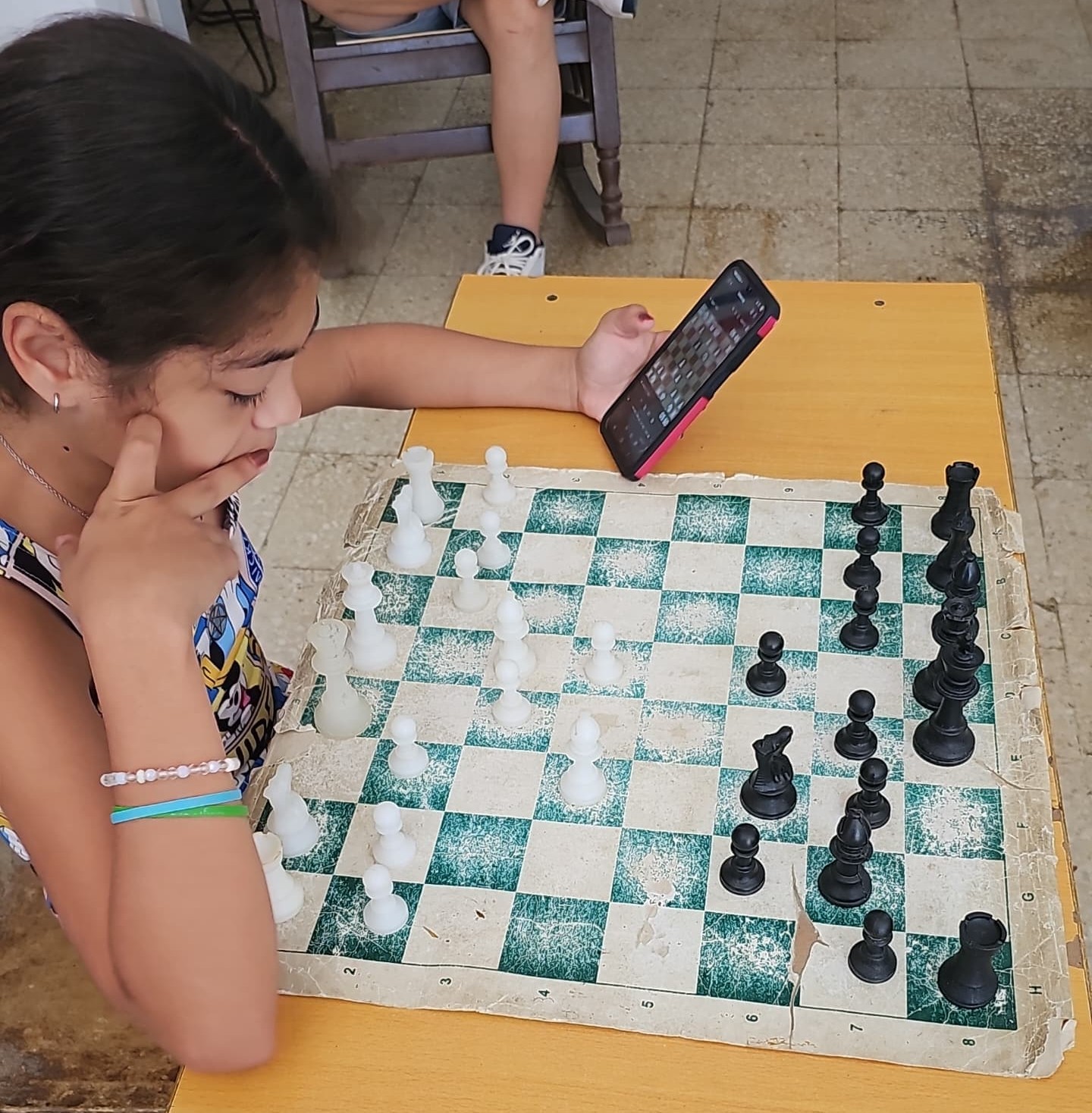
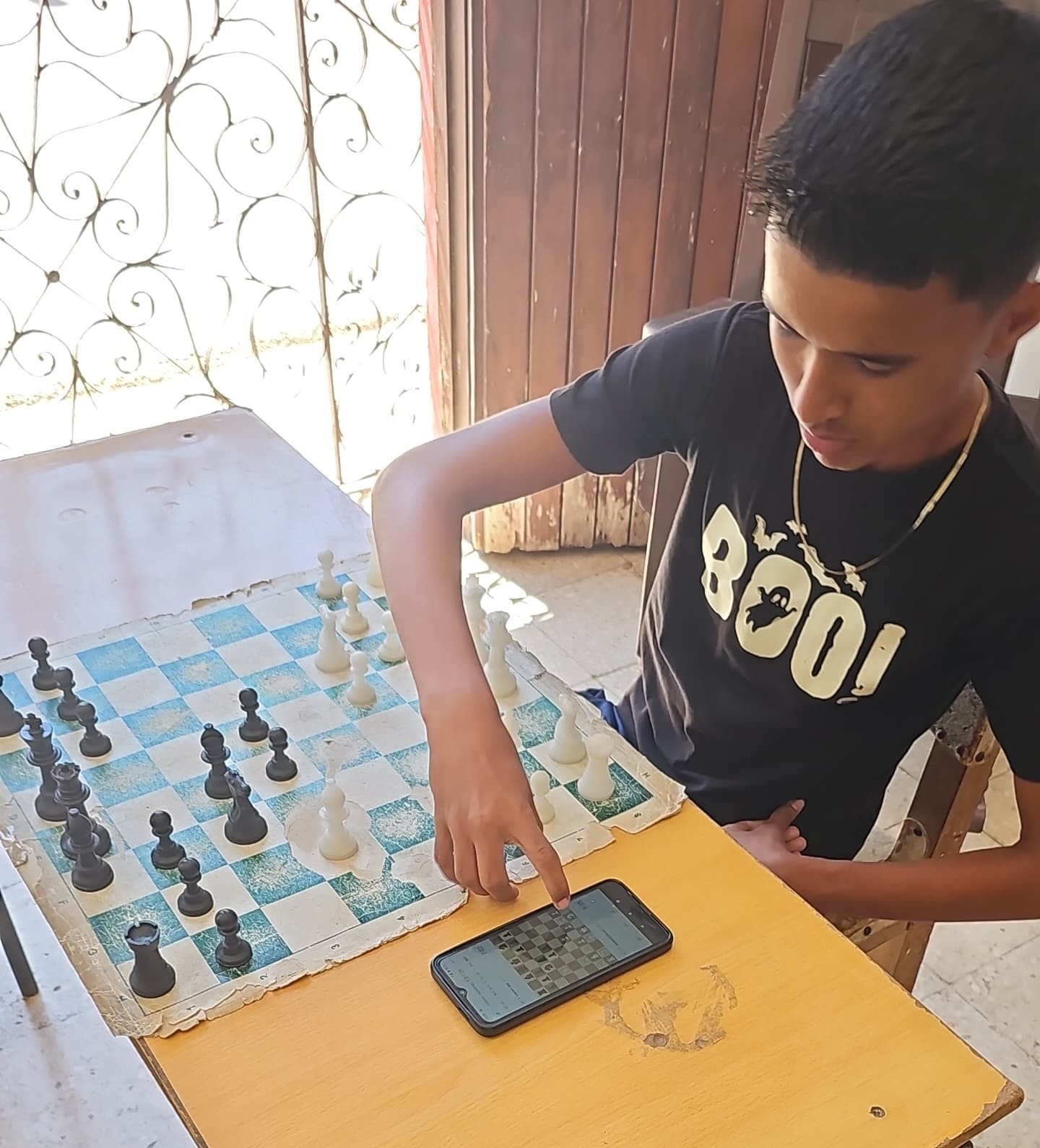
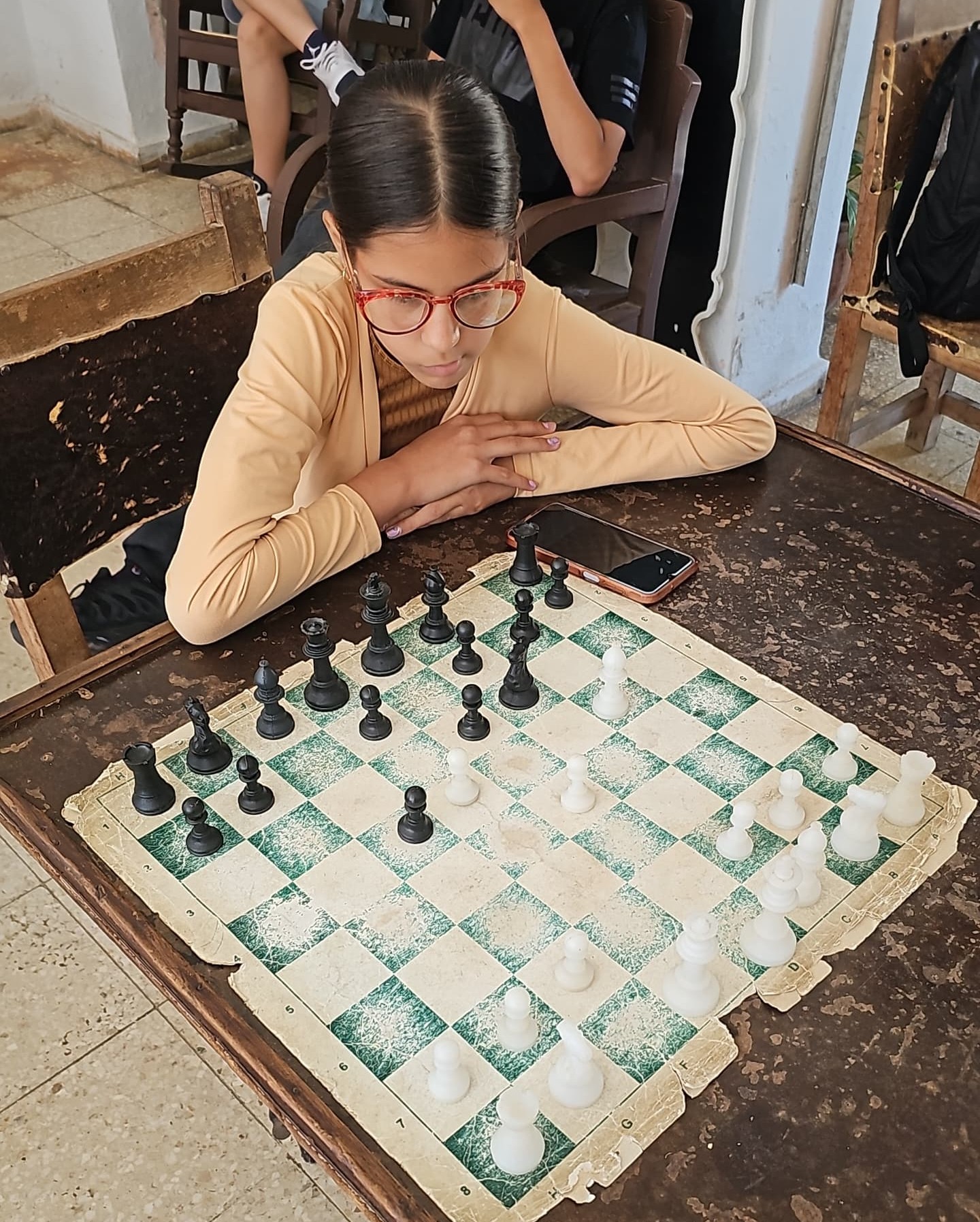
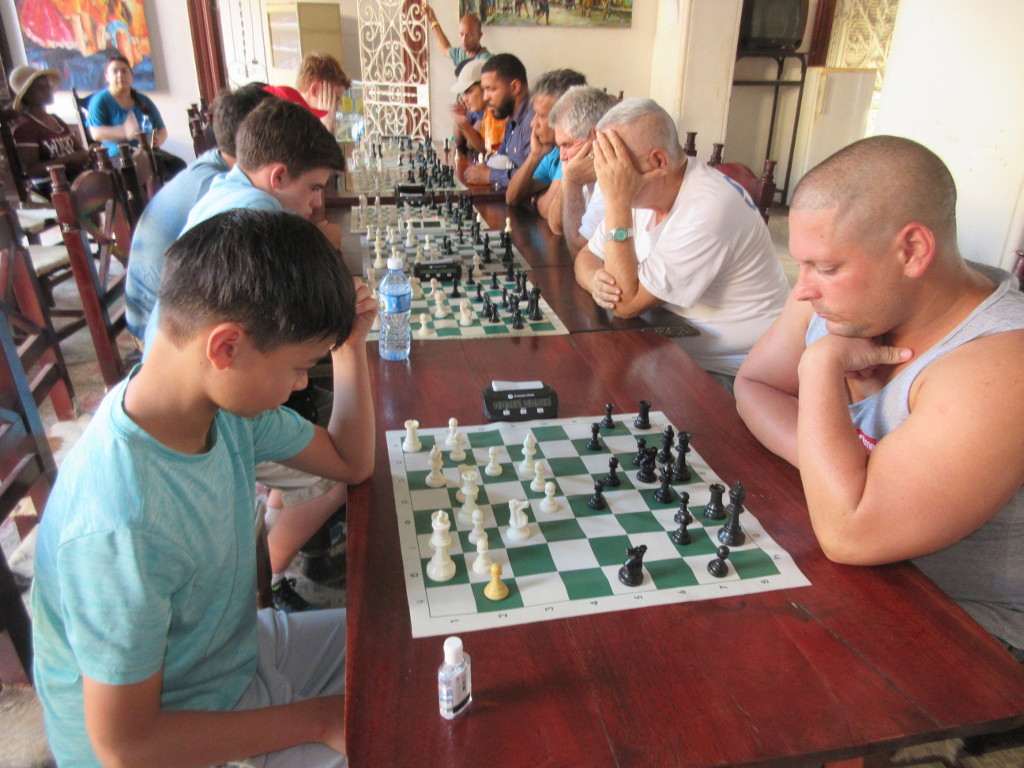
On Sunday, March 22, nine young U.S. Chess Center students joined nine kids from the Caimito, Cuba, chess club for a friendly match.

Chess confers many benefits on its students: improving memory and concentration, learning that actions have consequences, and appreciating the value of patience, perseverance, and planning. However, we believe that making friendships is the most important benefit, and the match with Cuba was a step toward forming friendships that benefit society.

Photos courtesy of Rey Rodriguez

When we learned that children learning chess in a small town southwest of Havana, Cuba, wanted to expand their horizons, we challenged them to an internet match. As impoverished as all of Cuba is, the conditions in which these students participated were even more harsh. For more than a day, the entire electric grid of their nation had shut down.

The Cuban players, and their adult coaches, were as gracious as their reputation suggested. Cuba has perhaps the friendliest population in the world and their attitude towards chess is entirely compatible with ours. The club in Caimito, like the U.S. Chess Center, stresses that chess is a tool to teach children critical thinking skills and to develop friendships with people from other cultures.

It happened that the Cubans lost games because of difficulties with their internet connections. When their system froze and their games were forfeited, there was no complaint, just an expression of looking forward to the next opportunity to play.

We hope to meet them again when their conditions are better, and we think it would be wonderful to lead a delegation of American chess ambassadors to the island to meet over tangible boards.

Big Chair Recognizes DC Chess Luminaries

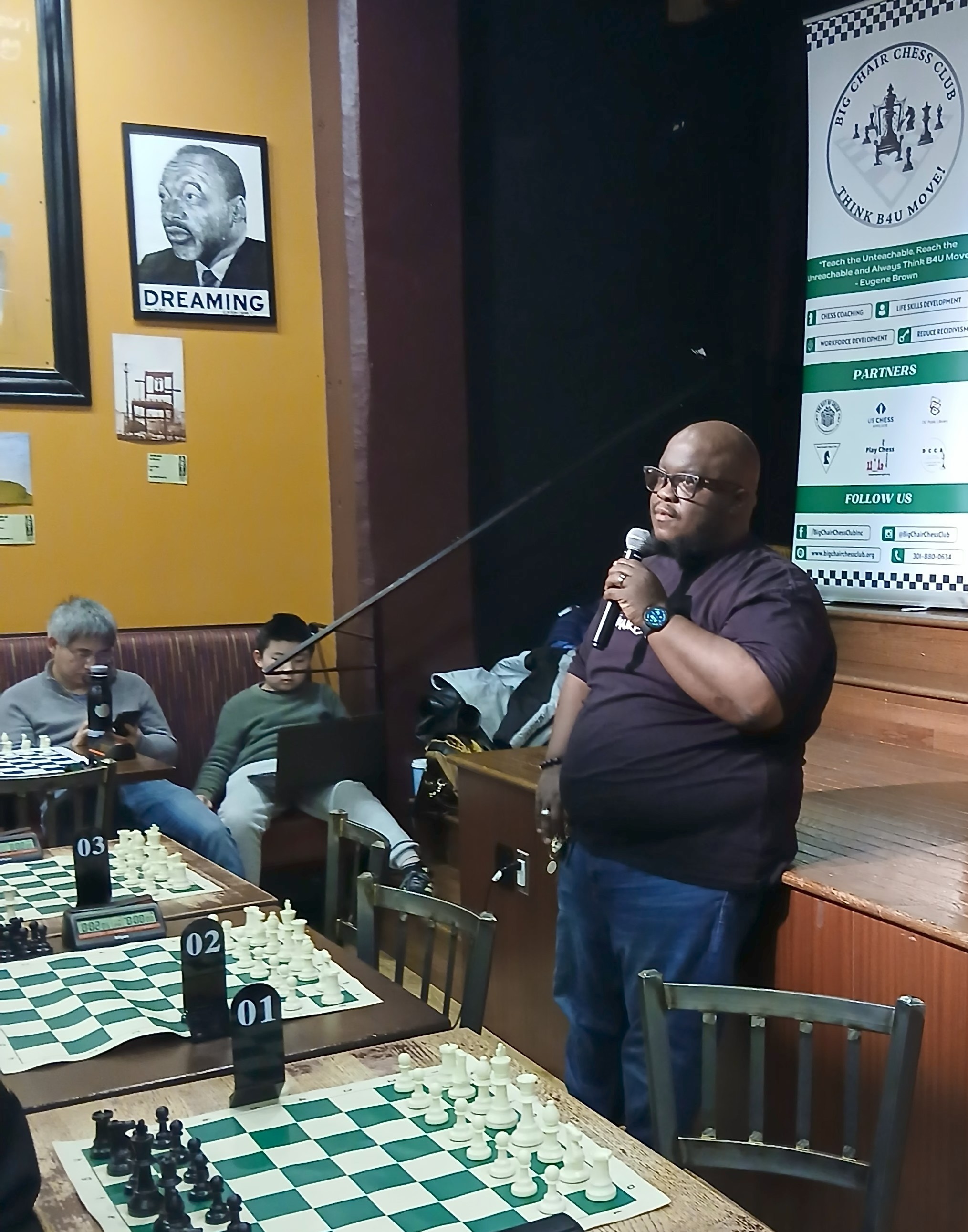
Busboys & Poets in Anacostia hosted another Big Chair chess extravaganza on February 21, with a tournament and poetry slam. It was a sell-out event, with players turned away due to space limitations. Those who came played great chess, enjoyed provoking poetry, and heard from people who made DC chess history.

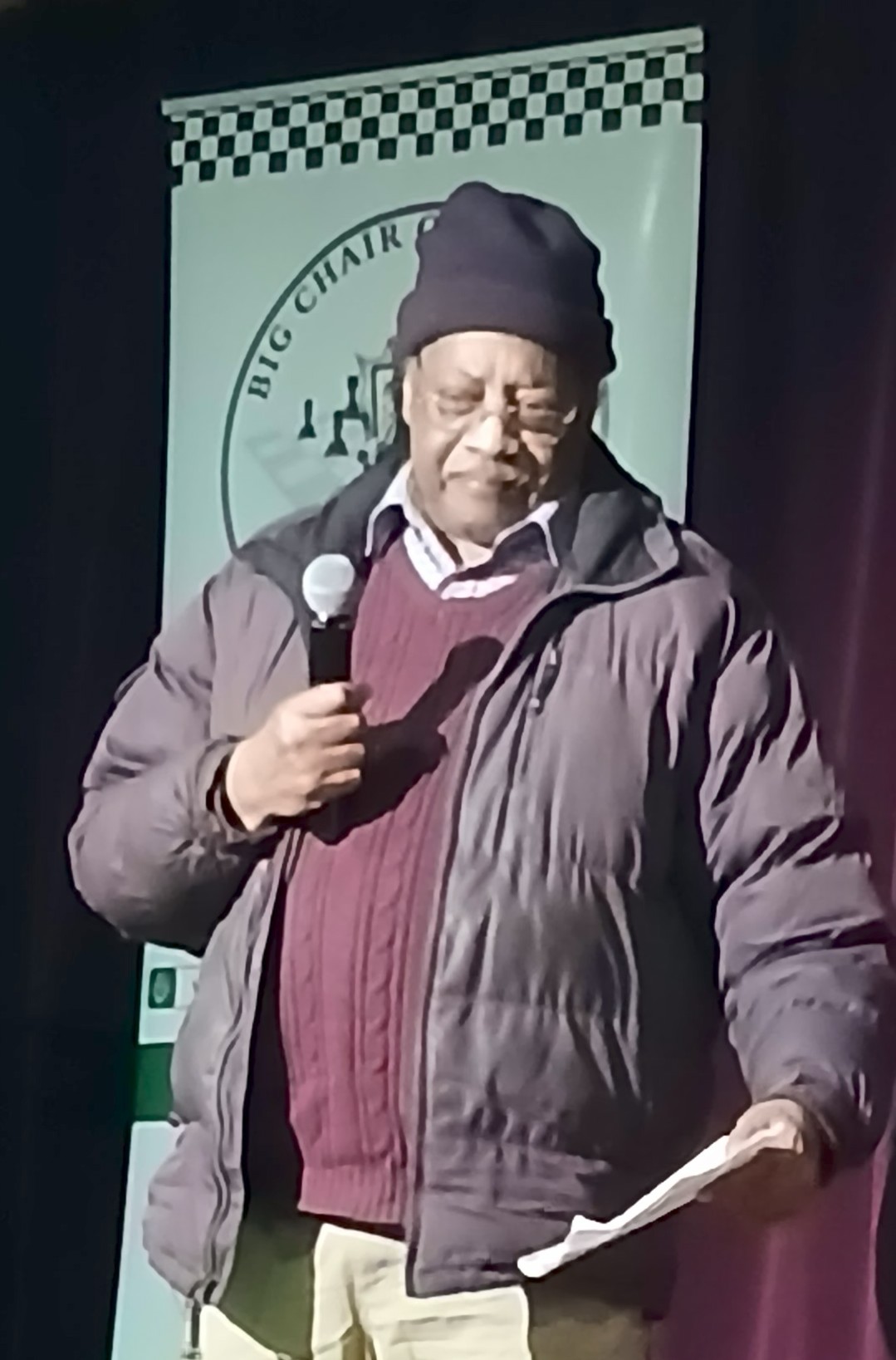
Eugene Brown and David Mehler
Wendell Hankins

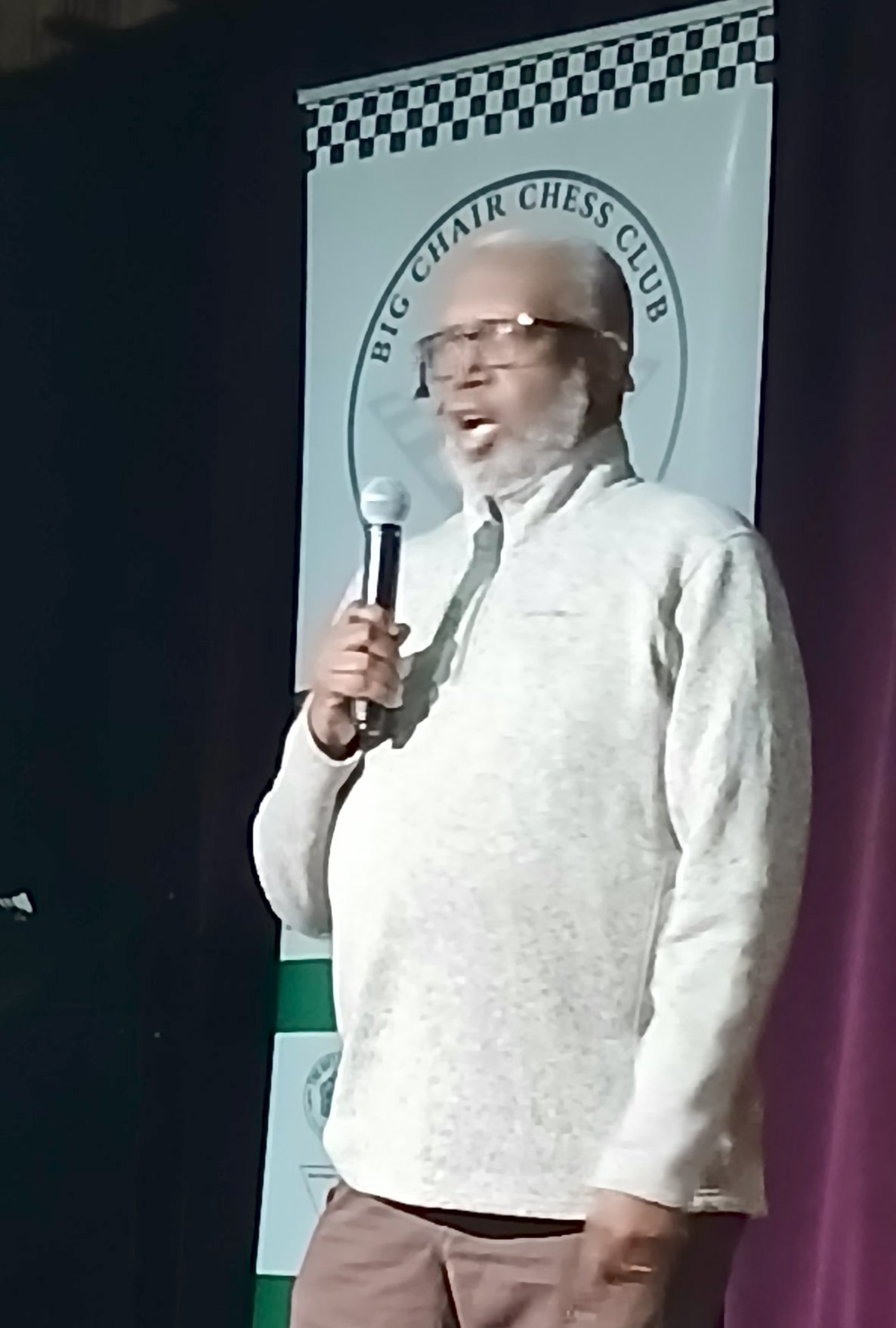
Eugene Brown, the founder of the Big Chair Chess Club (Think B4U Move), returned to Washington to play in the tournament and give an inspiring talk to the assembled group. Wendell Hankins, now the Co-Chairman of the Big Chair Club, directed the tournament and served as Master of Ceremonies for the festivities.

Frank Street, who became the second Black master in the world about 60 years ago, described his history of competition to offer encouragement to the younger players competing, and Ralph Mikell, one of the founders of the DC Black Knights, spoke about its history.

Frank Street
Ralph Mikell

While gray hair was present among the speakers, the theme that chess can be played at every age predominated. The DC Black Knights remains active in the DC Chess League and runs an annual tournament every December. Mr. Street, while no longer competing in over the board tournaments, remains active on chess.com

Wendell Hankins and David Mehler
David Mehler and Frank Street

The U.S. Chess Center has connections to all of the luminaries. Mr. Mikell was the original Treasurer of the Center, a post he held for more than 20 years. Mr. Street sent his son to the Center’s classes when we were located at 1501 M Street, NW, downtown. Mr. Hankins was a student at the Center, and played in many of our tournaments, and Mr. Brown, who was portrayed by Cuba Gooding in the Hollywood production of Life of a King, [Trailer] worked with Center teachers teaching at Kimball Elementary School in Washington.

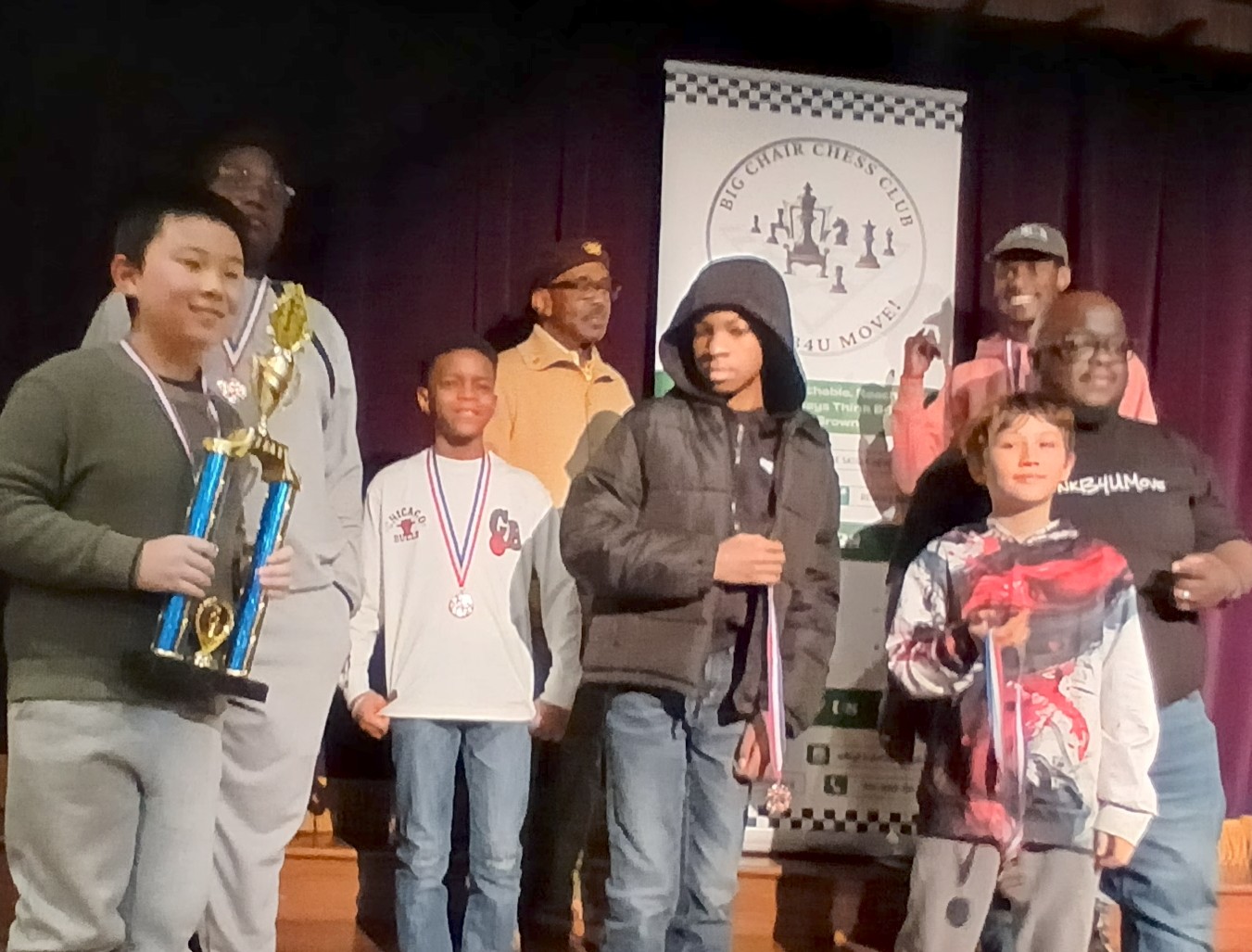
Some of the victorious players at The Poetic Checkmate on Saturday, February 21, 2026

Oprah, GM Maurice Ashley and the Chess Center Connection

Maurice Ashley, the first Black grandmaster, featured heavily on the latest episode of Oprah Winfrey’s podcast exploring the importance of character development and learning.  Winfrey, alongside Wharton professor of psychology Adam Grant, explored Ashley’s journey as teacher for the Harlem-based “Raging Rooks” chess team of young students. Despite lacking the resources enjoyed by many of their chess contemporaries at private schools, the team, coached by Ashley, rose to compete for national championships by focusing on disciplined learning and toughness in the face of adversity.

Ashley’s outlook on teaching chess echoes many philosophies similar to what we espouse at the U.S. Chess Center.  When he began his work with the Raging Rooks team Ashley, as Grant observed during the interview, did not task his young students with memorization or early specialization (intense focus on one individual aspect of the game, to the exclusion of others).  These are practices that can drive short-term improvement at the expense of long-term development and interest in the game.  Instead, Ashley’s approach emphasized the development of character traits such as confidence and resilience, to ensure that his charges were equipped psychologically to deal with the various unpredictable challenges chess threw their way.

Ashley earned the grandmaster title in 1999, and in the decades since then he has been one of America’s best-known ambassadors for the game of chess, especially among young people.  In 2011, during one of his many trips to Washington, D.C., he performed a simultaneous exhibition at the U.S. Chess Center’s former location on M Street.  We were happy to see that some photos from that simul made it to the Oprah segment (these photos are shown beginning at the 22 minute, 6 second mark of the video).

Whether or not you are a chess afficionado, if you are interested in the role of perseverance, resilience, and curiosity in driving long-term success, Ashley’s story is well worth your attention.

American Chess Magazine: Worth Supporting

American Chess Magazine is a publication worth reading and supporting. In its most recent issue (#46) it published an article I wrote about the Alex Sherzer Memorial Mid-Atlantic Masters, and for the first time I read the entirety of the 82-page glossy. 

Having not played competitive chess in more than 30 years, I found some of the grandmaster analysis beyond me but can appreciate the effort that went into it. The magazine enlists many of the world’s top players to prepare articles and analyze games. The amazing Polgar sisters, Judit, Sofia, and Susan, seem to be regular contributors. Many other well-known names have had by-lines: GM Boris Gulko, GM Wesley So, GM Maurice Ashley, GM Joel Benjamin, GM Alex Fishbein, as well as our local phenom WGM Jennifer Yu.

Most of the articles are written so well that they are accessible to every level of chess-playing reader. The American Chess Magazine receives awards for the high caliber of its journalism every year.

The articles cover all aspects of chess, from current events in America, to tournament results all over the world, to human interest stories and chess history, and, in this most recent issue a special feature of strong female players beating strong male players.

In addition to the best players in the world contributing to the magazine, one of the editors is a high school American girl who impresses both over the board and off. There are great book reviews. The layout is superb. I do not see a weakness in this bi-monthly periodical and believe it offers quite a bit for people interested in chess at any level, although those trying to improve their skills will benefit most.

Chess – a Vital Remedy to the National Epidemic of Loneliness

In 2023, the Surgeon General of the United States warned of the negative health consequences resulting from feelings of isolation, and the benefits of more connected communities. Robert Putnam famously called attention to the problem in Bowling Alone more than 20 years earlier. The problem is not going away, but chess can be a part of the solution.

Among our founding documents, the U.S. Chess Center has argued that chess should be used as a tool to promote social skills. Teachers and psychologists are now sounding alarms as to the importance of having young people meet in person. Engaging another person across the table in a game of chess has long been recognized as a valuable social experience.

Benjamin Franklin, one of many chess players among our nation’s founding fathers, hinted at the valuable diplomatic benefits of the game in his notes. (The Papers of Benjamin Franklin Vol. 21. pp. 363, 408, 437, 444, 550) Challenging others to play chess has served as a gateway for engaging in a variety of social and diplomatic activities.

One of the first programs created by the U.S. Chess Center, our Saturday morning class known as Chess Kids, brought together children of all demographics to play chess together and learn that what they have in common is vastly greater than those things that separate them. The friendships formed over the board created long-lasting bonds.

The Center teaches students only in groups, not individually. Peers compete, encourage, and learn together in healthy ways. Whether or not the students in a class share demographic traits seems to be irrelevant to the formation of friendships. Kids interact with other kids, and that is beneficial to them all.

Playing online does not confer the same benefits. People playing online do not see their opponents, and do not have constructive social interactions at the end of their games.  We regularly see kids engage in other activities, including having non-chess conversations, playing sports or other games, or going out for a meal at the conclusion of a game. Online, players often cannot be certain that they are actually playing a human. While many students use online resources to enhance their skills, playing chess across the board is a different, and better, game than playing through a screen.

At the U.S. Chess Center, we hope that professionals and policy-makers will consider promoting chess as a mental health tool.

Authoritarians Ban Chess

When the Taliban announced that chess was a forbidden activity in Afghanistan, it justified the prohibition by stating that the Game of Kings might serve as a platform for gambling. In Washington, DC, many years ago the police vice squad arrested chess players who were playing for stakes on Dupont Circle. The criminal cases were dismissed when the court ruled that chess is a game of skill and the outcome of each game is not based on chance, but on conditions wholly under the control of the participants.

Forbidden-x3-AI
Afghans-Playing-Chess-AI

For chess to be gambling, there needs to be at least one element of the activity that the people at risk of losing money do not control. However, placing bets on games that others are playing is gambling. It does not seem likely that the Taliban is concerned that people are betting on chess games played in Kabul tea rooms. There must be another factor to attract the interest of the authoritarian rulers of Afghanistan.

The explanation might be found in the history of other totalitarian governments that have banned chess. Those bans did not last long. Louis IX was the first absolute leader, as far as we know, to ban chess from the territory under his jurisdiction. His edict was honored in its breach, and whether it was formally withdrawn or just ignored is not clear. Similarly, Mao Zedong banned chess in 1966 as part of his effort to remove western thought from China. At the same time, he banned Einsteinian physics, and relativity was not acknowledged in the world’s most populated country. Mao’s ban on chess was enforced more effectively than was his ban on relativity, shown by China’s successful testing of nuclear weapons. When China decided to join the rest of the world, its new leaders promoted chess and its talented players became some of the best in the world.

Authoritarian leaders commonly discourage creative thought among their subjects. Chess teaches its players to engage in critical thinking, discerning the differences between good ideas and bad ones. Another common thread of authoritarian leaders is their desire to concentrate wealth in the hands of a small number of people, and to discourage their populations from rebelling against those who keep them impoverished. Chess teaches its players to create plans to improve their circumstances in a rules-based structure, so it is understandable that the Taliban would not want their subjects to learn the skills chess promotes.

Come play Chess at the Kensington Day of the Book Festival on April 27, 2025

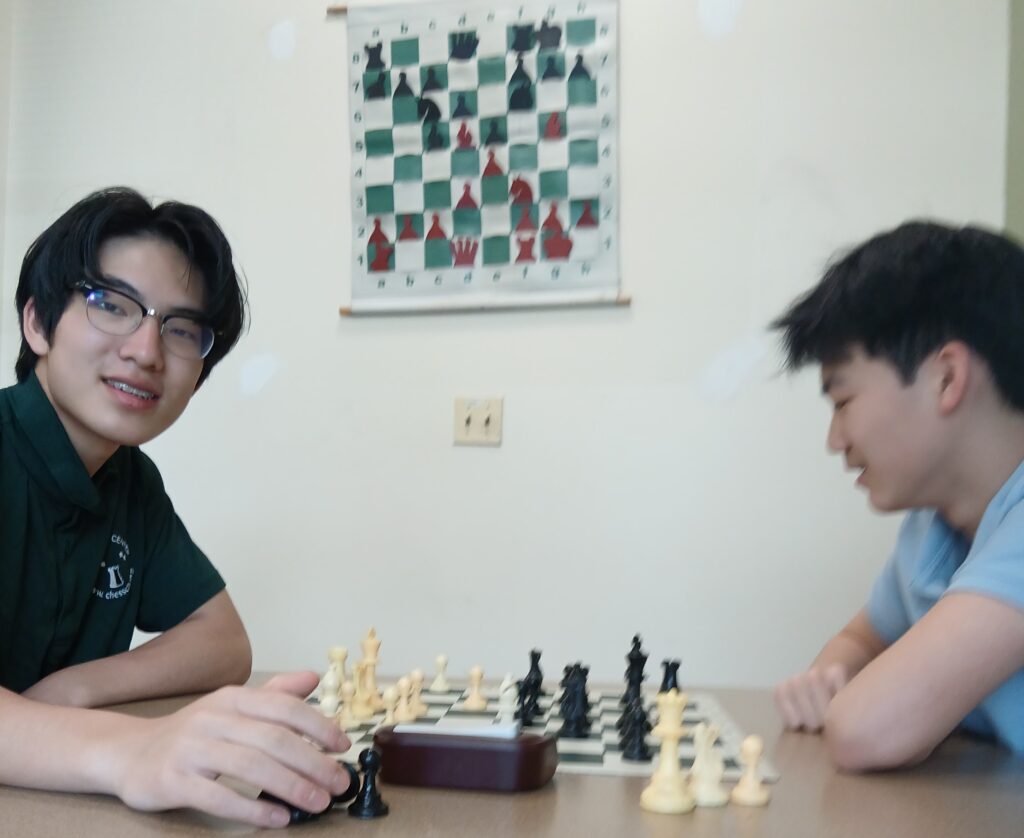
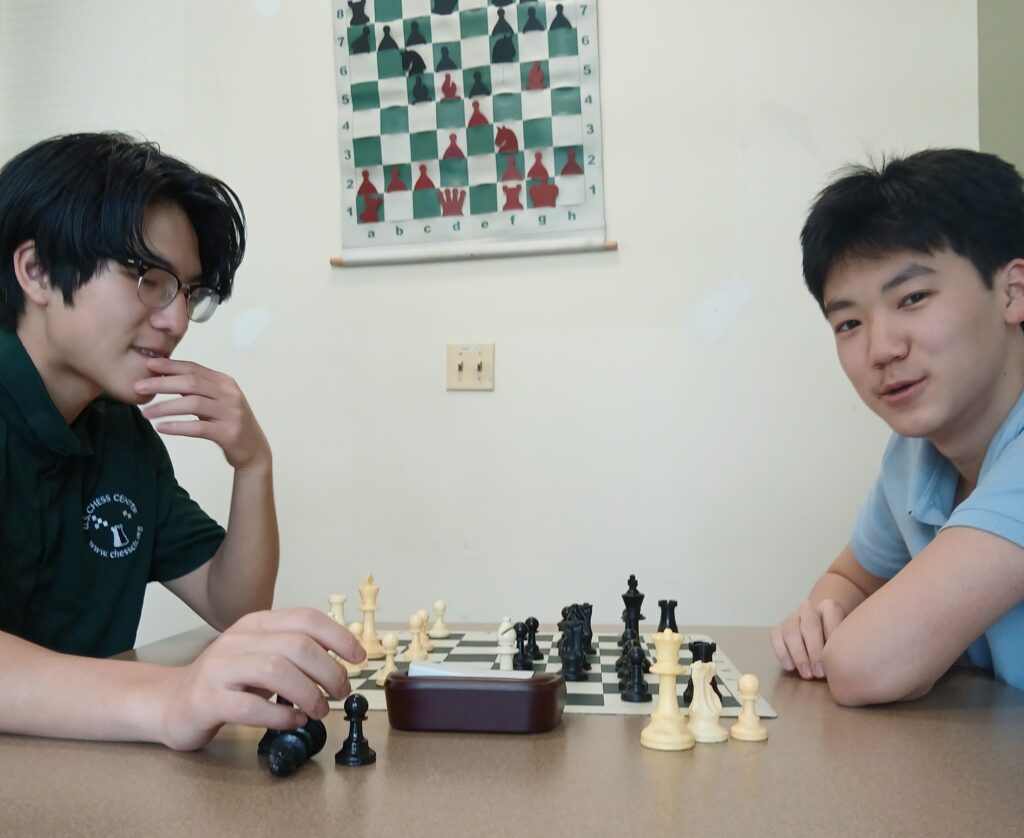
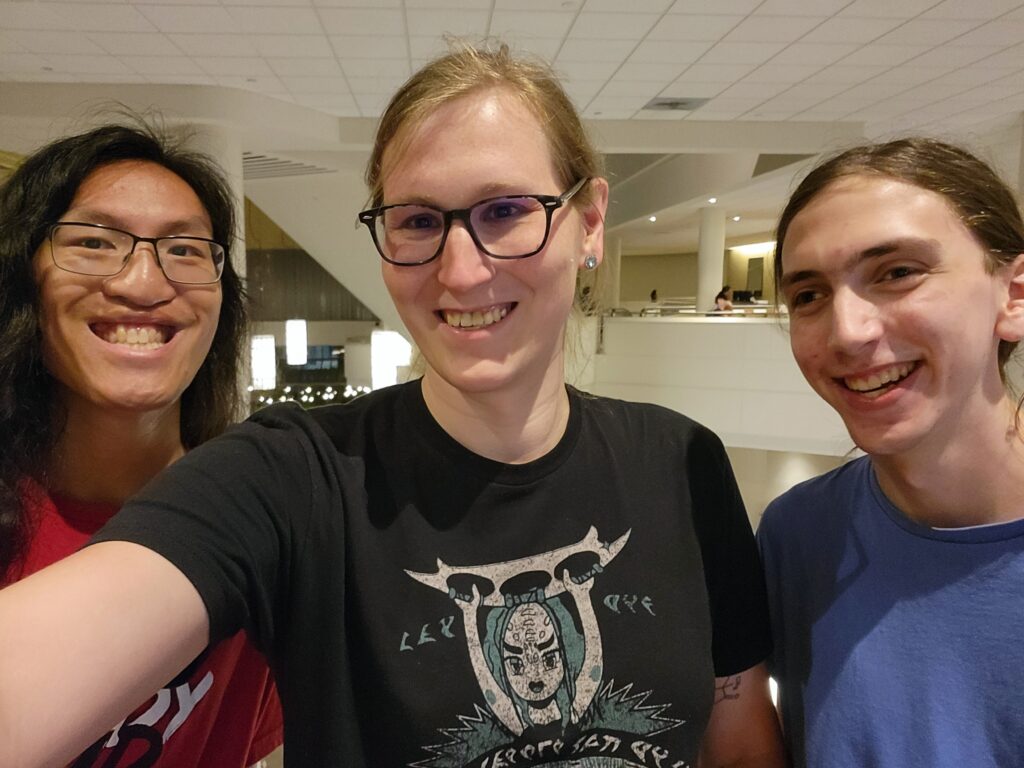
The U.S. Chess Center is pleased to join the Kensington Day of the Book Festival again this year. On Sunday, April 27, two of our ambassadors (pictured above), Lang (on left) and Kyle (on right), will play all-comers from 11:00 am – 4:00 pm. Both of these young players are National Masters.

This will be the third year we have joined the festivities and we hope that many chess players will come for the books and chess.

Ambassadors Lang and Kyle have volunteered with us before. Lang performed two simultaneous exhibitions in Silver Spring earlier this school year, and Kyle helped us with a camp in Oakton this past summer.

Chess is Universal

Berkeley Springs, West Virginia, is only 90 minutes from the District of Columbia, but as a town of 750 residents it can feel like a world away. Chess provides common ground between our communities.

High School Spanish teacher Pedro Miguel, an experienced tournament player from Spain, has created a successful chess team that finished second in their state last year. They have higher ambitions for this year.

To help them, we donated more than 20 books to help them start a chess library in their community. We also plan to stage a virtual match between their students and ours. Because they are not so far away from us, they will try to come to DC for an in-person tournament.

Chess is universal and can bridge cultures. Whether opponents are rural, small town, suburban, or urban, no matter their politics, without regard to their native languages, we can all enjoy playing the game together.

Sr. Miguel (with the help of his daughter Itaca) accepts chess books to start a library

Book Review – The Queen of Chess

Judit Polgar is an inspiration to chess players throughout the world. The strongest female player ever, she is outspoken in encouraging girls, women, and children to learn to play chess.

The Queen of Chess was written by Laurie Wallmark and illustrated by Stevie Lewis.  Written and illustrated for children, this book avoids the problems many books about chess have faced. Polgar’s story needs no embellishment. She became an international chess sensation by the time she was nine years old, and during her career she defeated 11 World Chess Champions, including Garry Kasparov and Magnus Carlsen when each was ranked the best in the world.

The book takes its readers through her history, starting when she learned the rules of the game at age five. Children will be able to relate to her path and should find inspiration from the success that came from her dedication and hard work.
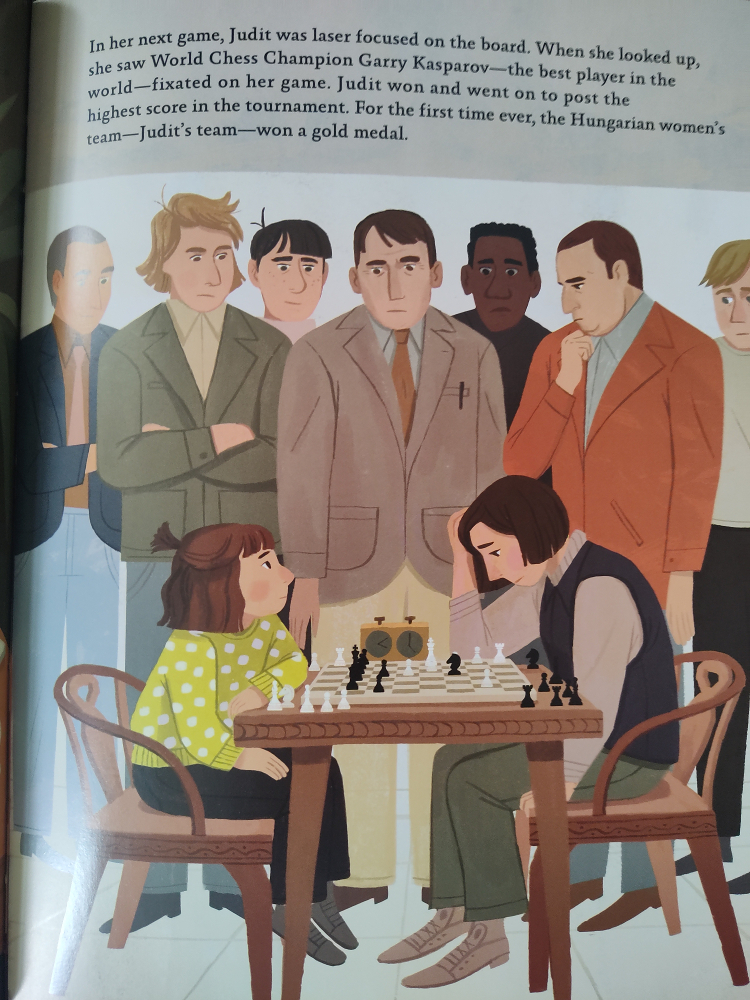
Appropriately, the book avoids all mention of controversies. There is no mention of the game she lost to Kasparov that was marred by his violation of the touch move rule. Later, Polgar beat him after he had suggested that she was a “circus puppet” and that women should stick to having children instead of playing competitive chess. Polgar faced discrimination both because she is a woman and because she is Jewish. That she overcame irrational prejudice in a game of logic and skill makes her journey more impressive, but it was good judgment to avoid those subjects in a book for children.

Polgar has written her own series of instructional chess books for children. Chess Playground, illustrated by her sister International Master Sofia Polgar, is in use in schools in her native Hungary and in China. https://www.juditpolgarmethod.com/

The Queen of Chess offers a few basics about the game and provides a puzzle that comes from a game Judit won at age nine. The book is not designed to teach chess but provides a wonderful introduction to one of the heroes of chess. Published by Little Bee Books, this book is a suitable gift for students in the primary grades (kindergarten through third grade).
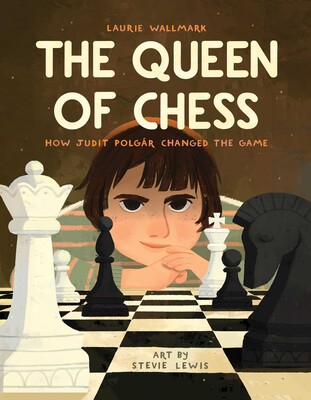
Cover photograph courtesy of Simon & Schuster.

Chess champion, David Sherman, will play a simultaneous exhibition at the Day of the Book Festival on Sunday, April 21 in Kensington, MD

The 17th Kensington Day of the Book Festival will be on Sunday, April 21. We will be there to play chess with anyone who wants to join us. https://www.dayofthebook.com/

In addition to the chess tent, there will be live music, authors reading from their books and engaging in discussions, children’s programs, cookbook demos (and quite a variety of food vendors), poetry readings, and booksellers.

For many years, Allan Savage performed a simultaneous chess exhibition at the festival. Allan, a friend of the Center, passed away unexpectedly during the pandemic, and the Center has picked up the torch.

David Sherman, a former Maryland and DC Champion who used to teach chess with us, volunteered last year and again this year to continue Mr. Savage’s tradition.

Looking for Chess Books? The U.S. Chess Center also has over a thousand used chess books for sale, starting at $1.00 and up and your purchase helps support the charitable mission of the Chess Center.  Peruse our inventory of used chess books at https://chessctr.org/usedbooks/

Judit and Sofia Polgar Played a Simul in the German Bundestag to Honor Israeli Hostages
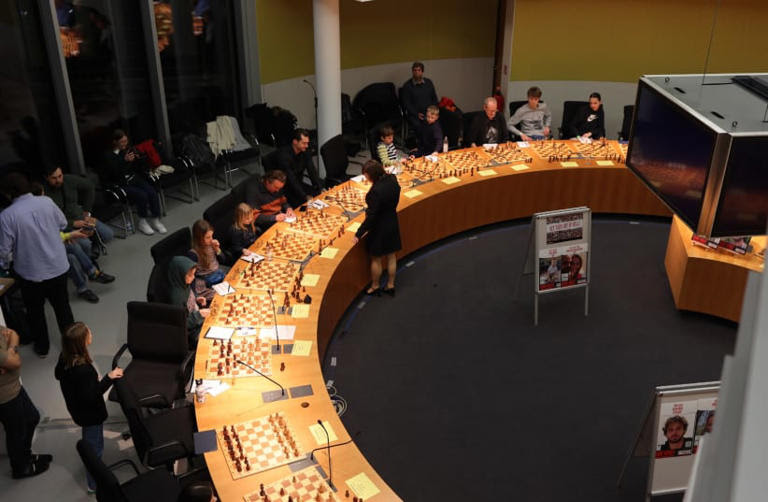
We try to inculcate our motto of Friendship, Courage, Integrity to all our students. We see examples of these traits in many strong chess players, although, regrettably, not all.

The best female player ever, Judit Polgar, with the active participation of her sister, International Master Sofia Polgar, recently performed a simultaneous exhibition in the German Parliament in Berlin to honor the hostages taken from Israel into Gaza. The exhibition strengthened the ties of friendship between Germany and Israel, while allowing 40 chess players the opportunity to face the Polgar sisters, who are retired from active competitive play.


The simul in the German Bundestag on March 14

With anti-Israel sentiment running high in many places, it took considerable courage to speak out for the hostages. Judit is a chess player of unquestioned integrity. Despite facing discrimination as a young player, which deprived her as a teenager of opportunities to compete for the World Chess Championship and to represent her country of Hungary in the Olympiad (she was offered, but declined, the chance to play in the Women’s Division of each), she steadfastly worked to become the strongest female player ever.

In rising to the top of the chess world, Polgar defeated 11 current or past World Champions including Magnus Carlsen and Garry Kasparov when they were each ranked #1. She broke Bobby Fischer’s record of becoming the youngest grandmaster ever and did so before the changes in the system that allowed the rank of grandmaster to become more common. She is the only woman ever to be ranked among the top ten players in the world.

When she speaks on an issue, the world listens. Now, she speaks on the topic of hostages. As she recently said, “Speaking up for hostages is not political. It is humanitarian. The world of sports is asking all athletes to heed the call to protect the safety and security of all hostages.”

The exhibition was staged by Chess4Solidarity, a collaboration between Germany and Israel.

Judit and Sofia Polgar, pictured in 1988

U.S. Chess Center students recently played in the World Amateur Team Chess Championship in New Jersey

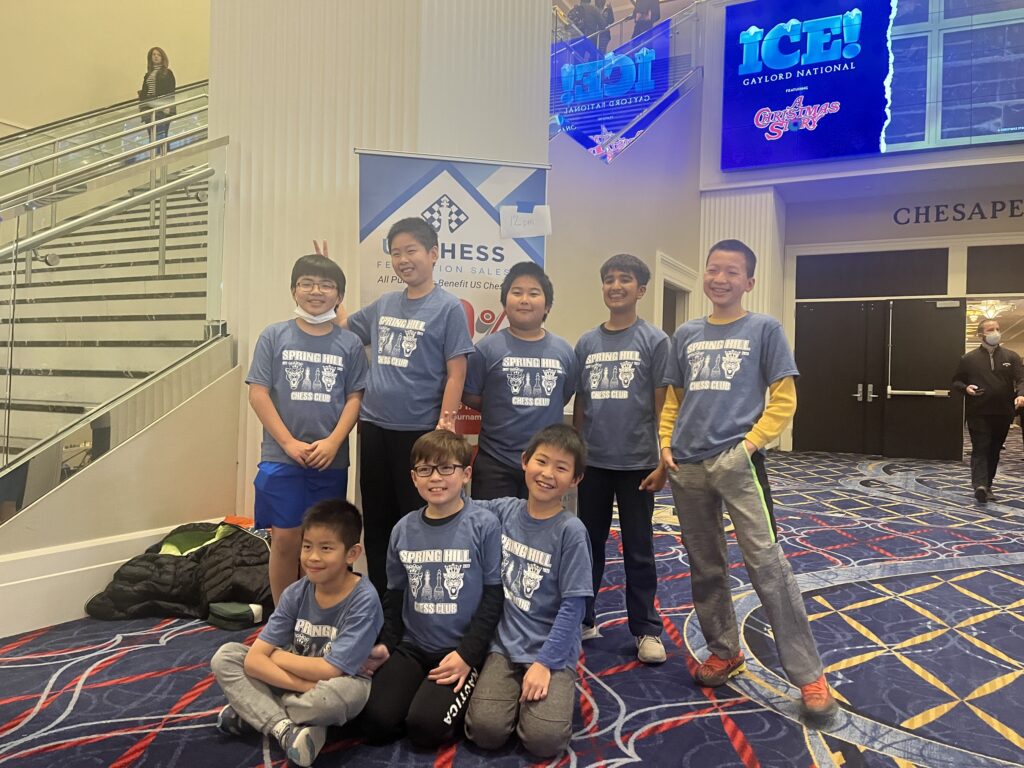
Two teams associated with the U.S. Chess Center played in the World Amateur Team Chess Championship in New Jersey over the weekend, and both returned with impressive awards. The Spring Hill Elementary team was the top elementary school team, and our team from the Theophilus Thompson Club was the top team with an average rating of under 1900. Congratulations to our students!

The World Amateur Team Championship, which was the US Amateur Team Championship when I was competing, was one of my two favorite tournaments (along with the U.S. Open) each year. Instead of scoring wins and losses as individuals, scores are based on the team results. Each team is four players, and they line up against the four players of another team. If a team scores more than two points (one point per win, a half-point for a draw) they score a win. With two points, a team draws that match.

Teams often decide on clever names, and the tournament offers special prizes for creative names. My favorite came from a group of women from the DC area about forty years ago. They dressed in nuns’ habits and called themselves Our Lady of Perpetual Check.

The team format relieves a lot of the pressure ordinarily experienced in chess tournaments, making the event more relaxed and fun. As a player in a team competition, if I lost my game but the team won, I could be happy. If I won my game and the team lost, I could still be satisfied that I did the best I could for the team. If I won and the team won, that was best of all. When I lost and the team also lost, we could accept that our team was out-matched and we would move on to the next round. In short, the result of each game and match was tempered and every round was a fun experience.

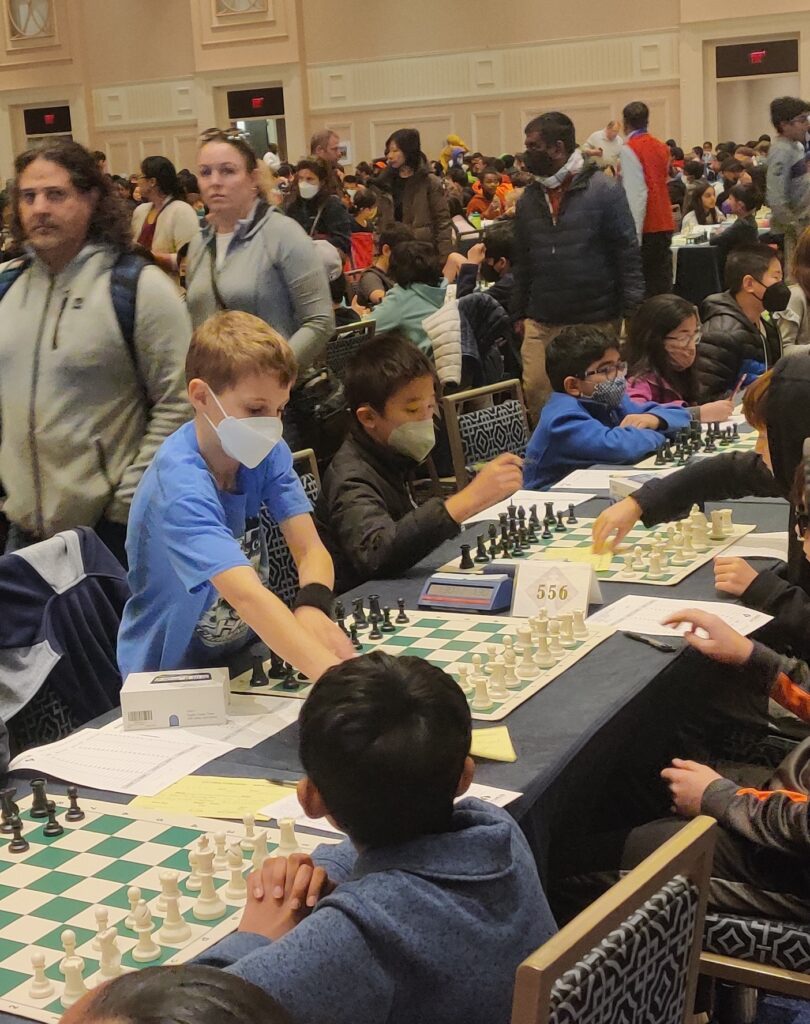
Both the Spring Hill Elementary and the Theophilus Thompson teams consisted of players who had experience in big tournaments, so being in a ballroom with more than 1,000 players was not daunting. The teenagers went 4.5/6; the elementary team scored 3.5 points in the six rounds.

Book Review – “The Match of All Time” – An Important Contribution to Chess History
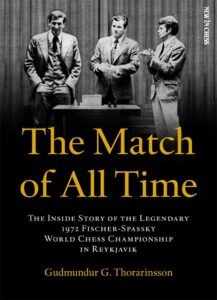
No American made a greater impact on chess than Bobby Fischer, and his phenomenal ability would be reduced to an interesting series of chess tales had he not captured the World Chess Championship in the most-watched chess match ever. The Cold War implications of the 1972 match brought attention to chess from the whole world, including millions of people who had never played the game.  

Gudmundur Thorarinsson’s book, The Match of All Time, featured as New in Chess’s eBook of the Week for this week, describes in brilliant detail the intrigue, luck, and phenomenal effort that allowed this match to be played. No one was in a better position to record the drama: Mr. Thorarinsson was the President of the Iceland Chess Federation at the time the small island nation produced the winning bid for the match, and it was Mr. Thorarinsson who negotiated with all the parties involved with the match that changed the chess world forever.

The Match of All Time sets forth the context of the match, provides excellent short biographies of Fischer’s predecessors as World Chess Champion, and describes coherently and concisely the personalities of the parties who made the match a reality. Thorarinsson’s perspectives are fascinating, as he was the organizer of the event and ultimately responsible for all its details. While he was never privy to the discussions taking place in America or the Soviet Union, he was the force that brought the two sides together despite the many obstacles thrown up by the American player and the leadership and bureaucracy of the Soviet Union. 

The Soviet World Champion, Boris Spassky, described by everyone who knows him as a perfect gentleman and sportsman, wanted to play the match. His score against Fischer up to the point of the match (three wins, two draws, no losses) gave him confidence. Soviet leaders, however, were more concerned with keeping the championship title a Soviet possession, which it had been since 1948. Those who ran the Soviet Union needed to be convinced, both by its own citizens and by the match organizers, to allow Mr. Spassky to play against Fischer, who flouted the norms and rules of the sanctioning body of chess, FIDE.

Of course, dealing with Fischer was not easy. He refused to commit to play and made demands of the organizers, which became more strident as negotiations lurched forward. Even by the time of the opening ceremony, it was not clear that Fischer would board the airplane in New York to come to Iceland to play. With the intervention of National Security Advisor (and later, Secretary of State) Henry Kissinger, Fischer finally showed up. Thorarinsson describes his involvement in getting leaders of the greatest antagonists of the Cold War to agree to have a chess match played.

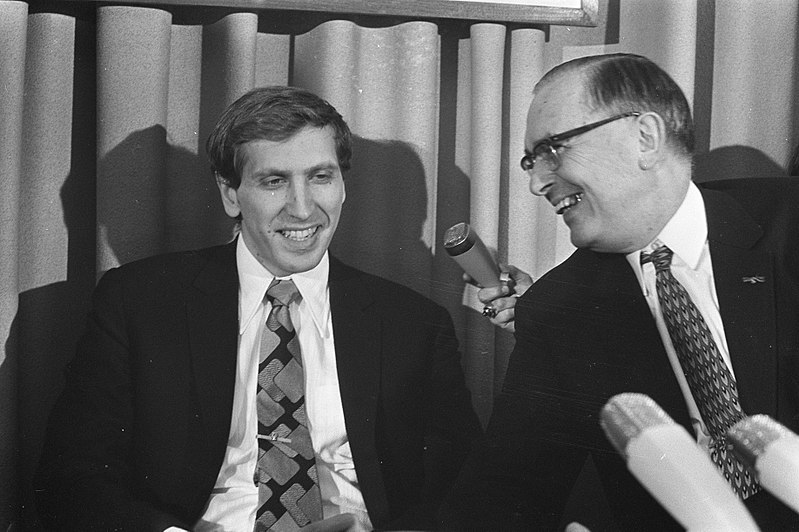
Bobby Fischer (left) in 1972 with then-FIDE President, Max Euwe. Photo courtesy of Wikimedia Commons.

Thorarinsson criticizes the United States for the way it treated Fischer late in his life, complaining that our country wanted to incarcerate the chess hero it had celebrated in 1972. It is true that Fischer was indicted by a District of Columbia grand jury for alleged crimes committed by playing chess in former Yugoslavia. It is also true that he was not indicted during the George H.W. Bush administration, when the match was played, and was not indicted during the eight years of the Clinton presidency. 

It was not until years later, after Fischer commended the 9/11 attacks on the United States, that the George W. Bush administration decided to prosecute Fischer. (Boris Spassky, who performed the same acts as Bobby Fischer, and as a French resident was subject to the same UN sanctions as pertained to Fischer, was never charged with a crime.) However, as a chapter of Julius Kaplan’s legal memoir,
Secrets and Suspense, suggested, the prosecutors had no great interest in putting him in jail but wanted to confiscate much of Fischer’s money.

Nobody but Thorarinsson could have written this book, and its value for the posterity of chess history cannot be matched. It is wonderful for the game that he wrote the book, and it will be a valuable resource for chess historians to come.

Photos From Robert Katende’s Visit to Lanham

If there are any better tools than chess to teach life skills to young people, we don’t know what they are.

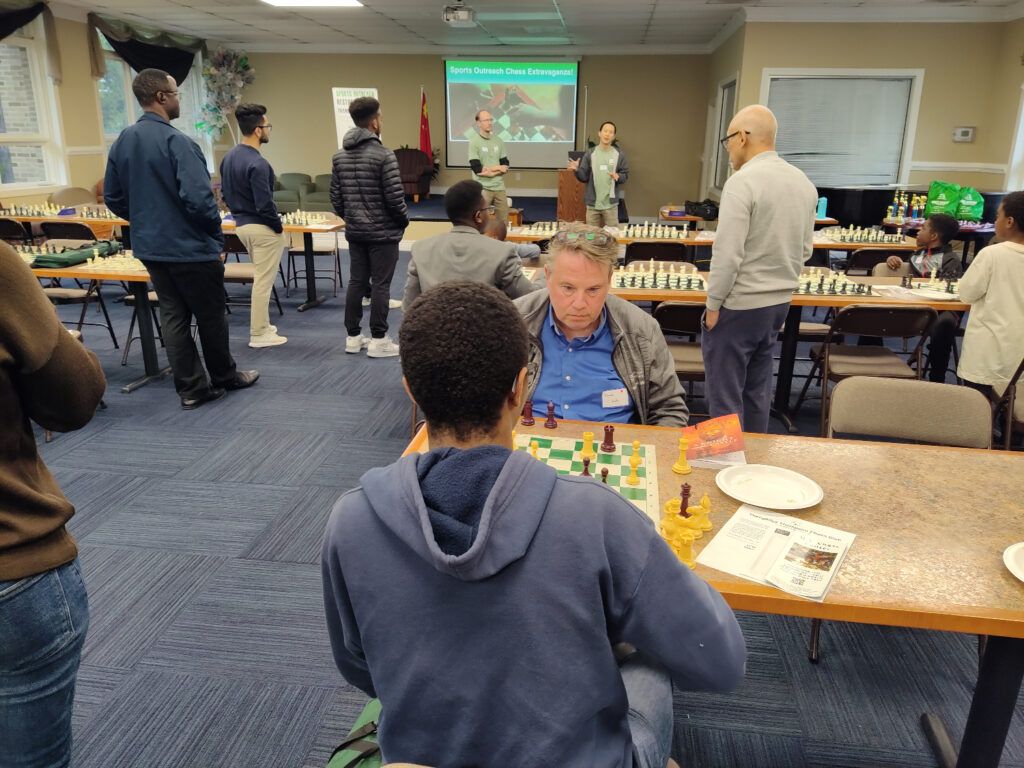
Robert Katende has spent the last two decades helping impoverished Ugandans escape some of the hardest slums in the world using sports, especially chess. Every year, he comes to the Washington, DC, area to host a free chess tournament, most recently this past Saturday in Lanham.

Several volunteers, including Scott Low and Andy Tichenor, helped make the event fun for children and adults. (Scott played in events at the U.S. Chess Center as a child and teenager. That was 15 years ago, and we are proud that we contributed to his development as a chess player and terrific human being.)

Katende’s best-known student is Women’s Candidate Master Phiona Mutesi, who was illiterate and hungry when she entered his chess classes in Katwe, Uganda, looking for food. Now a college graduate and an analyst for Deloitte, she credits learning chess for developing the skills she uses as an adult.

Hundreds of students come through Sports Outreach, Katende’s organization to help impoverished Ugandans and we appreciate that the Washington Education Zone in Lanham provided beautiful space in which to host a screening of Disney’s movie Queen of Katwe, the free tournament, and a simultaneous exhibition of chess. We will see them back here next year.

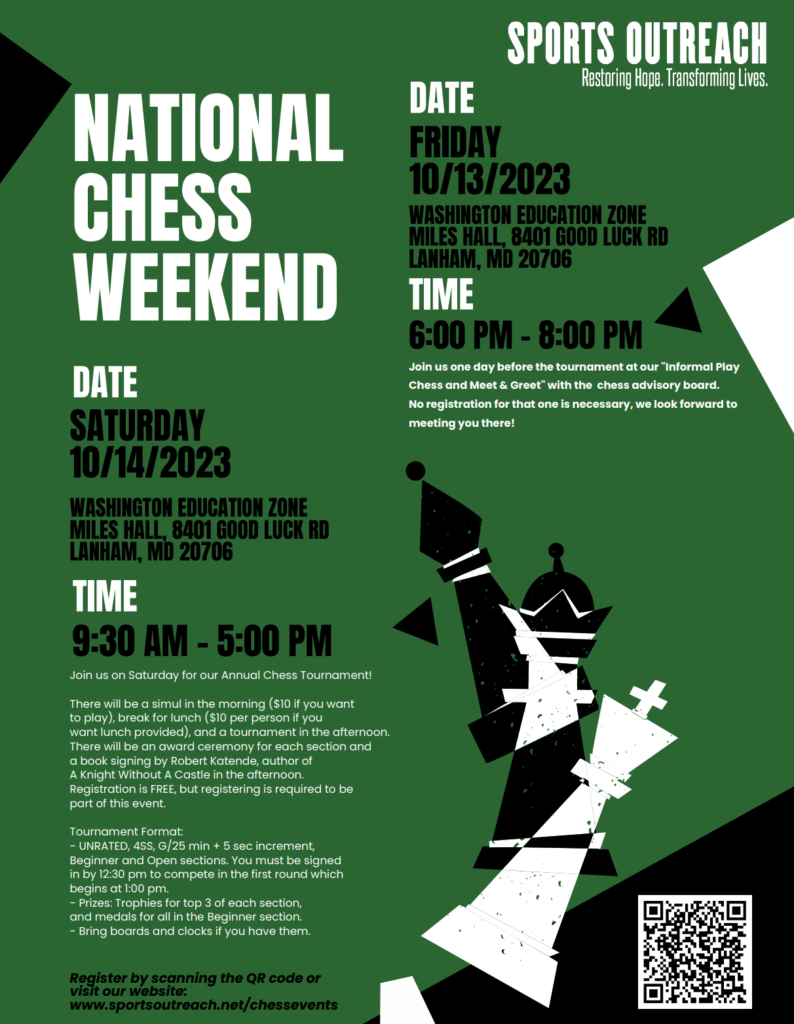
Spend National Chess Weekend (Oct 13-14) in Lanham, MD and meet Robert Katende

On Friday, October 13, you have a chance to meet Robert Katende and support Sports Outreach. On Saturday, October 14, the Washington Education Zone (Miles Hall at 8401 Good Luck Road in Lanham) will host its annual free chess tournament and a simultaneous exhibition by Mr. Katende.

Phiona Mutesi (seated left in the photo below) is one of the most inspiring stories to come from the chess world. As an under-nourished child in a slum of Uganda, Phiona discovered chess and became a champion of the African continent. Her story was written in The Queen of Katwe, then turned into a successful Disney movie.

We never would have heard of Phiona, however, had Robert Katende not created a chess program that welcomed her. Katende’s story, while not as well known, is equally inspiring. He also was brought up in difficult circumstances by his grandmother in Uganda. Through hard work and perseverance, he went to college, played soccer at a high level, and created a charity to help impoverished young people in his home country.

On National Chess Day this year, you have a chance to meet him and hear him speak.

Across the Battlefield: A Pawn’s Journey, a review of a children’s book

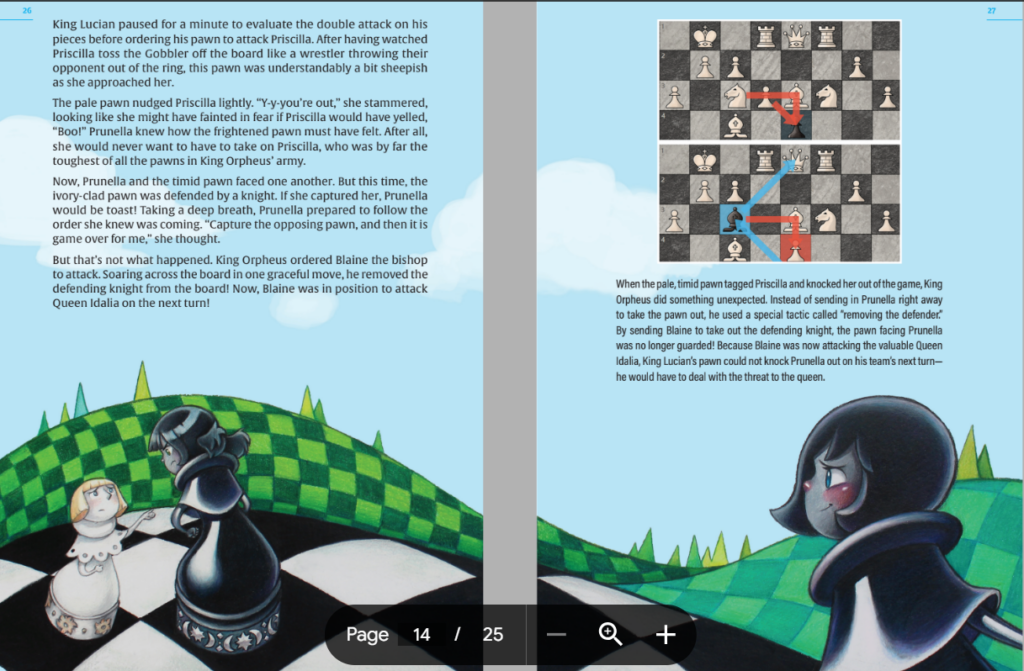
A book that describes not just the rules of chess but also abstract concepts and basic strategy, while at the same time introducing a plot with about 10 named personalities in 48 pages, is asking a lot of a pre-adolescent reader.  In my opinion, it’s too much.

Jonathan Ferry’s Across the Battlefield, beautifully illustrated by Caroline Zina, is such a book. He takes an interesting game, gives pawns and pieces individual names and personalities, and creates a story about the development of Prunella the Pawn. That would be enough, but the book uses the story as a vehicle to describe the rules and strategy of chess. For many readers, especially early readers, the effort to remember characters and their traits will take precedence over the chess vocabulary and chess strategy the book describes.

A child could well be captivated by the pictures on each page. If read to second graders who had not been exposed to the game, the book could generate interest in learning to play. However, children are likely to be overwhelmed by the firehose of information about the rules, vocabulary, and strategy of the game.

In short, the excess ambition of Across the Battlefield works against its effectiveness in introducing chess concepts to its target audience of 6- to 10-year olds.

Across the Battlefield: A Pawn’s Journey, written by Jonathan Ferry and illustrated by Caroline Zina, is published by Chess Tales, LLC, of St. Louis, MO.

Postcards From The Bobby Fischer Center In Iceland

Fifty-one years ago this month, the chess match that changed the game forever began in Iceland, and since then that tiny island in the North Atlantic has been excited about the game. Iceland has had the most grandmasters per capita in the world since the 1970s and is unique in being the only country with more International Grandmasters (14) than International Masters (12).

In 2005, Iceland conferred citizenship on Bobby Fischer and sent a plane to retrieve him from Japan, where he was being held in custody at the demand of the United States. Fischer remained on the small island nation for the rest of his life.

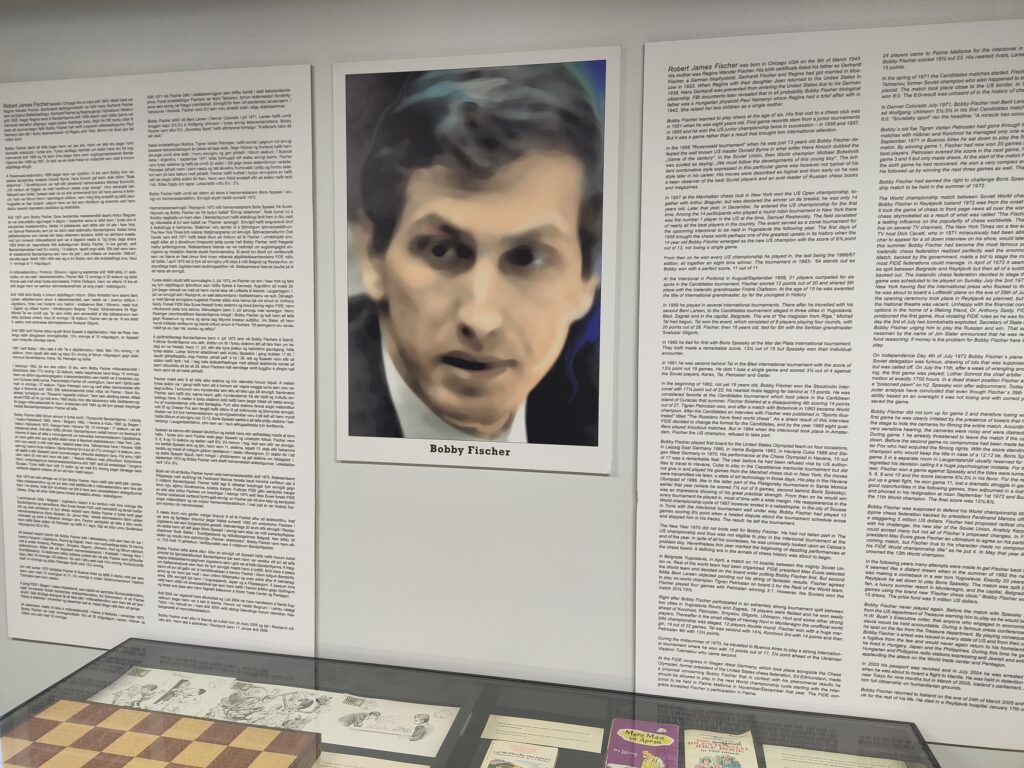
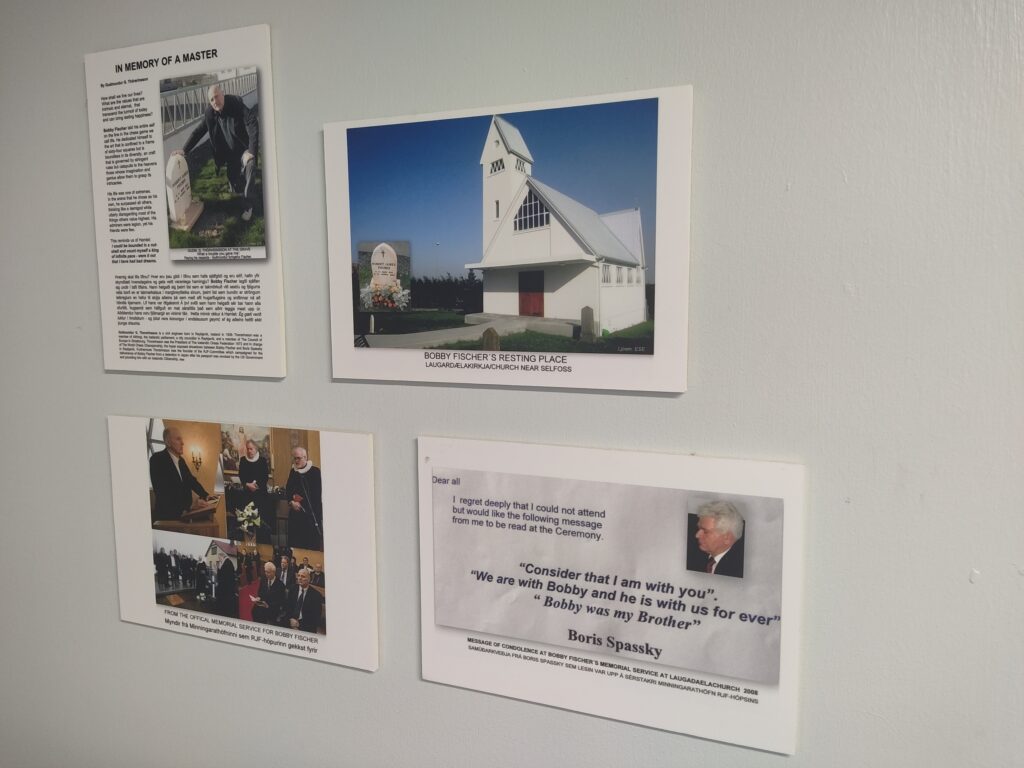
After he passed away, a group of chess enthusiasts created the Bobby Fischer Center near his final resting place in Selfoss. The Center celebrates Fischer’s life and chess career with particular emphasis on his connection to Iceland.

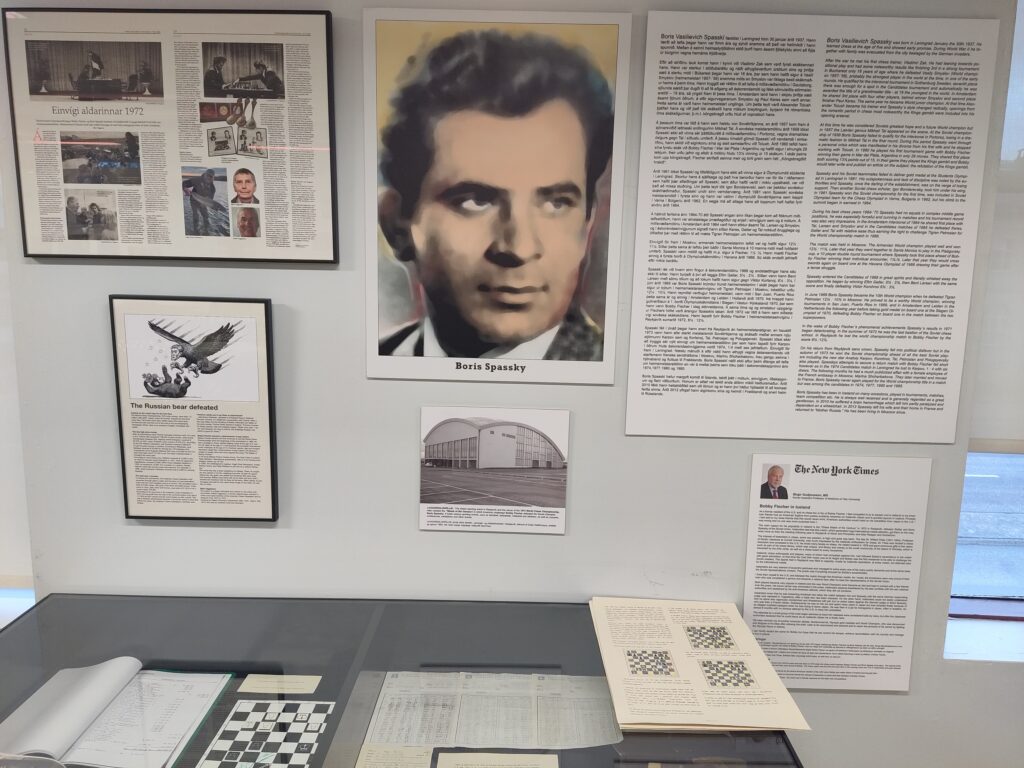
Recently, I had the opportunity to visit. Its director, Aldís Sigfúsdóttir, is very knowledgeable and gave my wife and me a comprehensive tour. The museum emphasizes Fischer’s life in Iceland and has an excellent display of photos from the 1972 match. We also saw the Letters of Citizenship prepared by Iceland’s Parliament granting Fischer a method of exit from the Japanese jail where he had been held.

The 1972 match pitted the Soviet Empire, which had dominated high-level chess since the second world war, against a young American who eschewed assistance. Fischer knew the world champion, Boris Spassky, but had never beaten him over the board. He had lost three times while securing two draws in their previous matches. However, Fischer had gone on a record-setting run of victories leading up to the World Championship match, including winning 20 games in a row against players competing for the right to challenge for the world championship. Fischer’s international rating was 125 points higher than Spassky’s, a formidable difference.

The match attracted more attention than any previous chess match because of the international politics involved. Fischer made demands on the match organizers up until the games began, and for a while refused to travel to Iceland for the match. It took a series of efforts, including a call from the U.S. National Security Advisor Henry Kissinger to implore Fischer to play the match and win for his country, to convince him to compete. By then, the match had been postponed for two days and the Soviet Union had to be persuaded to allow Spassky to compete after the insult of waiting for Fischer to arrive.

At last the match began, and the daily analysis of the games became the most-watched television in America. I had a personal stake in this, as it was in the run-up to the match that people asked me to teach them the game. It proved to be an avocation I would never relinquish.

The museum provides quite a bit of space to Boris Spassky, mainly about the 1972 match. It also covers their second match twenty years after the first, this time in the former Yugoslavia, which led to the indictment of Fischer for violating the U.S. embargo.

Despite their rivalry, the two World Champions became friends. The moving note of condolence that Spassky sent to be read at Fischer’s funeral in 2008 called Fischer his brother.

The Bobby Fischer Center also is used as a place to teach junior players. A substantial library of chess books is available for students to use, and there is space for about a dozen students at a time to play or receive lessons from volunteer grandmasters.

The Bobby Fischer Center is one of only three museums dedicated to World Chess Champions. (Emmanuel Lasker and Max Euwe are the other World Champions to have museums devoted to their memories.) Iceland is a fascinating and beautiful country, and chess players who travel there should make a point of visiting Selfoss, about 45 minutes outside Reykjavik on the Ring Road, and plan to spend an hour or two there.

Lessons and Memories From the 51st World Open

The 51st Annual World Open of Chess just concluded in Philadelphia. It was my first tournament in several months, and I looked forward to taking one of the top places in my section. It was, in a word: humbling. As chess players, we expect to study and see improvements in the form of wins and higher game accuracy. As an instructor, I felt I was in a good position to crush opponents at the rating that I’ve held flat for 2 years. Instead, I found that Caïssa comes for all of us. Of my 14 classical games, only 2 entered what could be called an endgame. Four ended because of significant blunders: 2 were mine, 2 were my opponents’—4 more than I had hoped, but I’ll take the wins with the losses.

I finished 2.5/5 in the women’s tournament (winning the U1400 prize), and 5/9 in the World Open. A supremely average result, in my opinion. I performed poorly in the blitz side tournament but did well in the rapid one. Both were extremely fun aspects of tournaments that I had never experienced before, but that I will seek out every chance I can. I learned some things about chess, and about myself. But what will stay with me forever is not Rxe6 in Game 9 (well maybe that too) but the time I spent with friends.

At the previous tournament that I competed in, the Eastern Open last December, I met a friend who has become my primary training partner. We’re evenly matched, but play very differently, which proves useful. Every Friday we’d meet to play a long time control game and analyze afterwards. At the tournament, we shared a hotel room and excitedly called each other after our games. When we got back to the room together after the round, we’d go through each other’s games and explain our reasoning to each other like sinners in a confessional. I met other new friends as well and exchanged numbers.


Chess can’t be learned in isolation, as so many are inclined to do these days. Meeting other people, with wildly different backgrounds and philosophies, adds diversity to our understanding of the royal game. Some of them have bad ideas, some ingenious, and some ideas have questionable merit but are fun to explore. What I do know is, I’ll be back.

Chess as a “Senior”

“Competitive chess is for the young,” a chess master once told me. Looking at the top players in the world, one might suspect this to be true. Carlsen, Liren, Nepomniachtchi, So, Caruana are all in their 30s and of course have been playing chess for many years. I began playing competitive chess at an “advanced age” (over 45) and wondered if this statement might have some validity to it. I decided to speak to several “senior” players and get their takes on this theory. 

Most older players relayed to me that they felt there were two areas where younger players had an advantage. They included memory and processing speed. From a personal standpoint, I might agree that memory does seem to diminish as we get older; however, it is not necessarily a given. With enough repetition and practice, older players can improve their ability to remember openings, strategies, etc. In terms of processing speed i.e. the ability to make and spot a strong move more quickly, this could be dependent on the amount of time a player has to practice and study and how long they have been playing. (For the most part my experience with younger players has been that they tend to move very quickly, but often their move is not the optimal one.) 

As we age, it is a known fact that our brains shrink and learning new skills may take more time; however, it is also a known fact that older adults can still learn new information and should do so in order to keep their brains healthy. This concept is called neuroplasticity or the forming of new neural pathways.

Dr. Sanjay Gupta, a well-known neurosurgeon, medical writer and journalist says in his book Keep Sharp: Build a Better Brain at Any Age that reasoning and problem solving are “key to building cognitive reserve” (brain resiliency). He goes on to say that the greater one’s “cognitive reserve”, the more likely we are to “stave off the degenerative brain changes” associated with many of the common brain diseases including dementia.

Even though we may not have any illusions about becoming chess masters, playing competitive chess can be a wonderfully challenging brain building activity. At the very least it is definitely a cognitively stimulating activity that I am sure Dr. Gupta would approve of. I would encourage anyone, including seniors, to give it a try. After all, who knows for sure what the long-term benefits may be!

U.S. Chess Center Students and Alumni at the Eastern Open

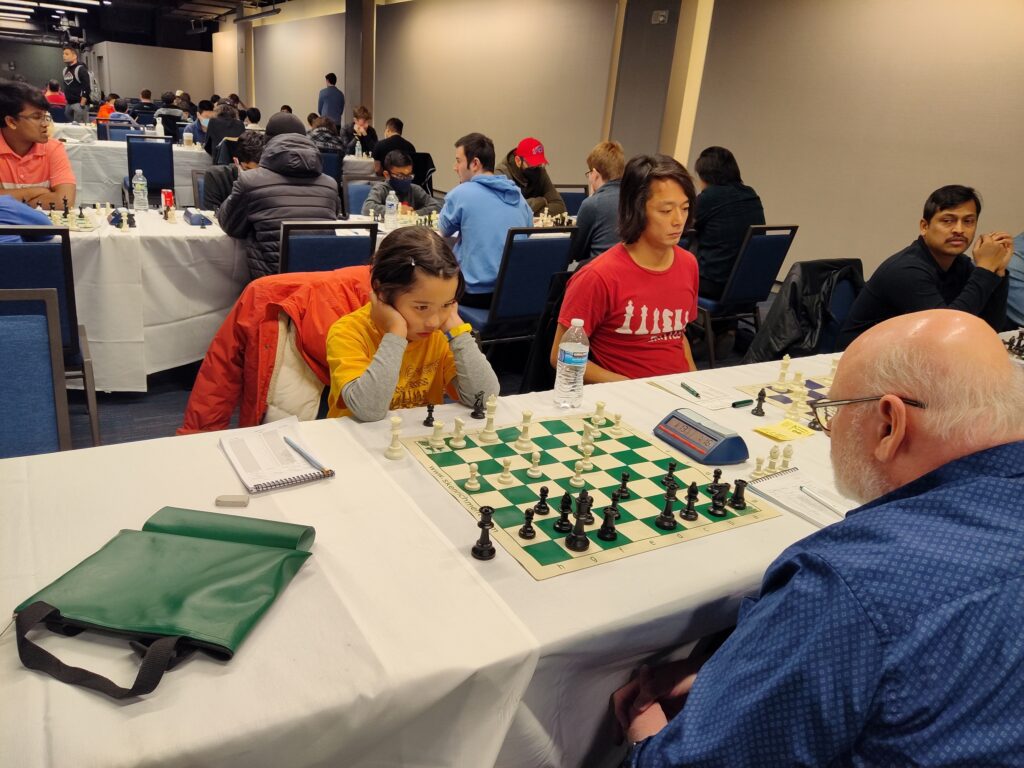
The 47th Annual Eastern Open wrapped up Thursday evening with a record-breaking turn-out. More than 400 players came to this year’s iteration, held at the Hyatt Regency in Arlington, VA.  The competition included a number of innovative additions (Mixed Doubles and Senior prizes, in addition to a rated blitz tournament) to the traditional 8-round main event.

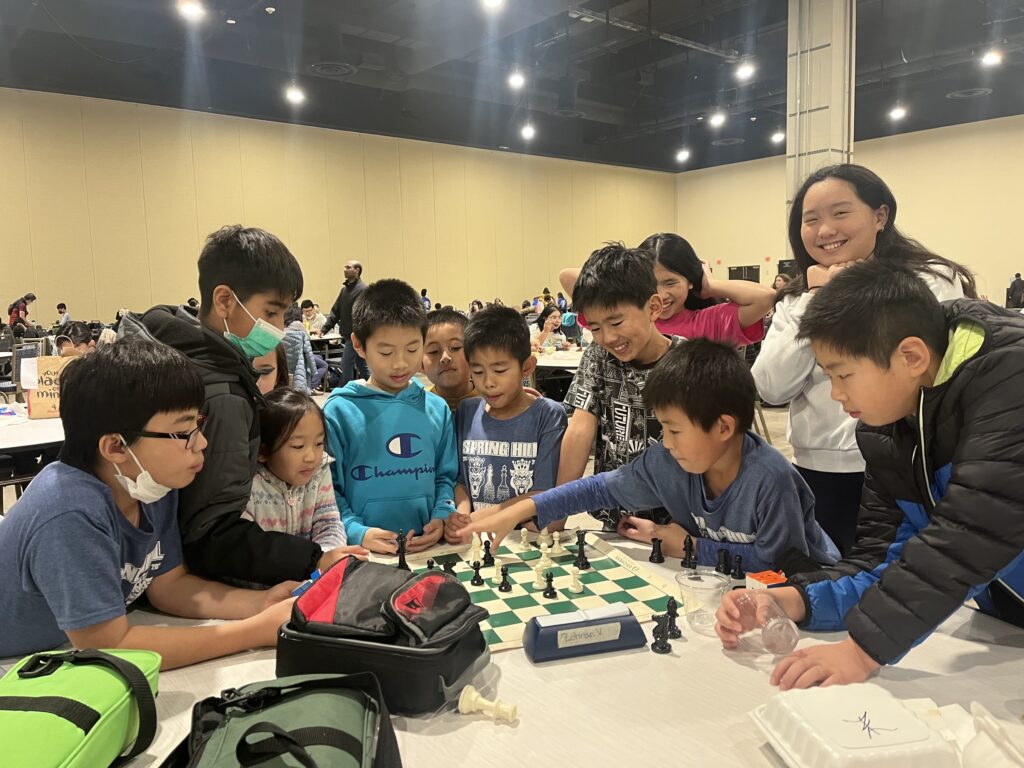
Among the competitors were dozens of students of the U.S. Chess Center, including players from the Theophilus Thompson Club, and Kent Gardens, Spring Hill, Colvin Run, and Churchill Road Elementary Schools.

It was also wonderful seeing graduates of our classes and camps, including students returning from college and post-college adults. We saw players as young as six years old and another (a grandpa of one of our summer campers) at age 82.

Record Turnout at K-12 Championships at National Harbor

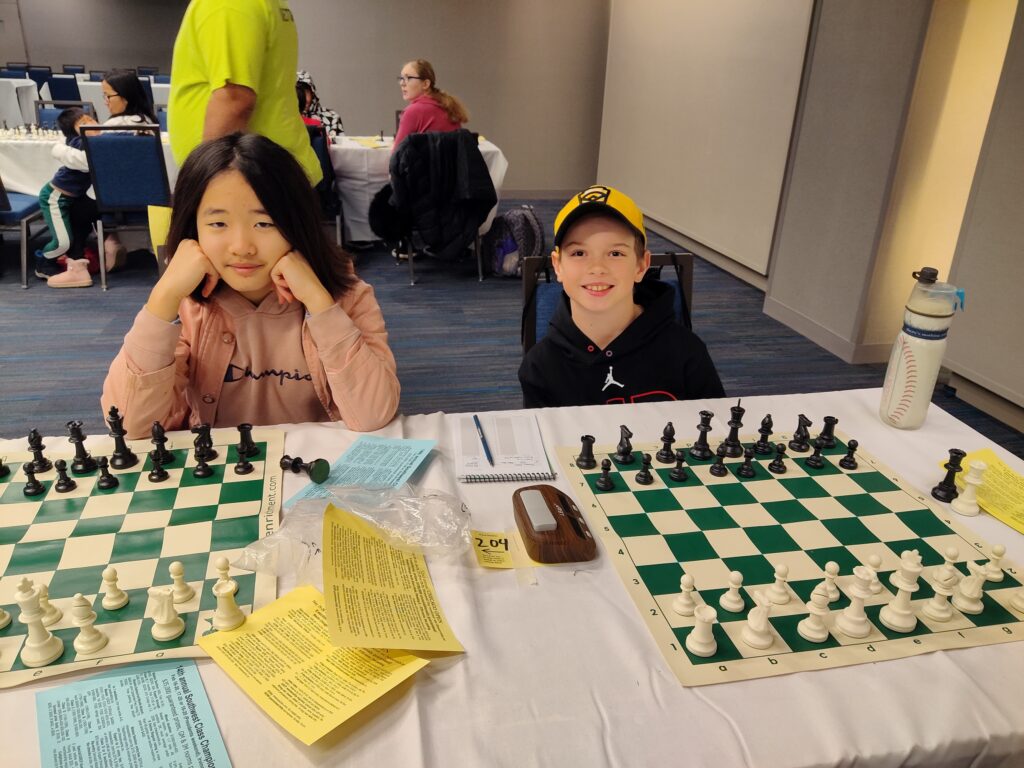
2,463 students turned up to this past weekend’s National K-12 Grade Championships, held at National Harbor, MD for the first time ever.  The field size shattered the previous record of approximately 1,700 students from five years ago.  Students showed up from all over the country to compete for the national championships in their respective grade levels.

We had hoped for strong local representation, and were not disappointed as large contingents of students turned up from the District of Columbia, Maryland and Northern Virginia.  Spring Hill Elementary (pictured below) took home the 5th place trophy in the 6th grade section, as well as the 8th place trophy in the 3rd grade section.  Students at our clubs at Spring Hill, White Oaks and the Theophilus Thompson Club also won individual medals.

Win or lose, it’s always an incredible experience for kids to play an event with thousands of other young people who possess the same love for chess.

A full list of results is available on the website of the U.S. Chess Federation, here.

Jennifer Yu Wins U.S. Women’s Chess Championship
The 2022 U.S. Chess Championships have concluded in St. Louis.  A day after Fabiano Caruana won the open section of the championship, U.S. Chess Center honorary co-chair Jennifer Yu won the women’s championship for the second time, following on from her win in 2019.   Congratulations to both the winners!

Jennifer Yu’s victory in particular is a testament to one of the most fundamental values we espouse at the U.S. Chess Center: the value of not giving up.  Going into the late stages of the tournament, Jennifer led her closest opponent, eight-time U.S. Women’s Champion Irina Krush, before losing their individual matchup in Round 12 to fall half a point behind her in the standings.  Undeterred by the loss of that game, Jennifer battled back to win in Round 13 whereas Irina could only draw.  This forged a tie for first place and ensured that the championship title would be settled the following day with tiebreak games at a faster time control.

Jennifer Yu, U.S. Women's Chess Champion, pictured in September 2018 giving a simul at the U.S. Chess Center.
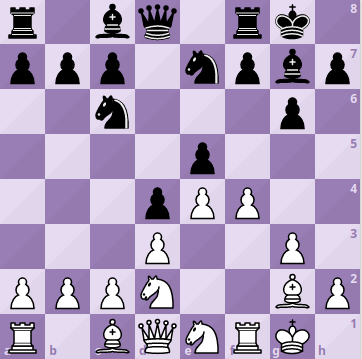
Krush-Yu 2022 Black to move 9....

Diagrammed here is a position during the opening of the decisive game of that tiebreak match, with both competitors knowing that the winner of this game would be the new champion.  Jennifer, as Black, made an uncharacteristically big error with 9…Bg4, hanging the bishop, which Irina quickly took on the next move with 10. Qxg4.  In tournament games, it’s sadly common for players to resign after making a mistake like this. Facing the prospect of playing on down a piece against a player as strong as Irina Krush, perhaps to some players it would seem less unpleasant to just give up.  But Jennifer chose to play on and keep trying her hardest, and what happened later on is a testament to the merits of doing exactly that.

 
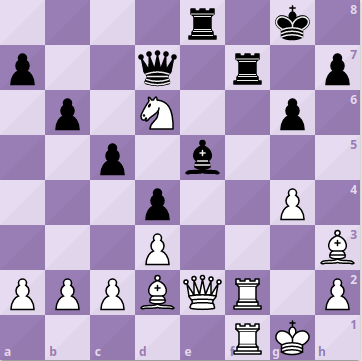
Krush-Yu 2022 Black to move 22...

The players eventually reached the position in the second diagram on the left.  Irina, still ahead by a piece, had just taken Black’s knight, 22. Nxd6.  But instead of recapturing right away, Jennifer combined an in-between move (zwischenzug) with a discovered attack: 22…Bxh2+ 23. Kxh2 Qxd6+ 24. Kh1 Rxe2 25. Rxe2.  After the tactics, Black ended up with a queen and pawn in exchange for White’s two bishops and rook – still a material advantage for White, but a position with the kings exposed like this tends to create tactical chances for the side with the queen, and Irina felt compelled to use a lot of time on the clock. 

White’s time ultimately ran out after the 47th move, giving Jennifer the win in the game and the championship.  The lesson to our students, as always – don’t quit, because until the two players shake hands to end the game, no outcome is guaranteed.

Some thoughts on the recent tragedy during the Sinquefield Cup in St. Louis

If a chess player is caught cheating, every notable accomplishment that follows is viewed with suspicion. The recent controversy during Sinquefield Cup in St. Louis serves as a reminder to our students that nothing good comes from dishonesty. If Hans Niemann had never been caught cheating before, his win over Magnus Carlsen would have been seen as a magnificent performance, perhaps a once-in-a lifetime accomplishment. That he has admitted cheating repeatedly in his young life, however, has caused this result to be viewed more skeptically.

Many prominent figures in the chess world have weighed in on the likelihood or lack thereof that Niemann broke any rules during the game in question.  This much is certain: in the third round of the annual elite Sinquefield Cup round-robin event, Niemann, the lowest-rated player in the tournament, defeated Carlsen, the long-time World Champion and highest-rated player.  The day after the loss, Carlsen withdrew from the tournament, the first time in his career he has pulled out in the middle of an elite event.  Carlsen’s only public explanation for the withdrawal was an enigmatic Twitter post that was viewed by many as a possible allegation that Niemann had received some form of outside assistance in the game the day before.

At the present moment, any evidence of foul play during that game is subjective and inconclusive.  What has truly amplified the contention is Niemann’s self-confessed history of cheating in online games, some as recently as three years ago.

Our experience shows that most people enjoy playing with strong players but nobody likes playing without confidence that the game will be played fairly. If players don’t follow the same rules, the game is no fun. Trash-talking diminishes the competition, as distracting or annoying an opponent is not supposed to be part of chess. Trying to get away with a touch-move violation, taking a move back, moving an opponent’s piece, or using a computer during a game, all are things that might tempt a player, but players of character resist those thoughts.

There is no game, and there is no tournament, so important that it is worth damaging your reputation or honor. Once either is lost it can take a long and miserable time to get it back.