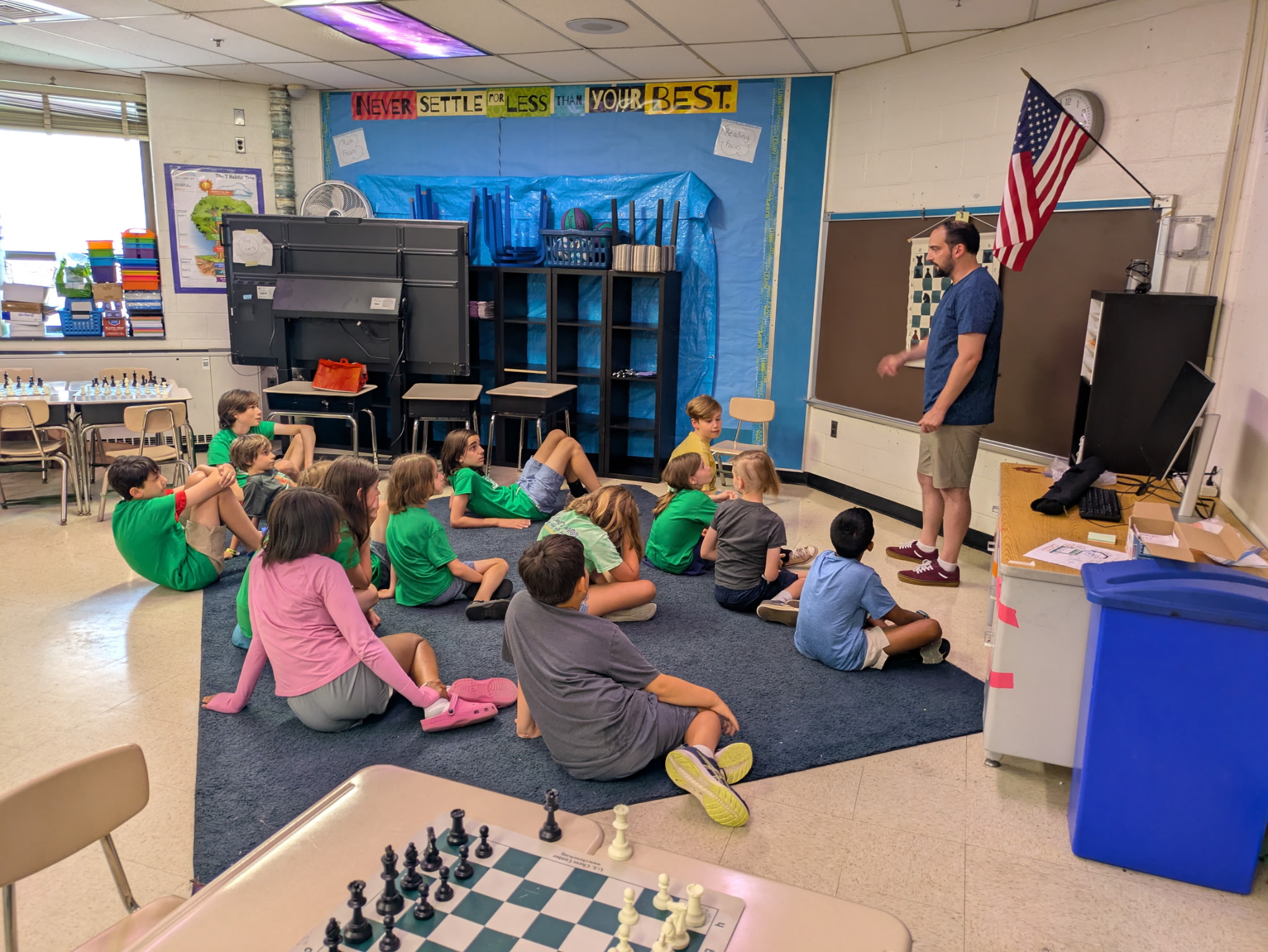
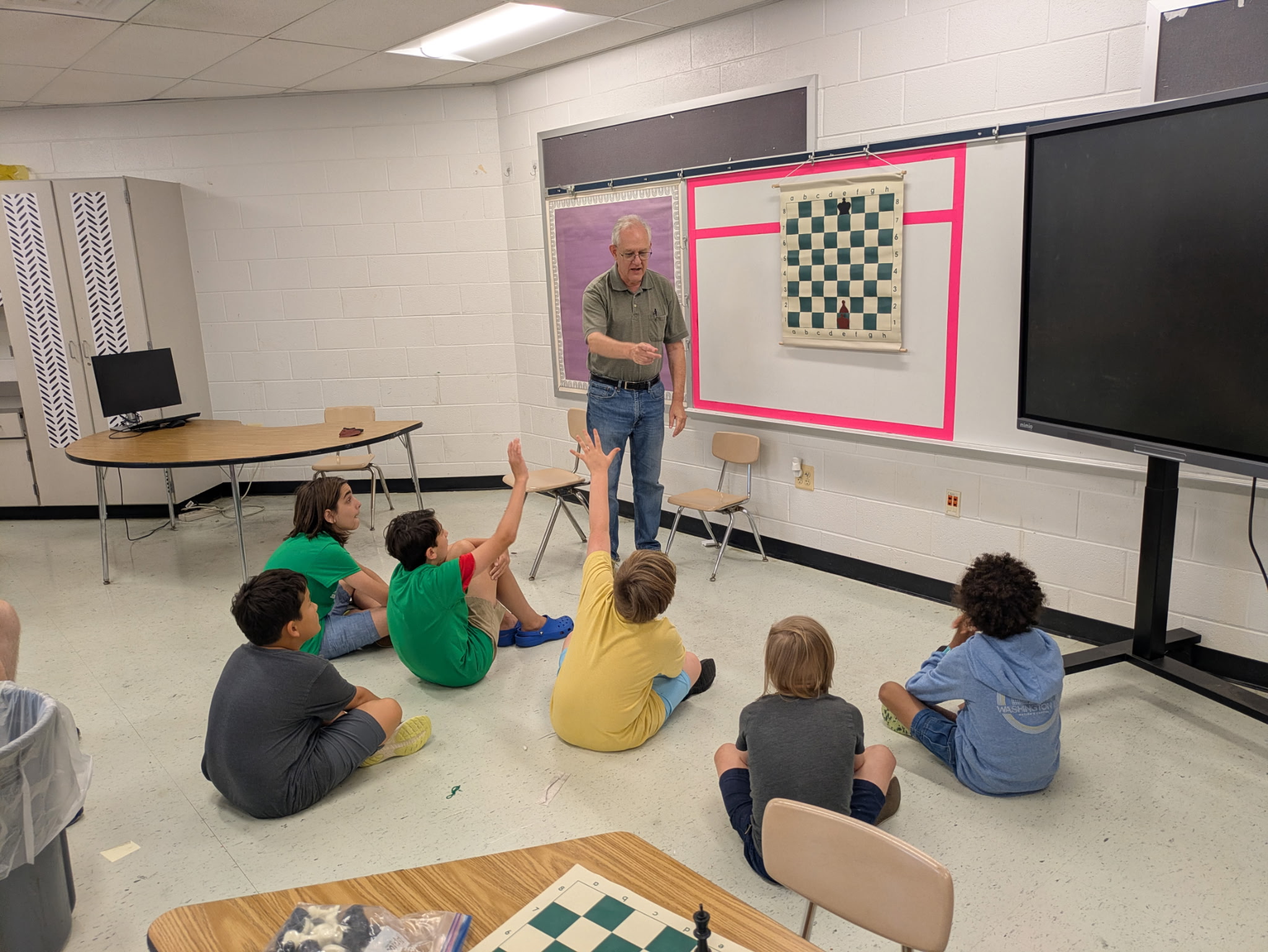
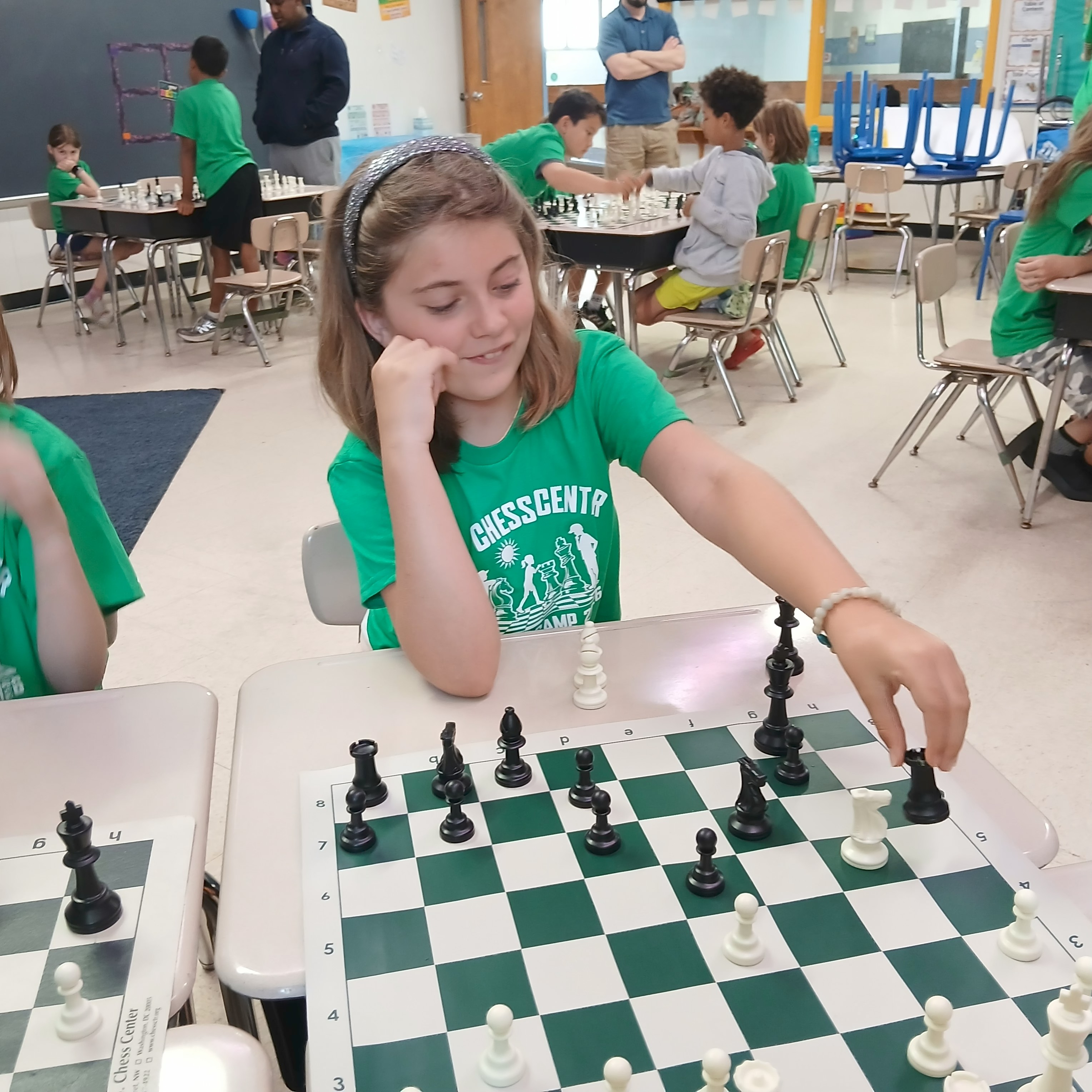
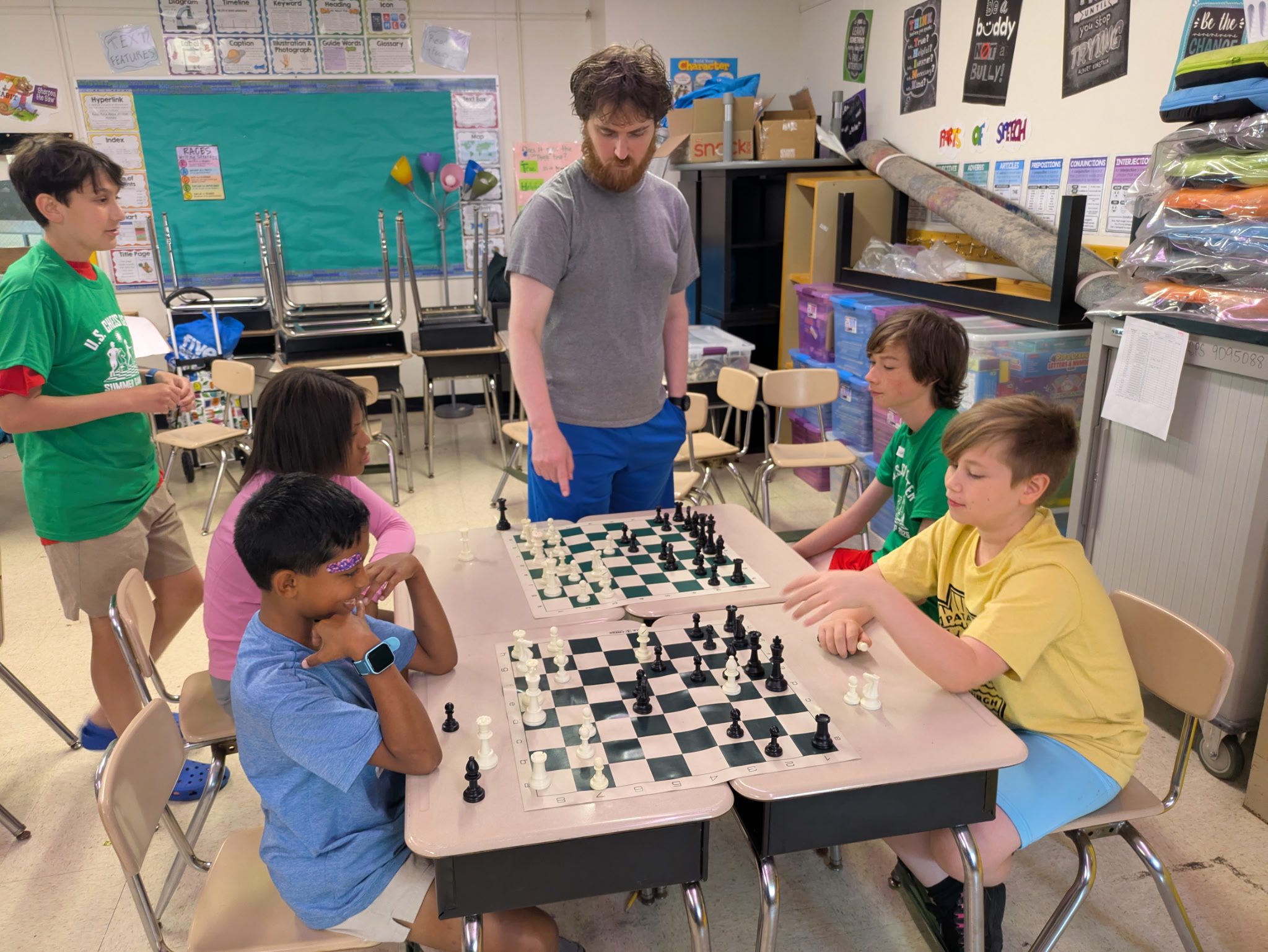
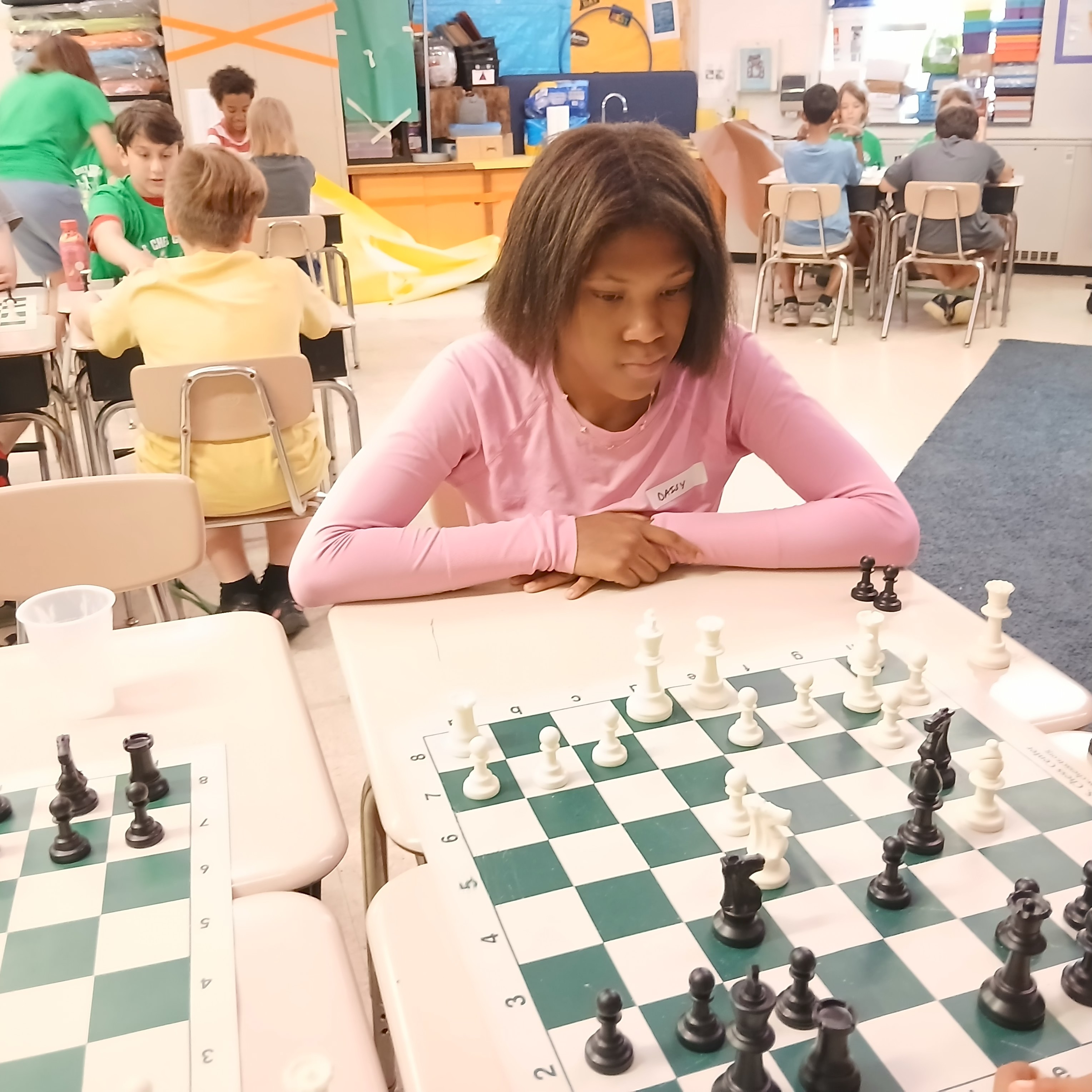
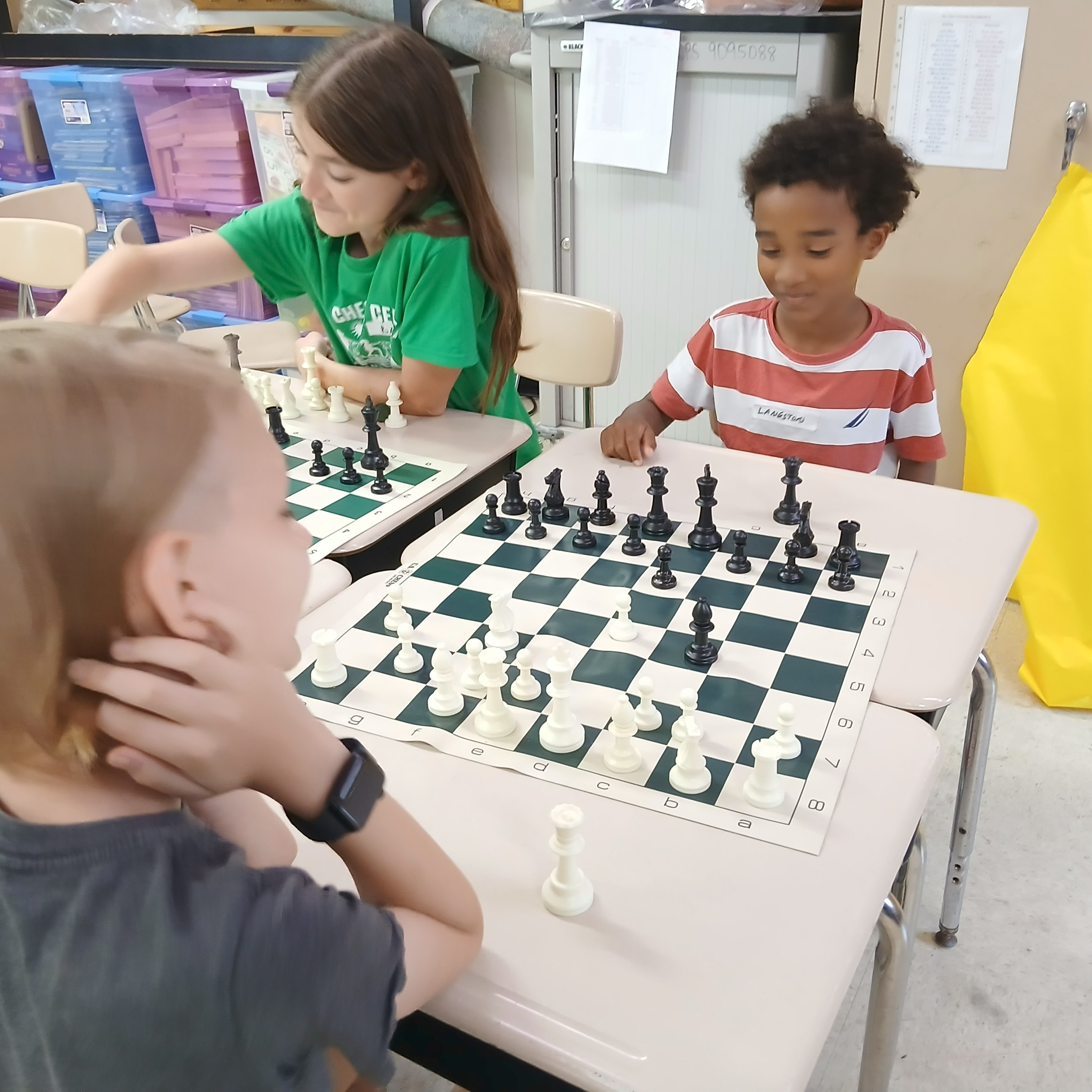
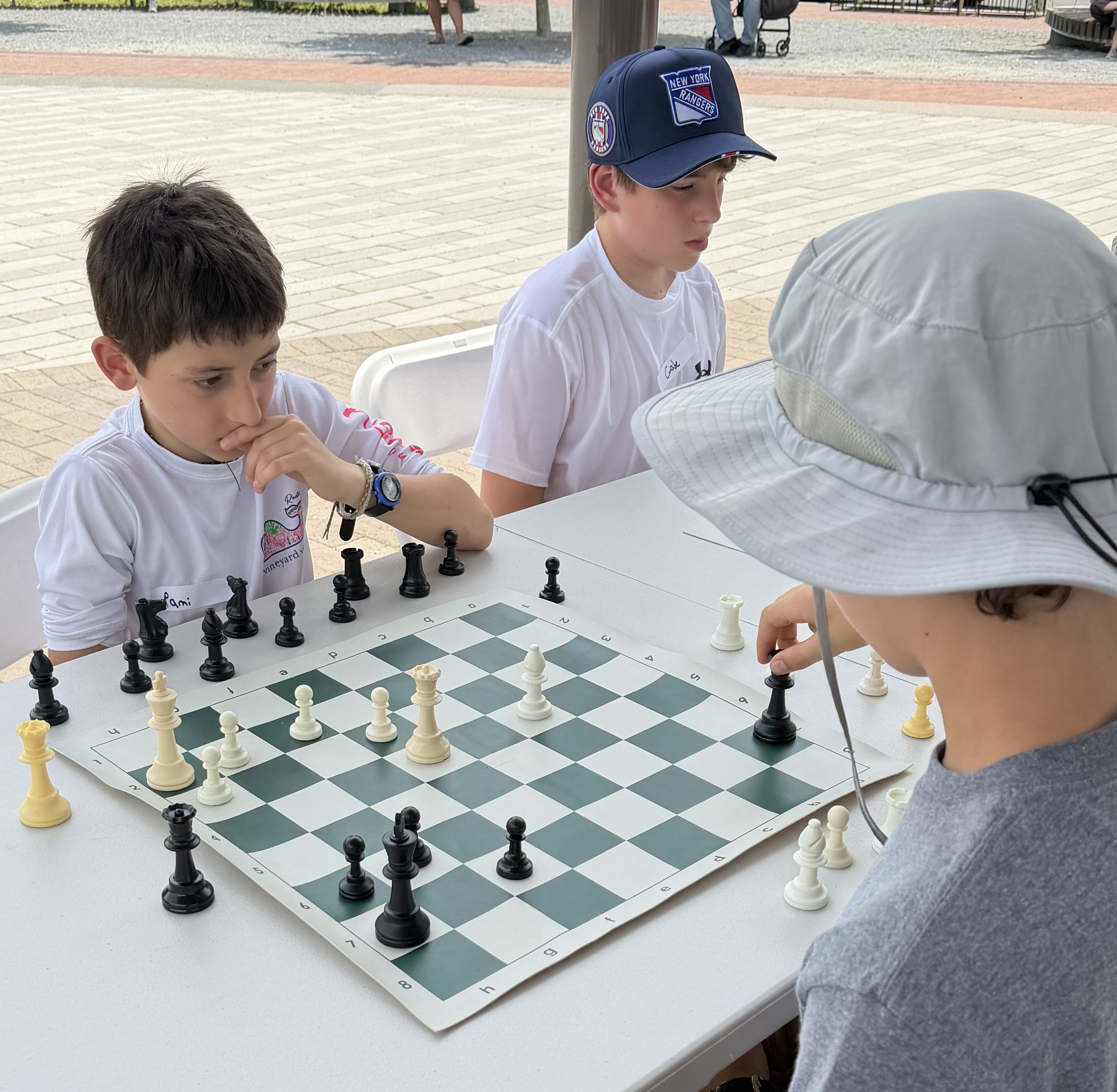
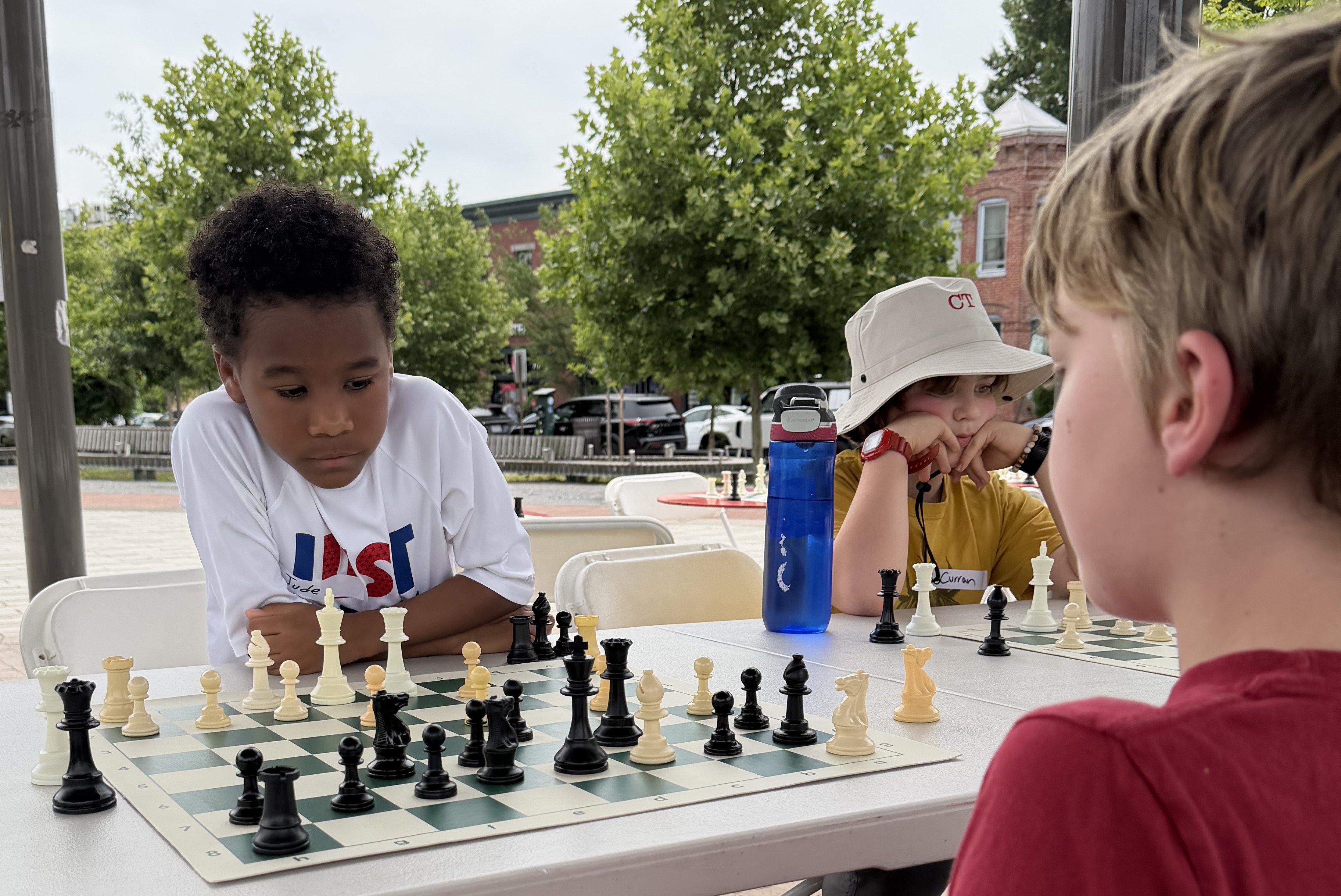
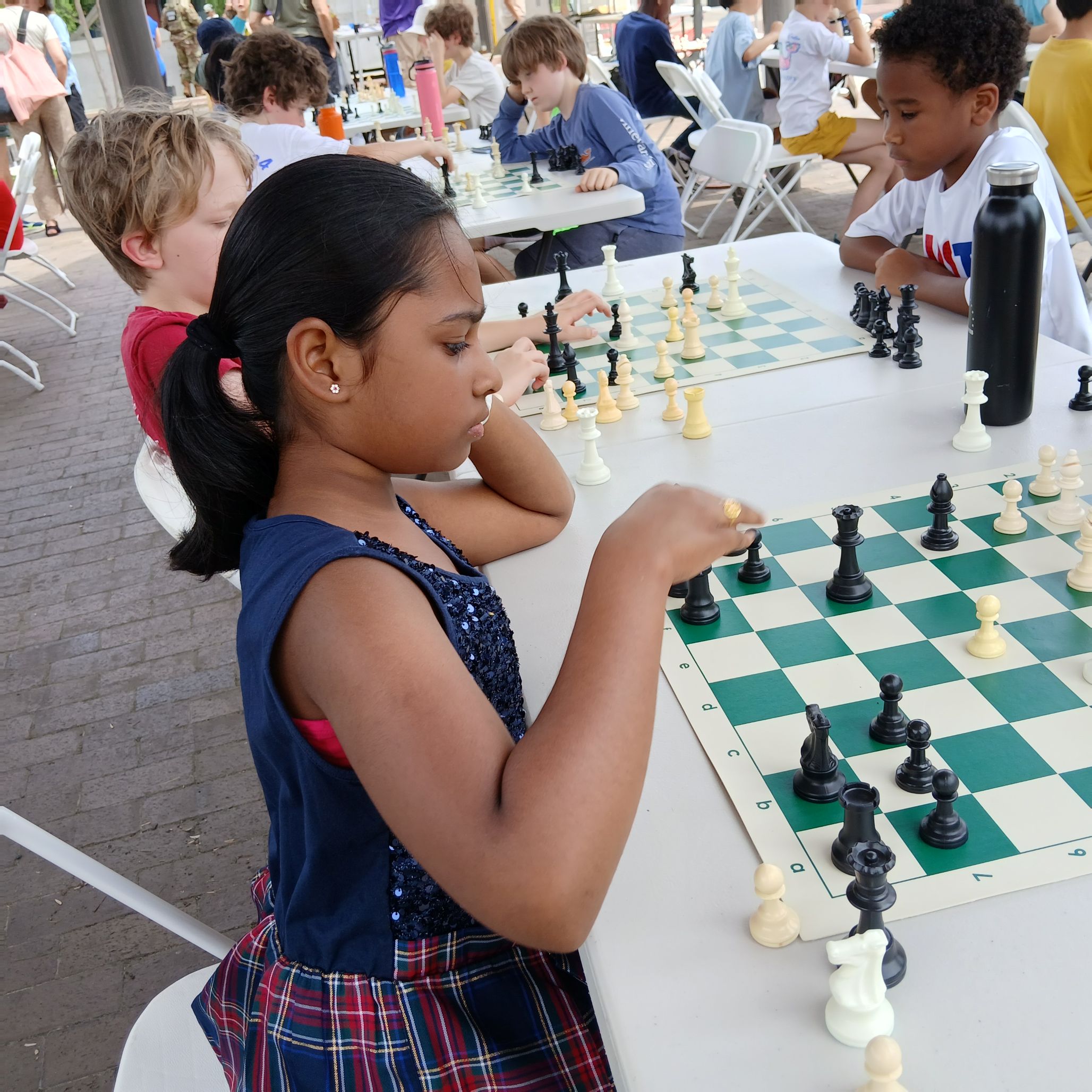
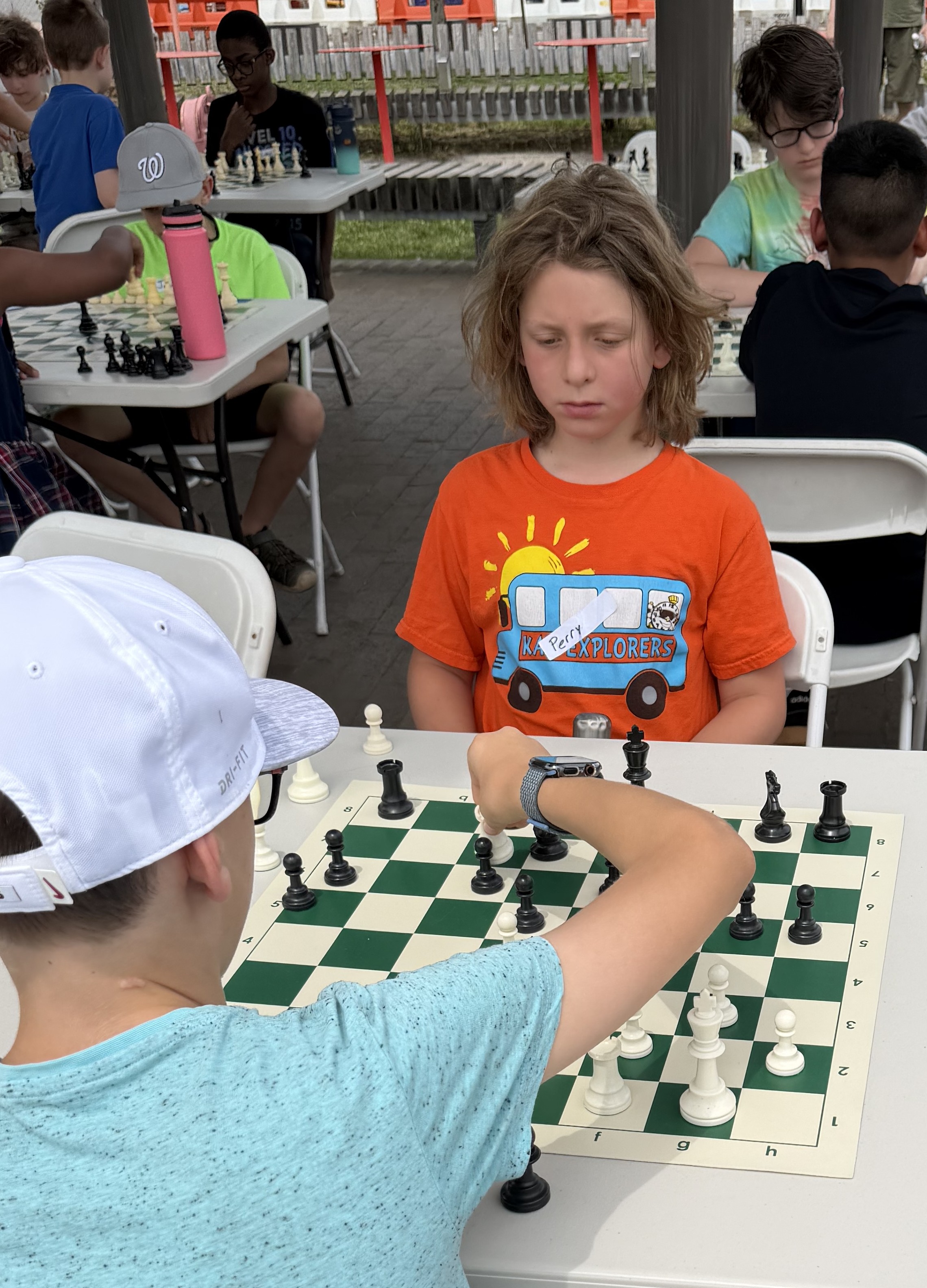
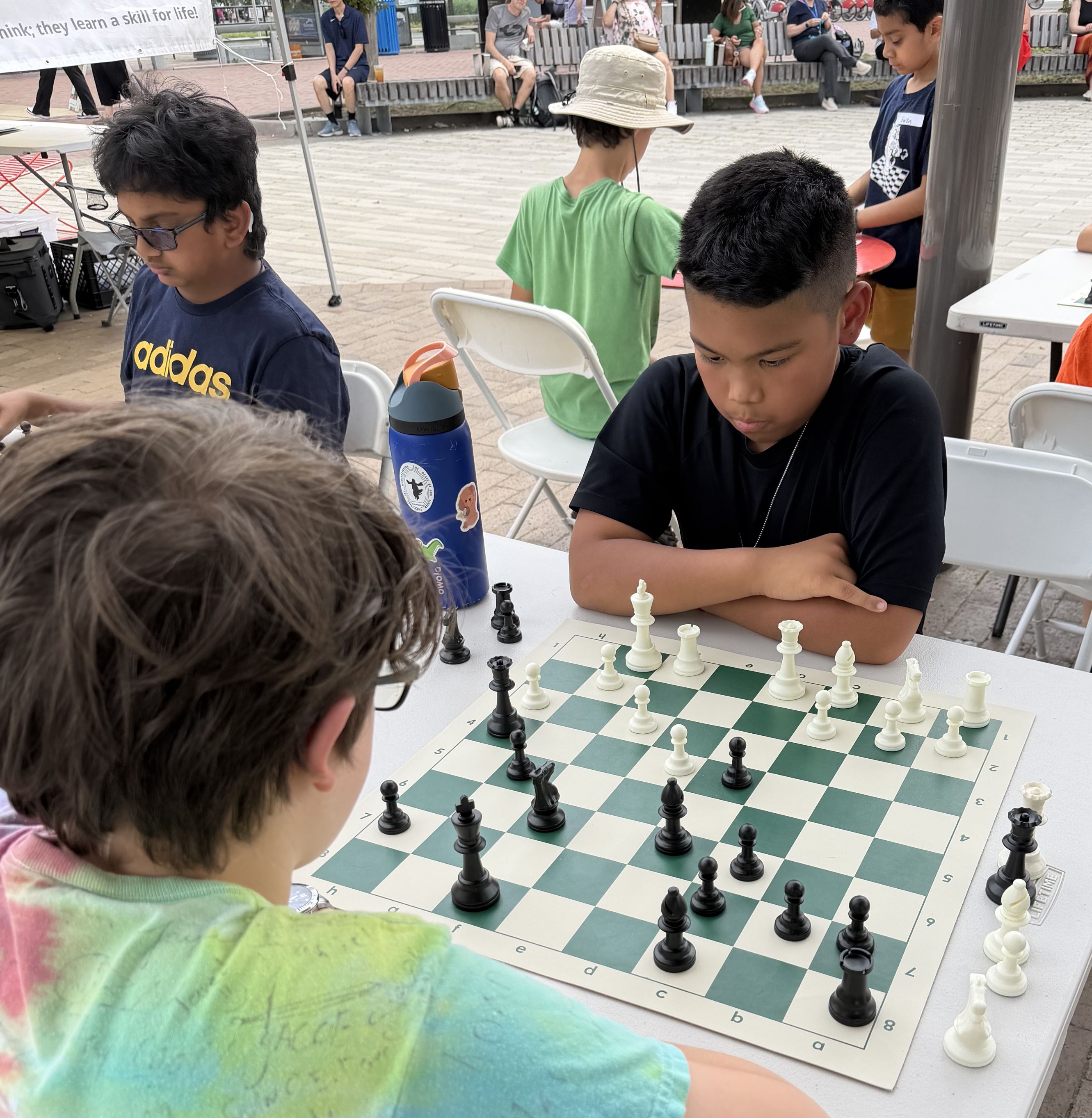
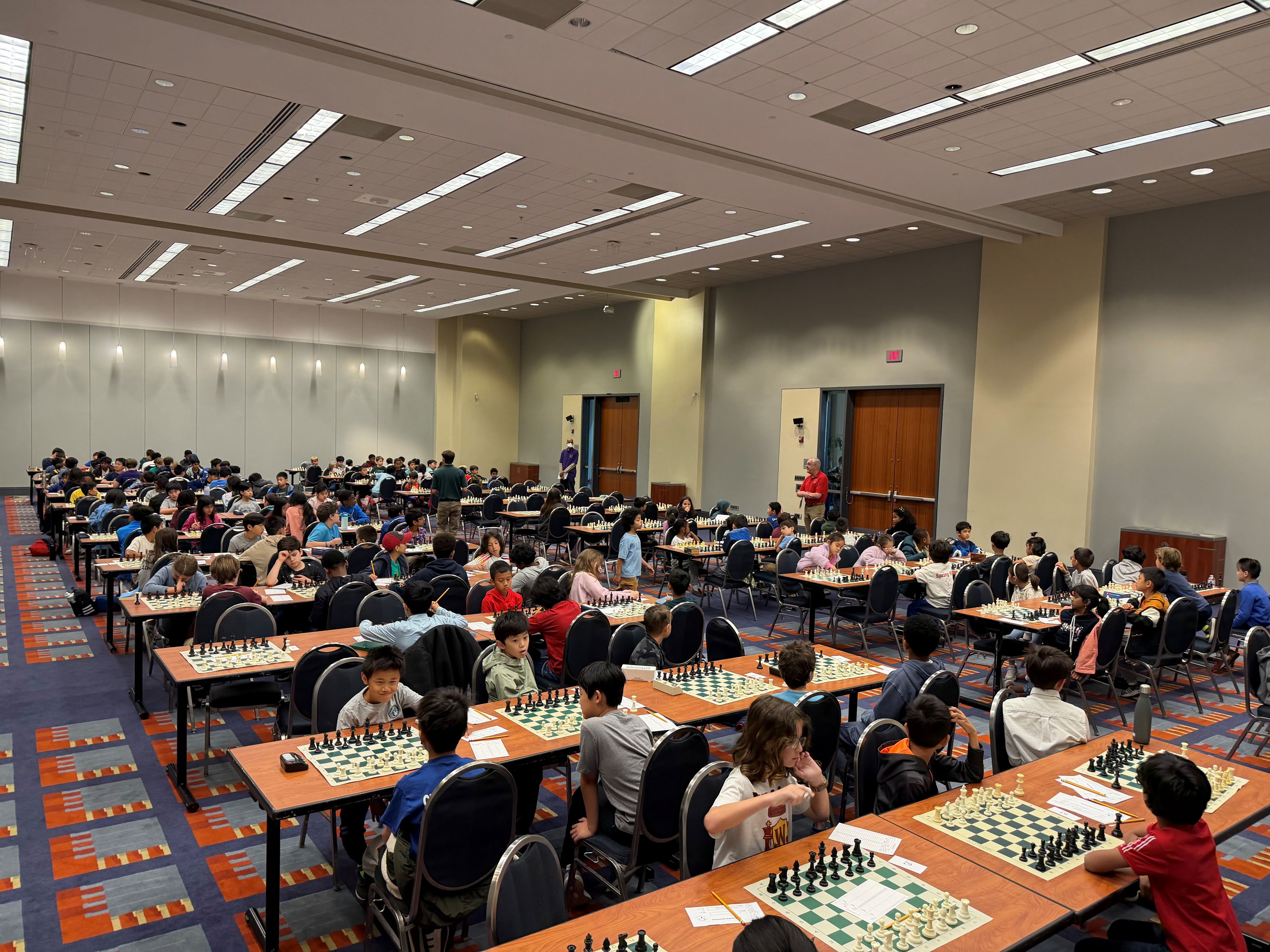
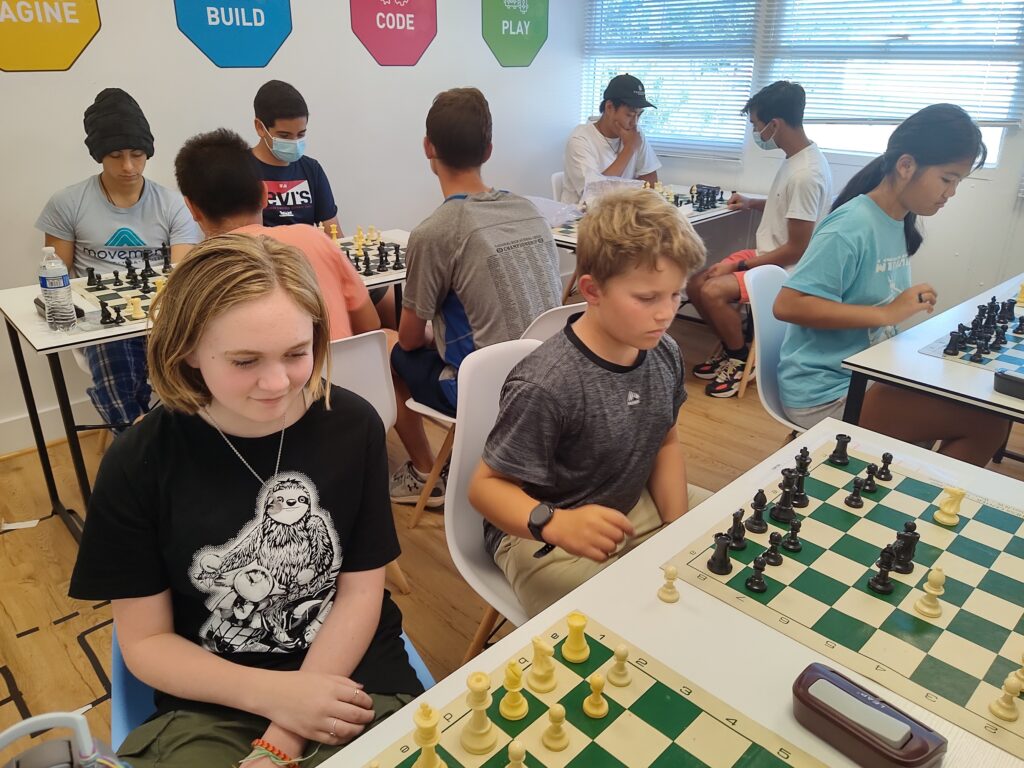
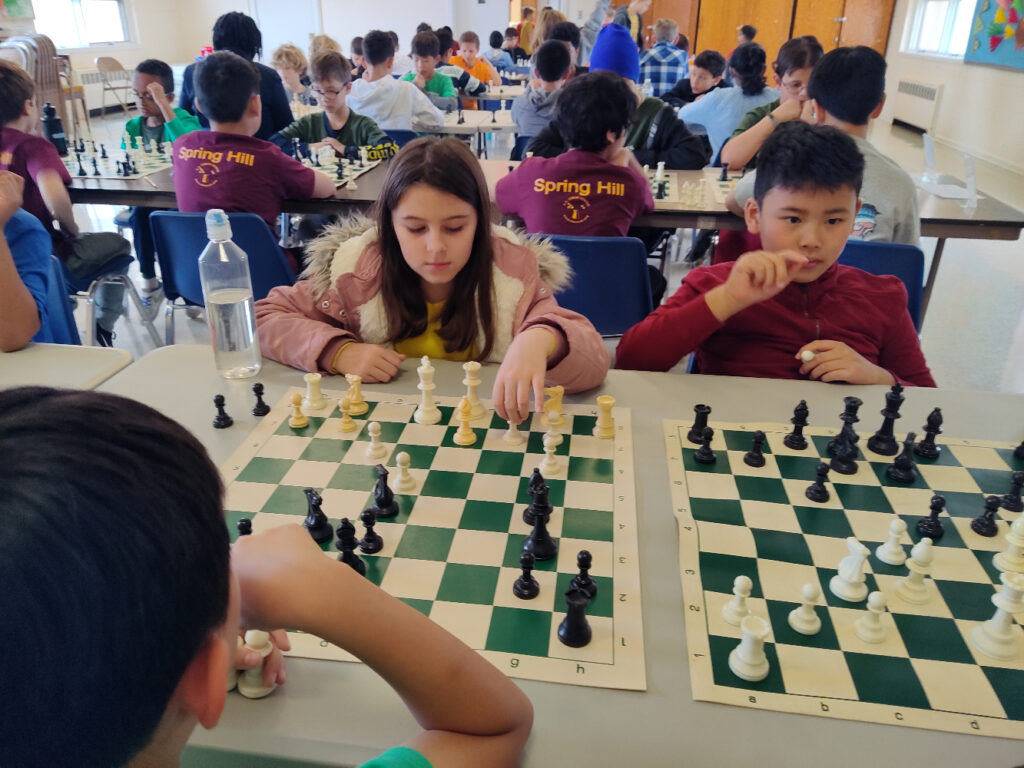
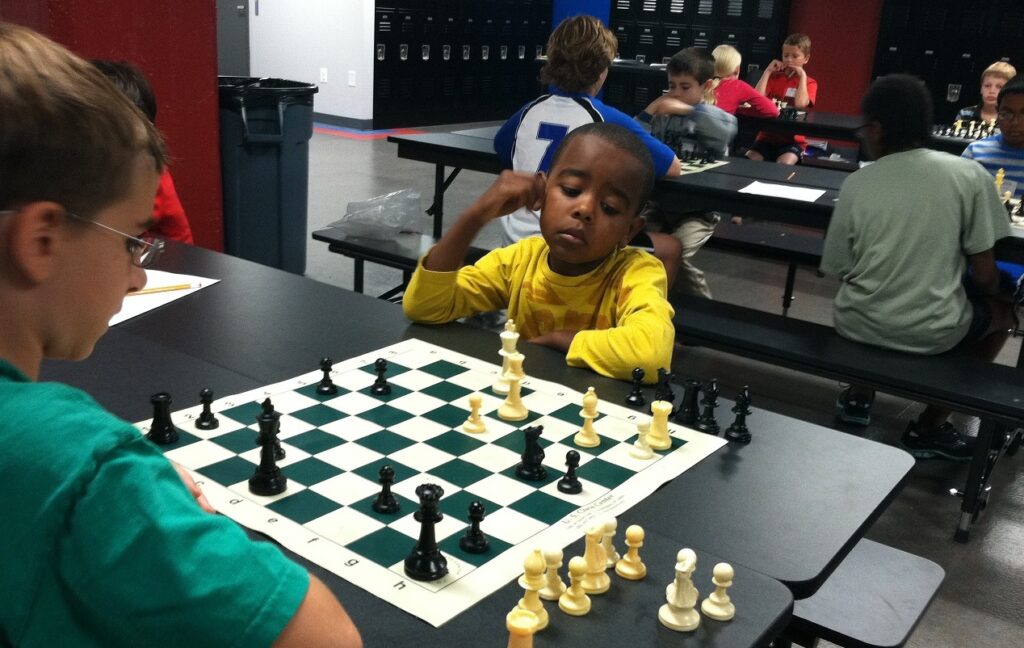
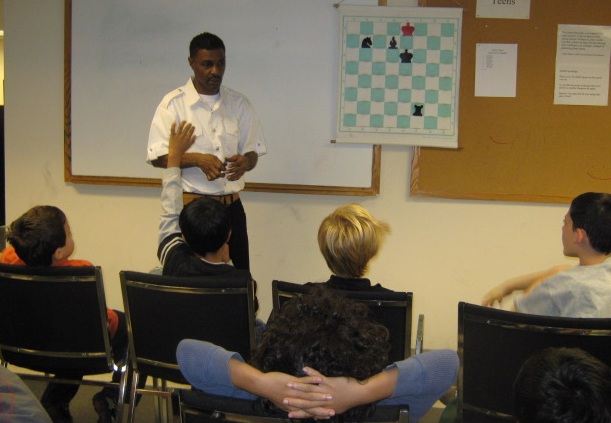
The U.S. Chess Center’s summer got off to a great start with the camp at East Silver Spring Elementary. Students ranged from third grade to ninth, and all left knowing a lot more than they did when they arrived.
Our camps, unlike our after-school clubs, feature students receiving one-on-one instruction every day with our adult teachers, in addition to small-group and large-group lessons based on our observations of the games the students play with their peers.
All of our camps emphasize the important endgame skills, and all of the students came away with greater understanding of the techniques they need to succeed in their games. Most of the campers at this camp also needed to internalize basic opening principles, and we had several lessons over the four days focusing on that topic.
We also had discussions about the immense value of good sportsmanship. Players improve their skills by taking enough time to find the moves that allow them to win in the fastest way. Several students have been playing chess online, and that provided us with the opportunity to learn the differences between online and over-the-board games. While both games use the same pieces, there are major emotional considerations when sitting at the same table as another player who also wants to win.
It seems that knowing less about an opponent would not be an advantage, but in chess it often is better not to have an opinion of the strength of the adversary. People often play worse when they believe they are stronger or weaker than the person sitting across the table. Young people, in particular, can become discouraged when facing someone they perceive as a strong player. Many people do not concentrate as well when they believe they can win without maximum effort. Because the most effective method of improving at chess is to practice doing the best a player can, doing anything less than one’s best is a waste of a chance to get better.
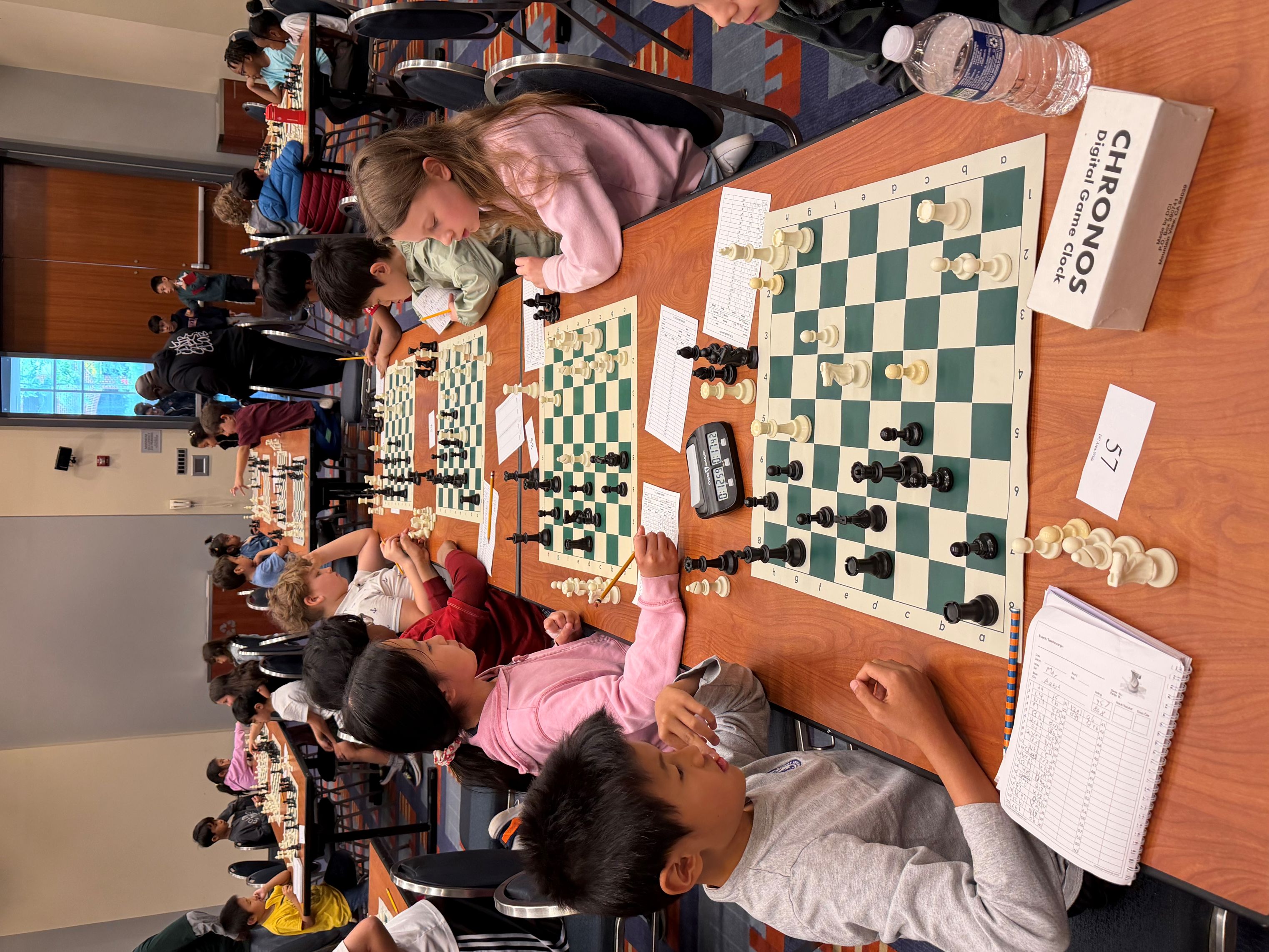
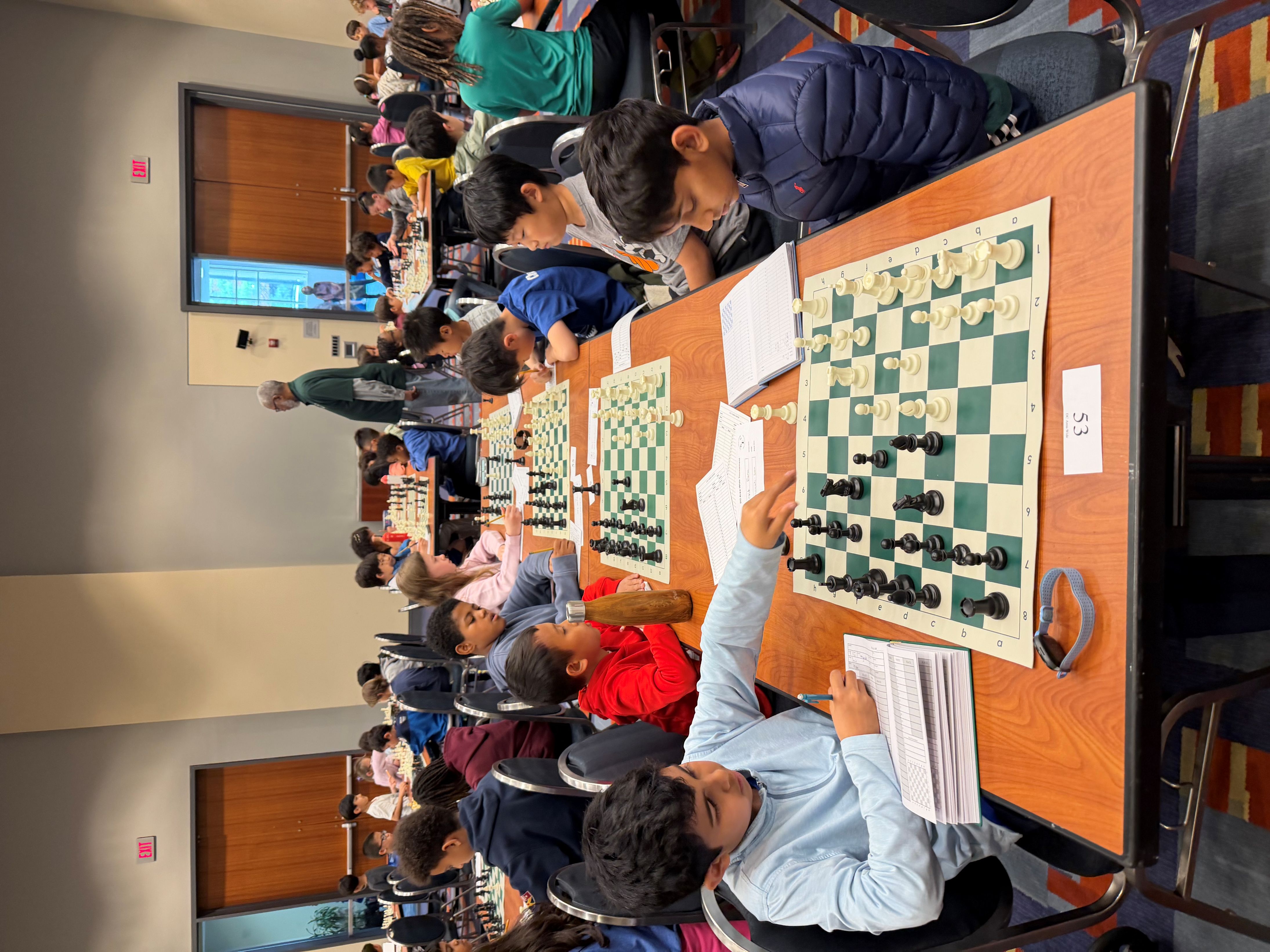
Sai Arjun came to Chess in the Park with a goal: win nine games. Three weeks earlier he had won the first place trophy with a near-perfect 8.5/9 score, and he wanted to improve.
The U.S. Chess Center stresses that the fun part of chess is improving. Winning happens when players get better, and we also stress that good sportsmanship includes always playing one’s best. It was gratifying that Sai Arjun’s goals were not achieving a rating (events like this always are unrated) or winning a trophy, but instead he wanted to improve on his previous impressive result. He succeeded, and in doing so again took home the first place trophy.
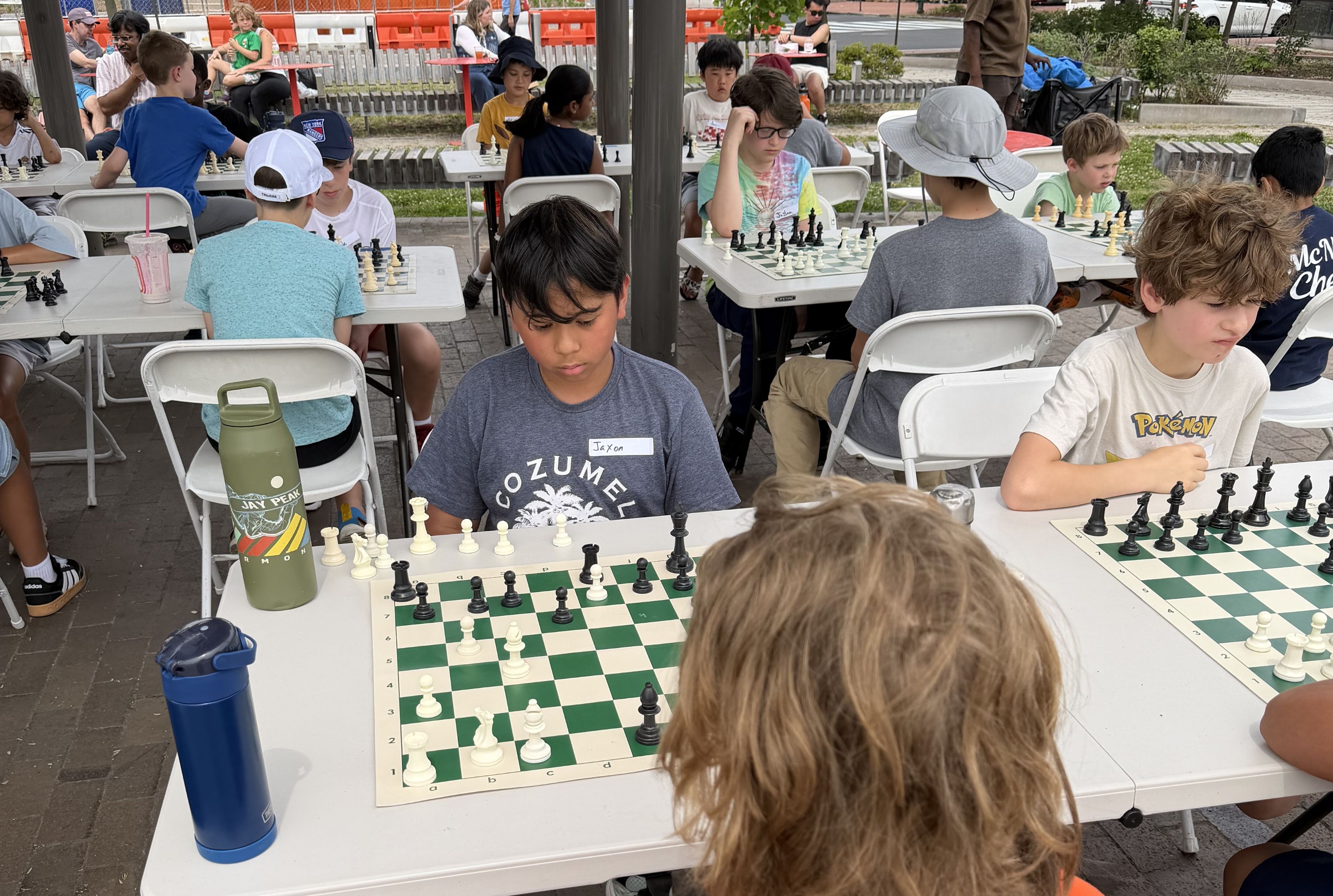
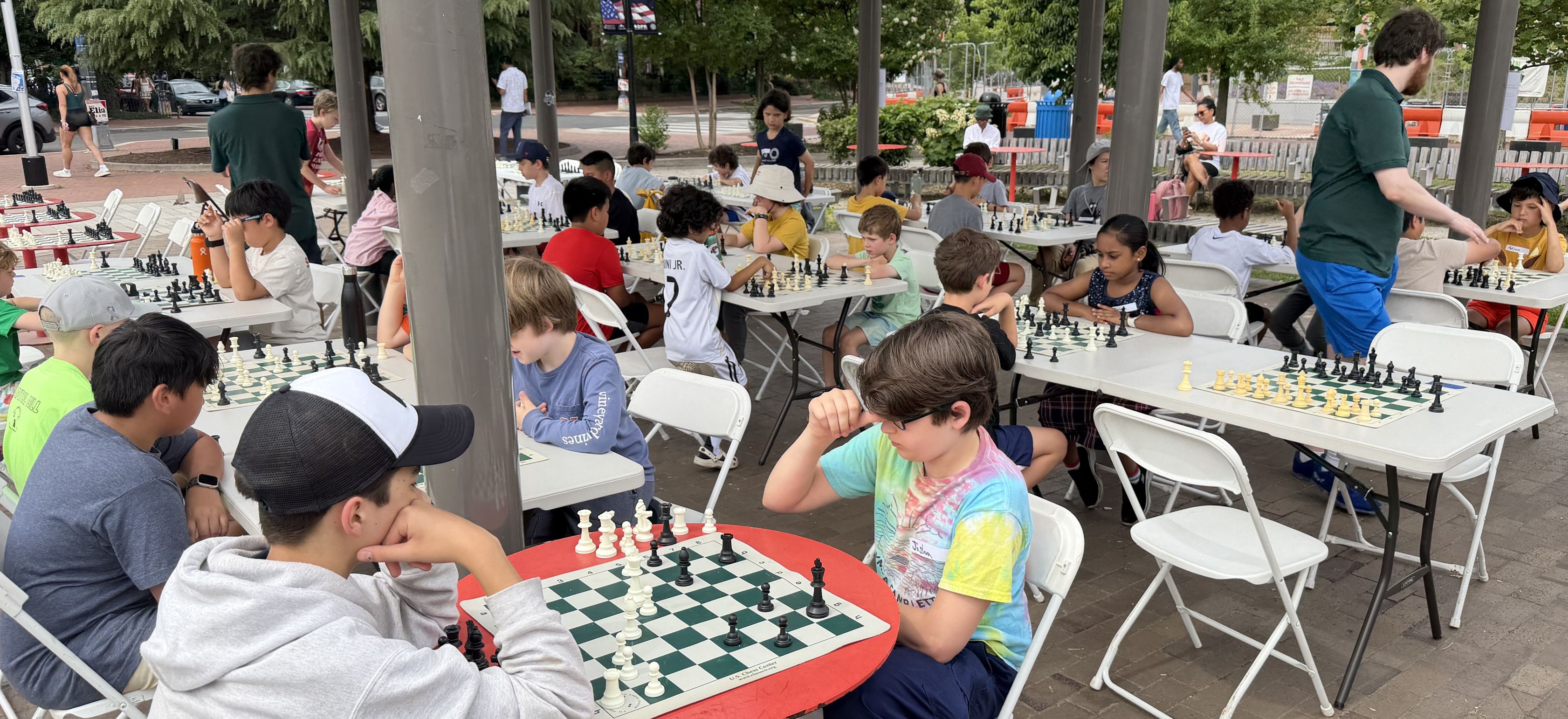
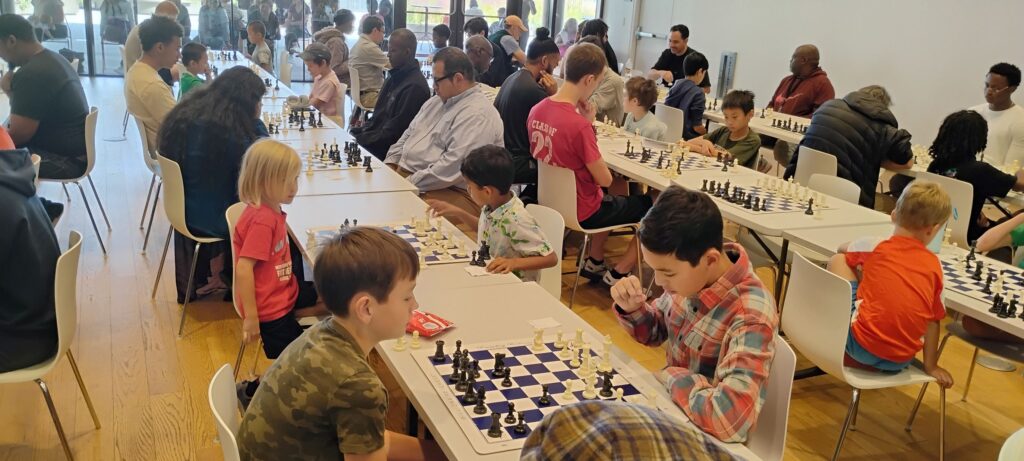
We were pleased that 42 children representing 28 schools in the District of Columbia, Maryland, and Virginia were brought to Eastern Market Metro Park. Well over half the players live in DC, with the remainder pretty evenly split between Maryland and Virginia.
At the beginning, the temperature was comfortable, but when the cloud cover dissipated the heat became oppressive. The games were played in the shade of the pavilion, but most of the parents sat on the nearby benches that were, unfortunately, not covered. It was nice that politicians campaigning in the park were distributing bottled water.
Heat did not slow down the contestants. They played chess, ran around, and made friends. Spring Hill Elementary in McLean, VA won the top team award, while BASIS DC won the trophy for the top DC school.
Barracks Row Main Street sponsors these events two or three times each spring. Discussions have started about running chess competitions for adults in the fall.
Until very recently, students were told that learning to code guaranteed them the ability to earn a good living. Then the world changed.
Other students have found Large Language Models (LLMs) that can “assist” with learning in ways their teachers cannot detect, providing those students more time to play games because they can avoid reading and writing.
A smaller subset of students have found that they can substitute LLMs for interpersonal relationships, never developing social skills to the extent that is necessary to live fulfilled lives.
Here’s where chess comes in. Chess players have great advantages over those who do not learn the game. The nature of chess requires participants to engage in solving problems and thinking critically. When a chess player visualizes a desired position, then figures out how to achieve that position, that’s solving a problem – usually dozens of them.
Thinking critically, distinguishing correct answers while considering the alternatives, is an essential part of chess. When people develop critical thinking and problem-solving skills, AI won’t replace them.
When people join the community of chess players, they have less reason to rely on LLMs for social relationships, which seem usually to be unhealthy. Being in a room with other chess players, conforming to the behavioral norms of tournament chess, develops social skills that are transferred to school and work settings.
Chess has abundant social and academic benefits. The same is not true for online chess, which really is a different activity, but that’s a topic for a future article.
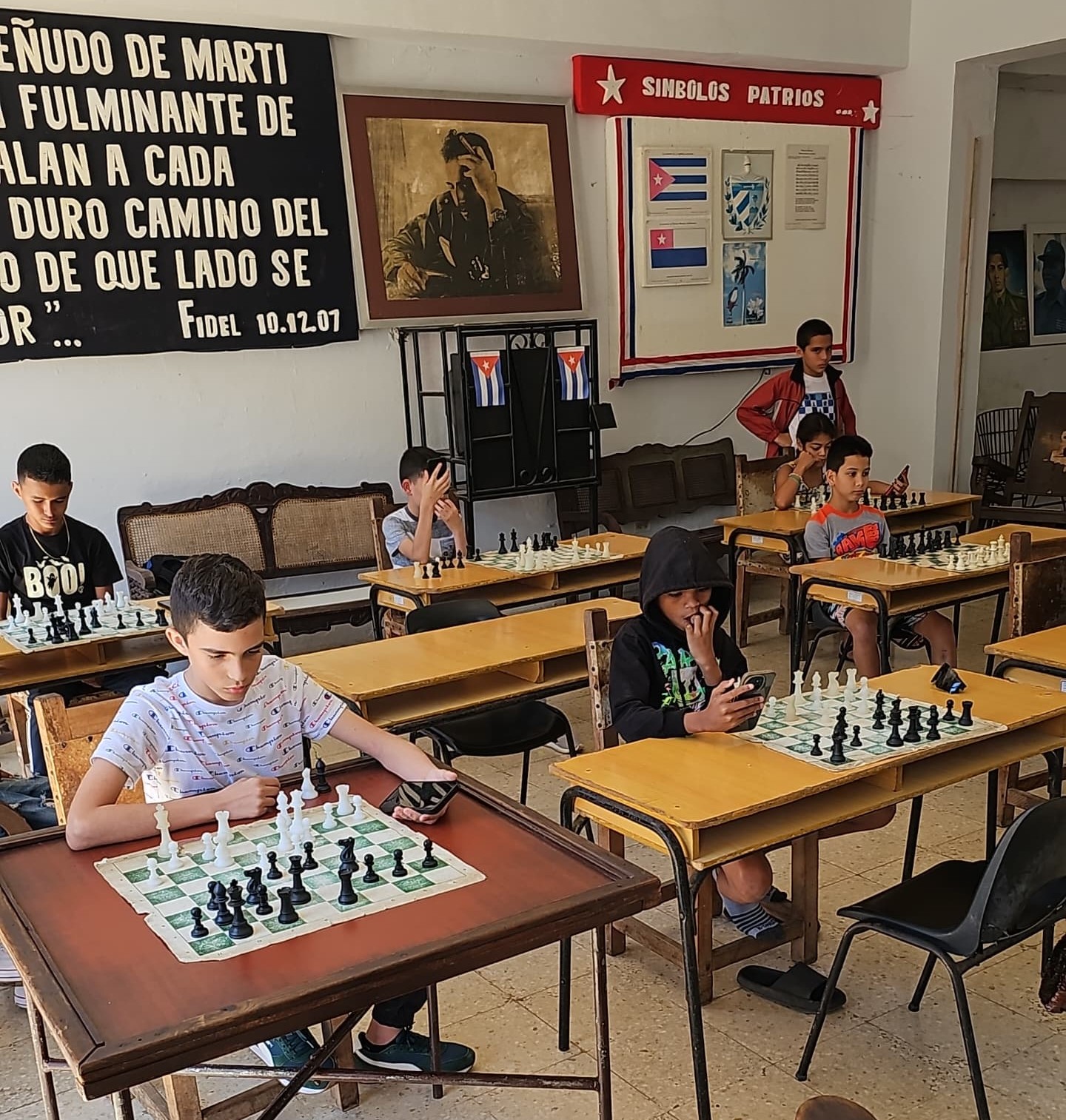
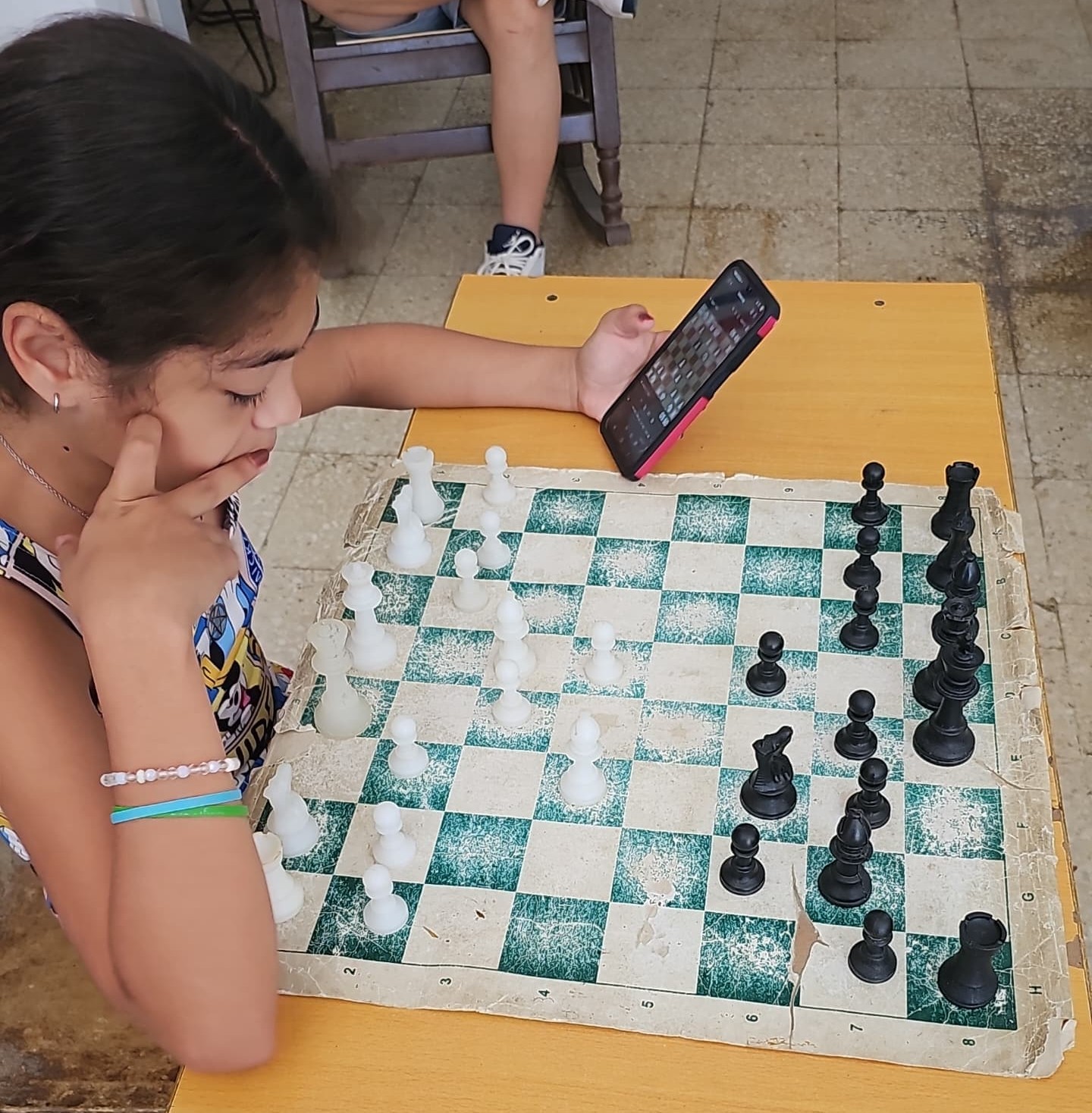
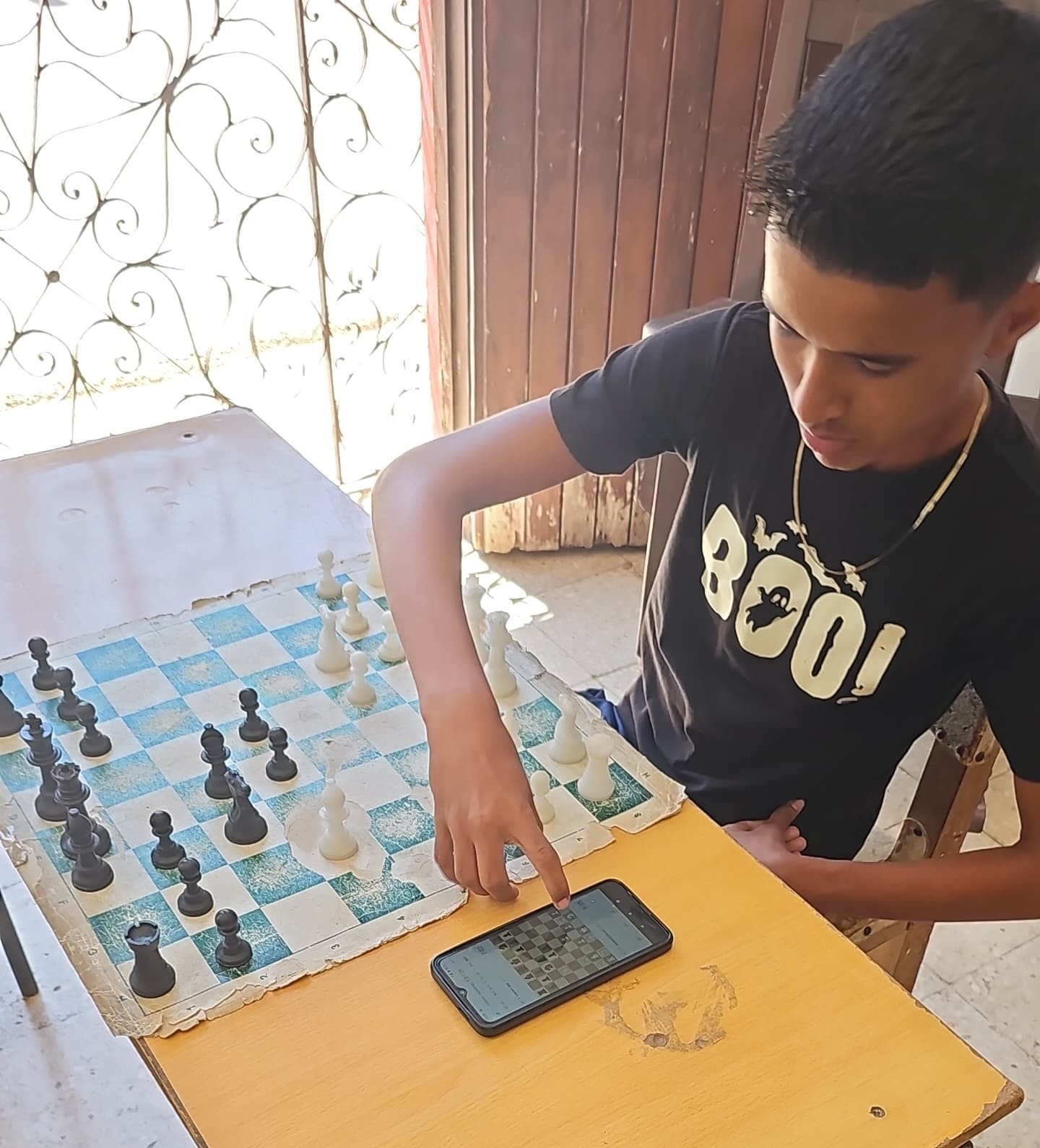
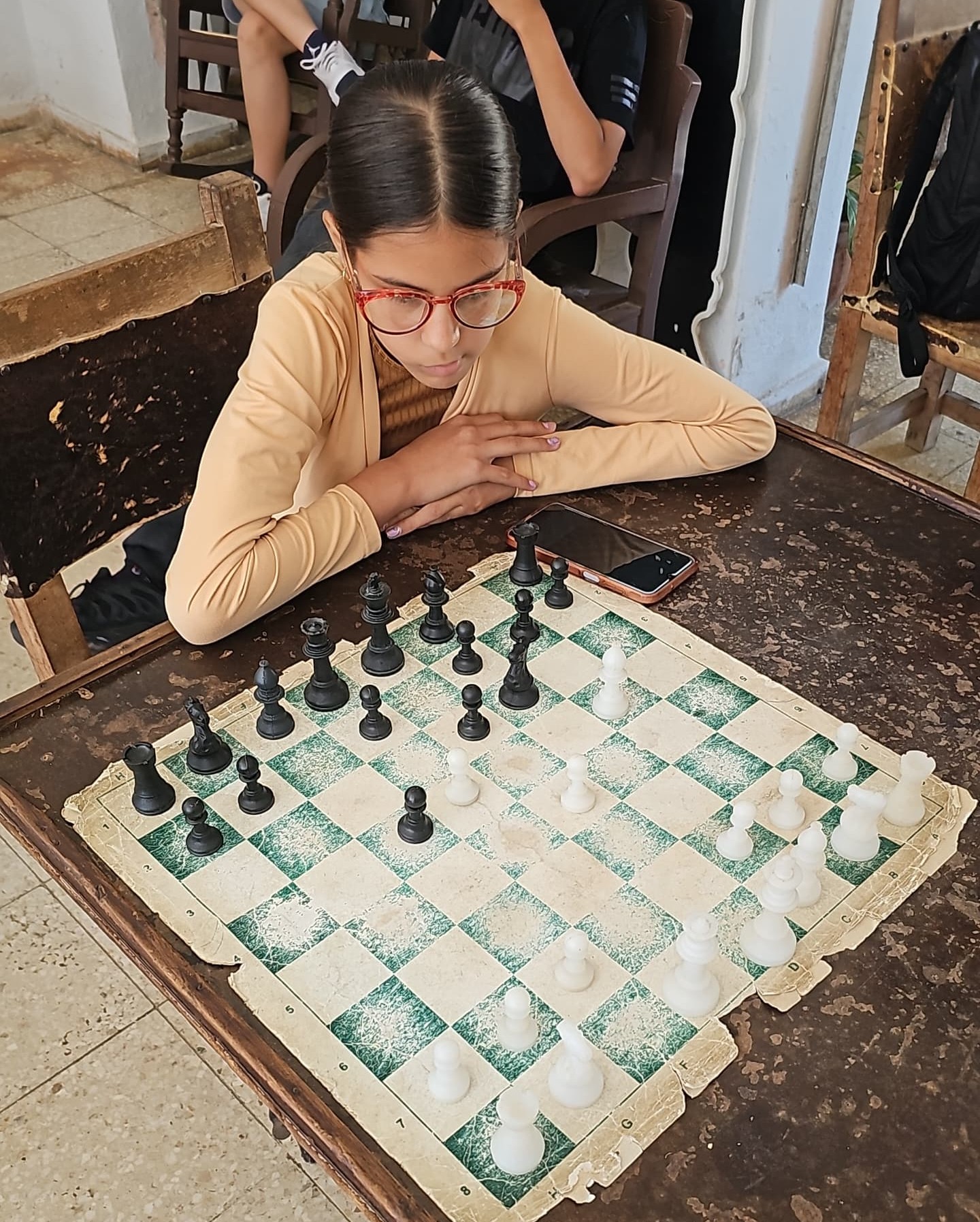
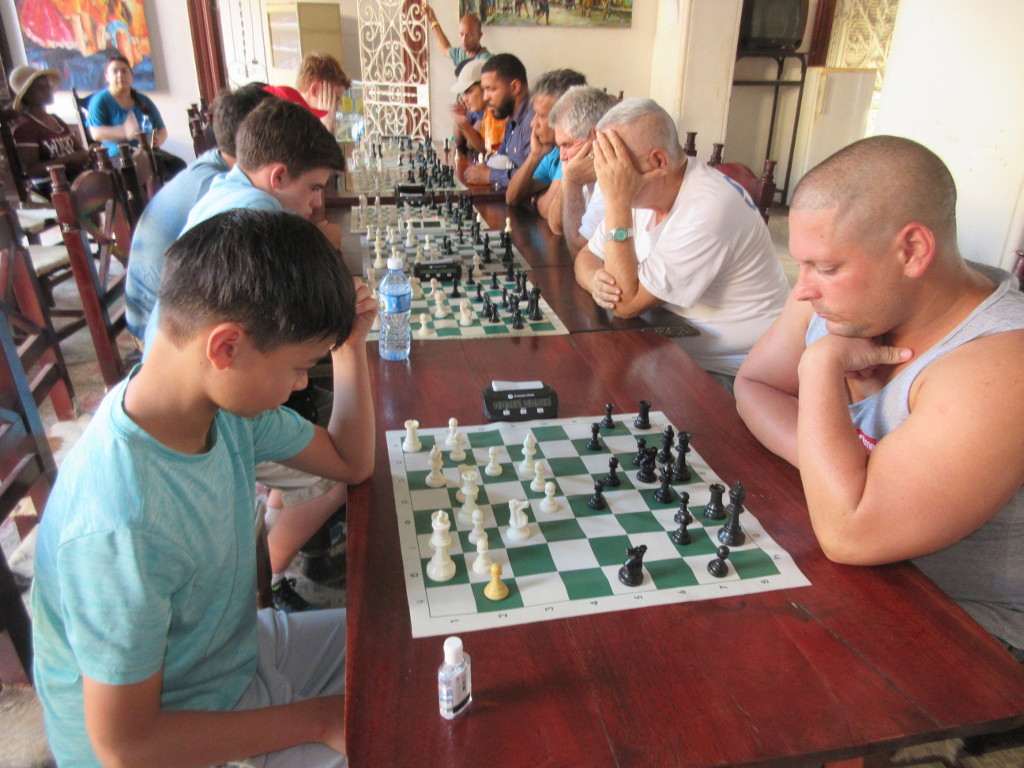
On Sunday, March 22, nine young U.S. Chess Center students joined nine kids from the Caimito, Cuba, chess club for a friendly match.
Chess confers many benefits on its students: improving memory and concentration, learning that actions have consequences, and appreciating the value of patience, perseverance, and planning. However, we believe that making friendships is the most important benefit, and the match with Cuba was a step toward forming friendships that benefit society.
Photos courtesy of Rey Rodriguez
When we learned that children learning chess in a small town southwest of Havana, Cuba, wanted to expand their horizons, we challenged them to an internet match. As impoverished as all of Cuba is, the conditions in which these students participated were even more harsh. For more than a day, the entire electric grid of their nation had shut down.
The Cuban players, and their adult coaches, were as gracious as their reputation suggested. Cuba has perhaps the friendliest population in the world and their attitude towards chess is entirely compatible with ours. The club in Caimito, like the U.S. Chess Center, stresses that chess is a tool to teach children critical thinking skills and to develop friendships with people from other cultures.
It happened that the Cubans lost games because of difficulties with their internet connections. When their system froze and their games were forfeited, there was no complaint, just an expression of looking forward to the next opportunity to play.
We hope to meet them again when their conditions are better, and we think it would be wonderful to lead a delegation of American chess ambassadors to the island to meet over tangible boards.
Having not played competitive chess in more than 30 years, I found some of the grandmaster analysis beyond me but can appreciate the effort that went into it. The magazine enlists many of the world’s top players to prepare articles and analyze games. The amazing Polgar sisters, Judit, Sofia, and Susan, seem to be regular contributors. Many other well-known names have had by-lines: GM Boris Gulko, GM Wesley So, GM Maurice Ashley, GM Joel Benjamin, GM Alex Fishbein, as well as our local phenom WGM Jennifer Yu.
Most of the articles are written so well that they are accessible to every level of chess-playing reader. The American Chess Magazine receives awards for the high caliber of its journalism every year.
The articles cover all aspects of chess, from current events in America, to tournament results all over the world, to human interest stories and chess history, and, in this most recent issue a special feature of strong female players beating strong male players.
In addition to the best players in the world contributing to the magazine, one of the editors is a high school American girl who impresses both over the board and off. There are great book reviews. The layout is superb. I do not see a weakness in this bi-monthly periodical and believe it offers quite a bit for people interested in chess at any level, although those trying to improve their skills will benefit most.
In 2023, the Surgeon General of the United States warned of the negative health consequences resulting from feelings of isolation, and the benefits of more connected communities. Robert Putnam famously called attention to the problem in Bowling Alone more than 20 years earlier. The problem is not going away, but chess can be a part of the solution.
Among our founding documents, the U.S. Chess Center has argued that chess should be used as a tool to promote social skills. Teachers and psychologists are now sounding alarms as to the importance of having young people meet in person. Engaging another person across the table in a game of chess has long been recognized as a valuable social experience.
Benjamin Franklin, one of many chess players among our nation’s founding fathers, hinted at the valuable diplomatic benefits of the game in his notes. (The Papers of Benjamin Franklin Vol. 21. pp. 363, 408, 437, 444, 550) Challenging others to play chess has served as a gateway for engaging in a variety of social and diplomatic activities.
One of the first programs created by the U.S. Chess Center, our Saturday morning class known as Chess Kids, brought together children of all demographics to play chess together and learn that what they have in common is vastly greater than those things that separate them. The friendships formed over the board created long-lasting bonds.
The Center teaches students only in groups, not individually. Peers compete, encourage, and learn together in healthy ways. Whether or not the students in a class share demographic traits seems to be irrelevant to the formation of friendships. Kids interact with other kids, and that is beneficial to them all.
Playing online does not confer the same benefits. People playing online do not see their opponents, and do not have constructive social interactions at the end of their games. We regularly see kids engage in other activities, including having non-chess conversations, playing sports or other games, or going out for a meal at the conclusion of a game. Online, players often cannot be certain that they are actually playing a human. While many students use online resources to enhance their skills, playing chess across the board is a different, and better, game than playing through a screen.
At the U.S. Chess Center, we hope that professionals and policy-makers will consider promoting chess as a mental health tool.
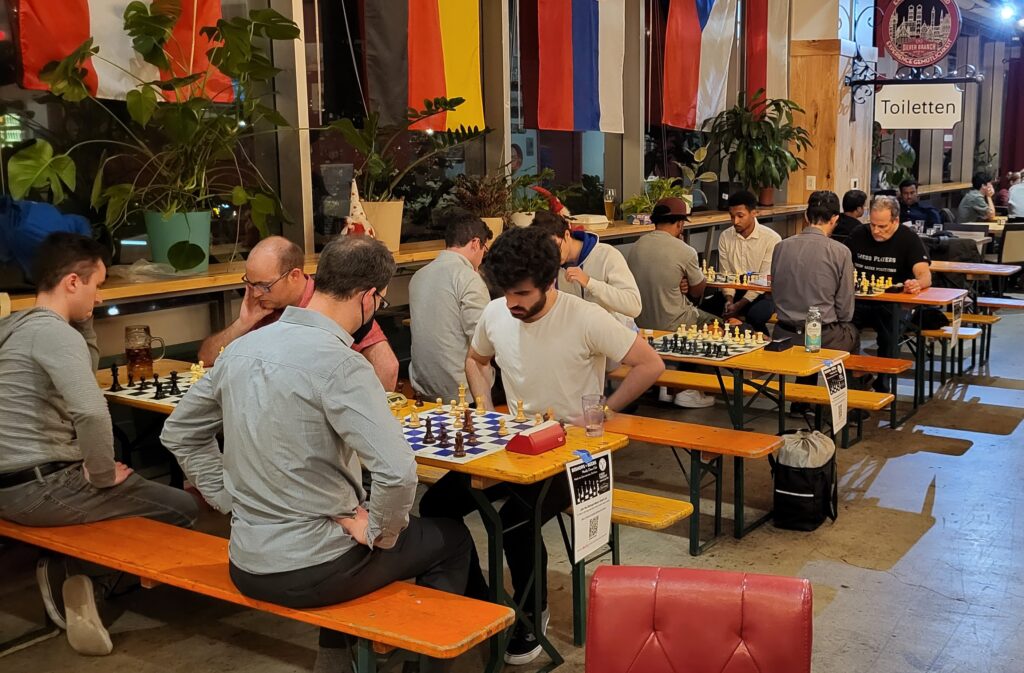
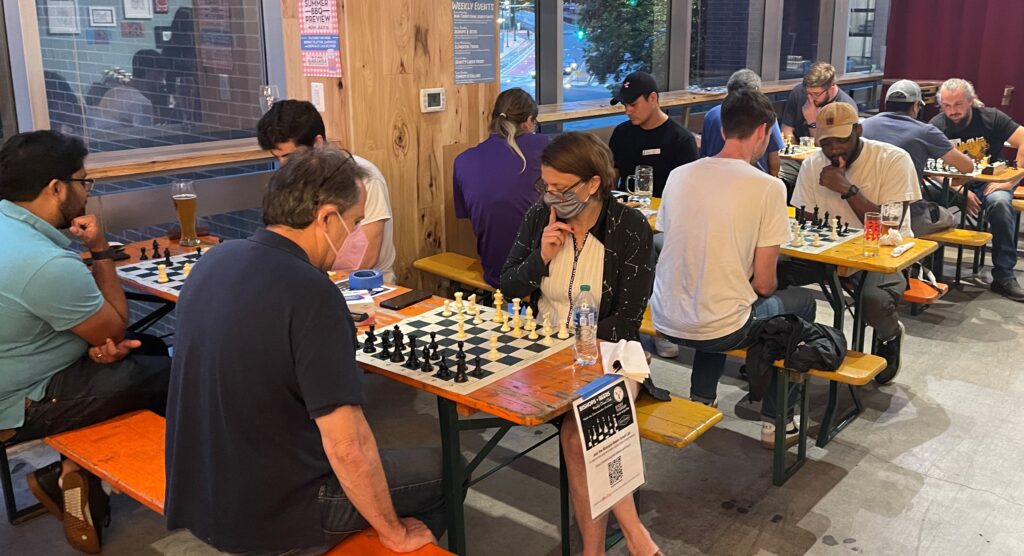
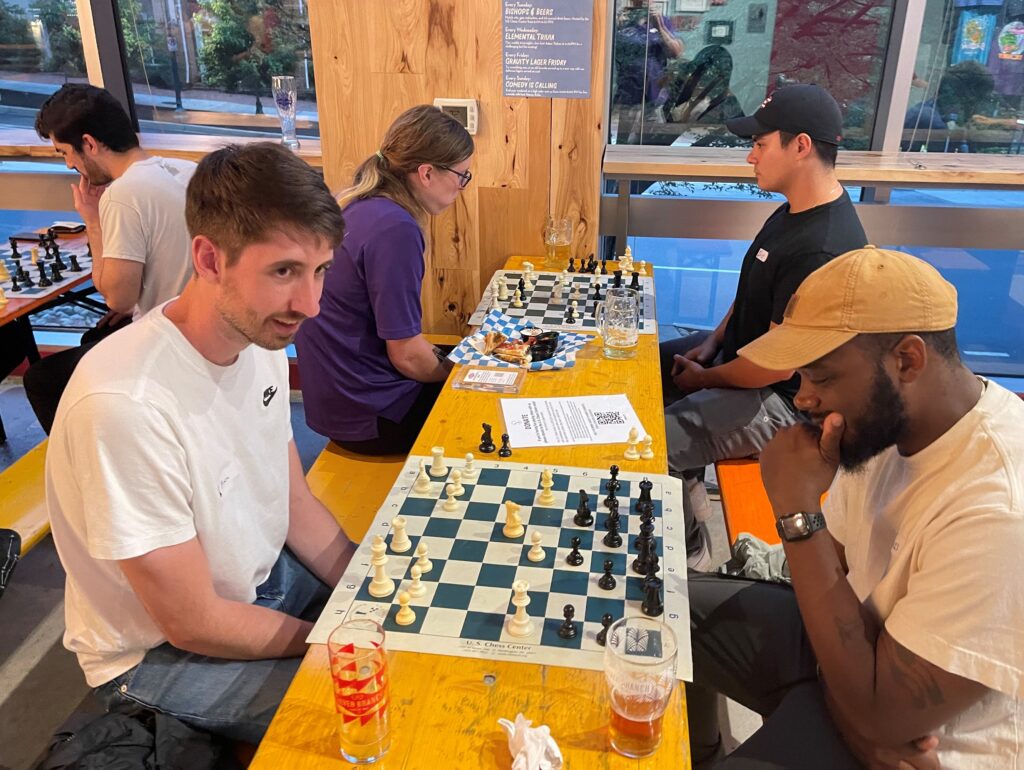
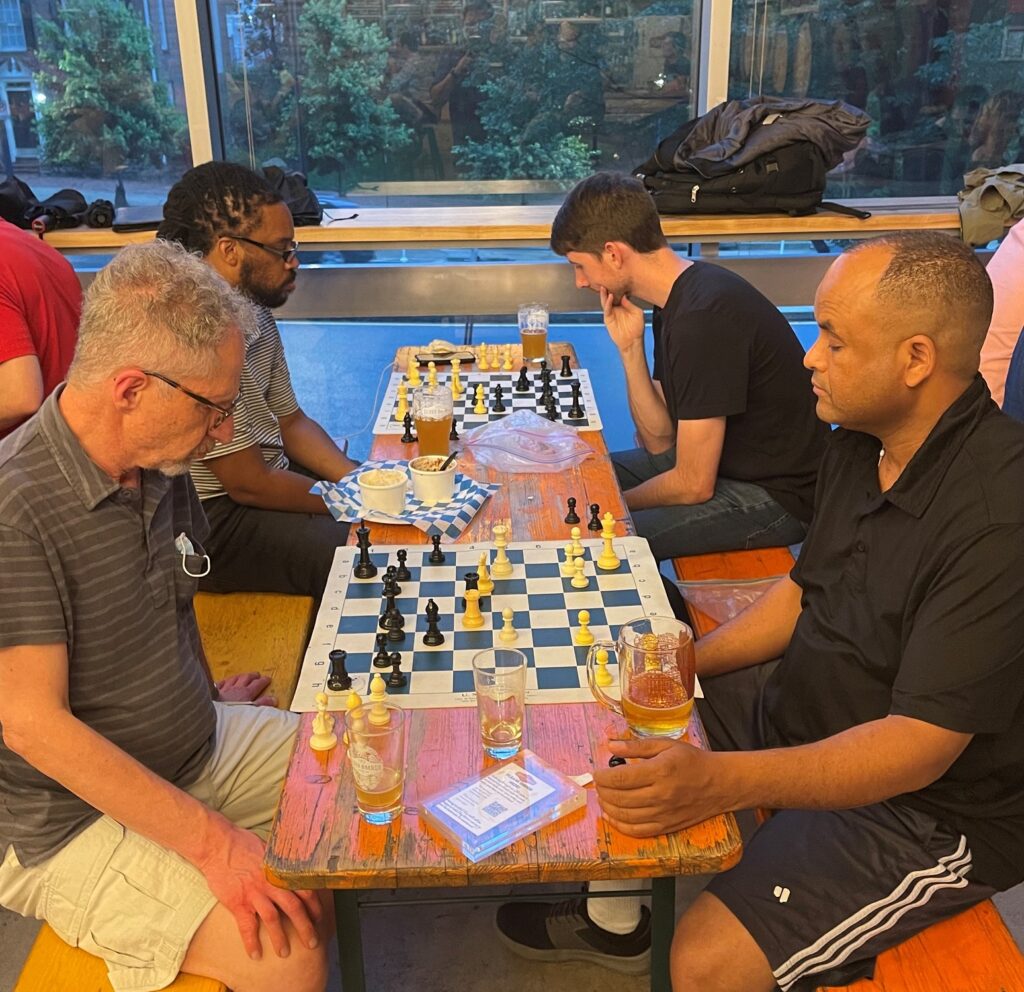
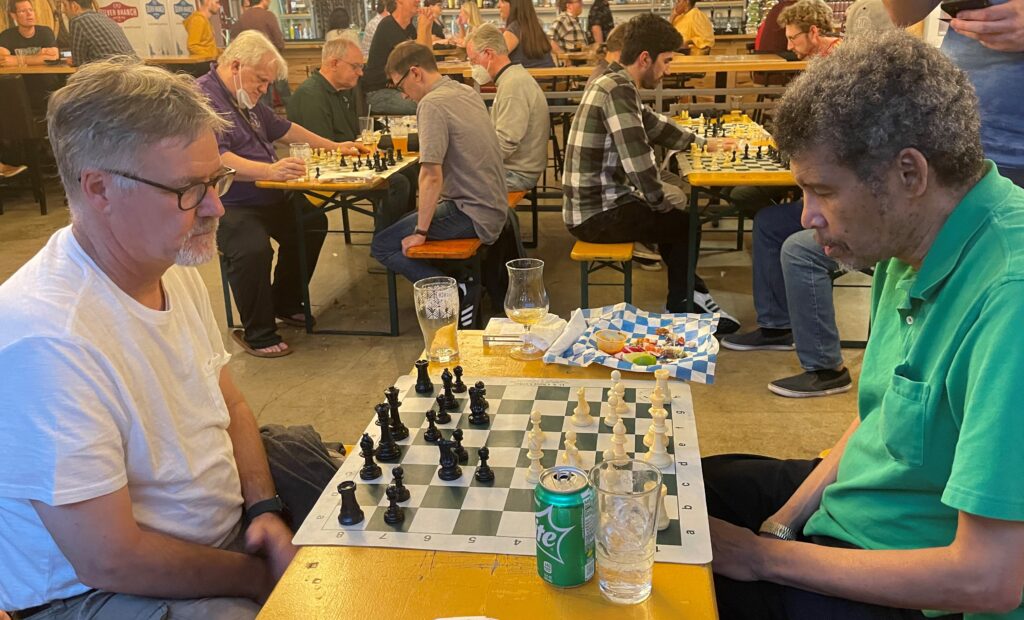
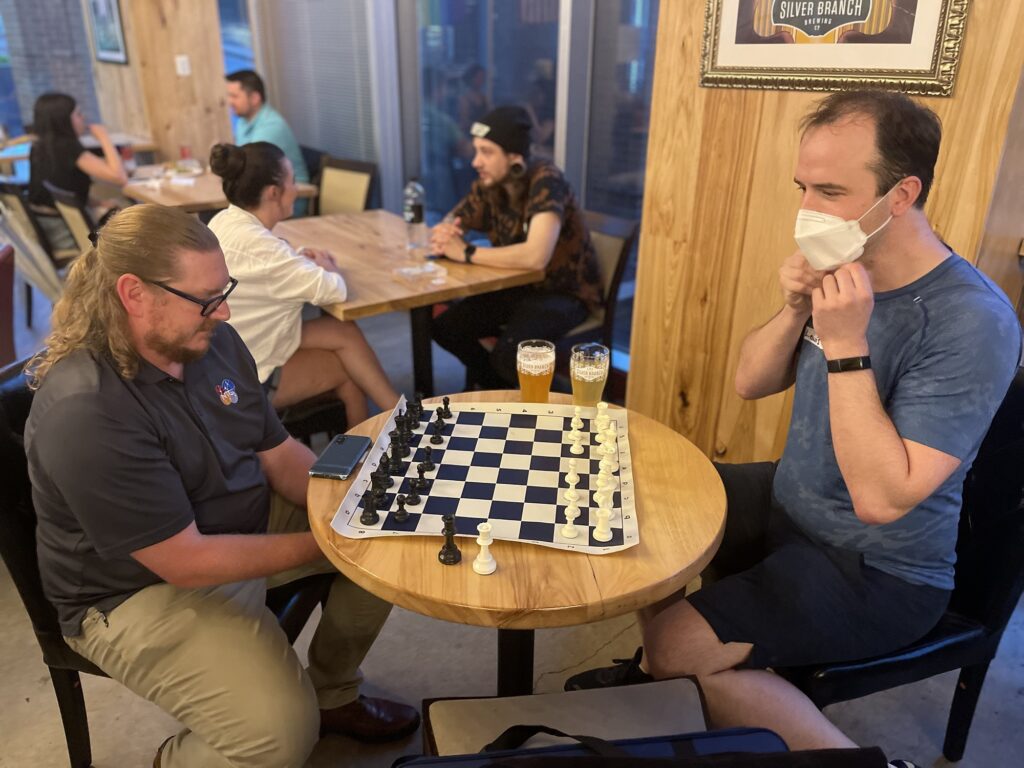
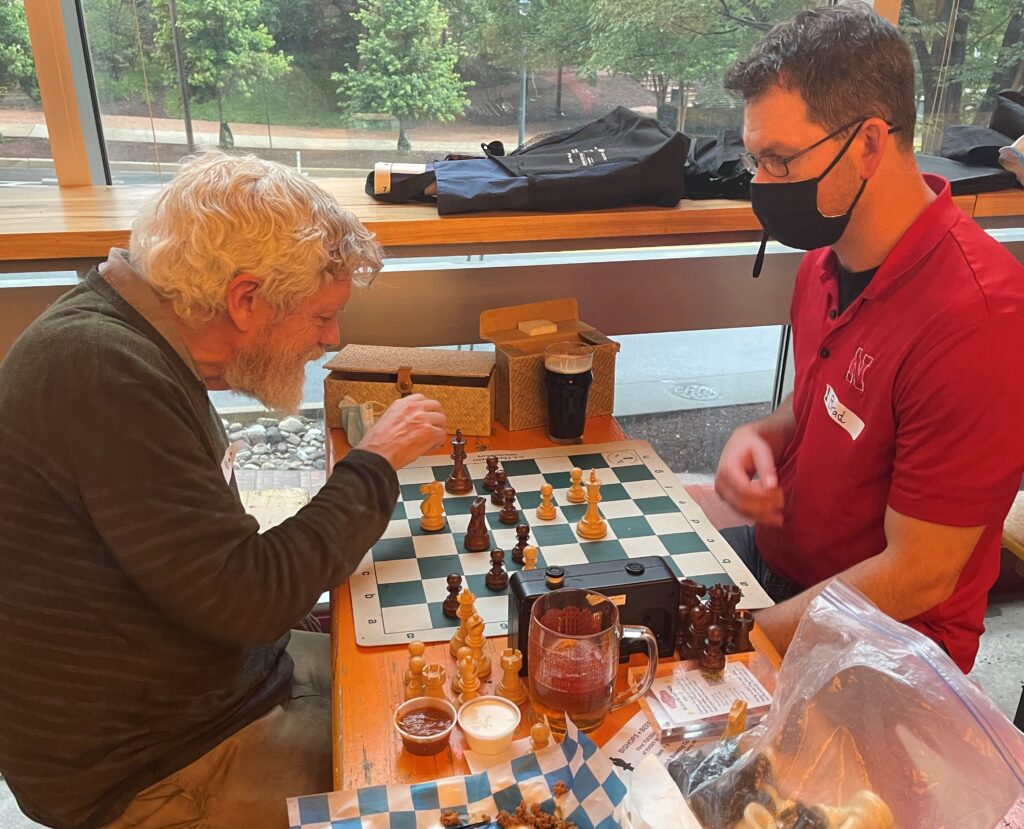
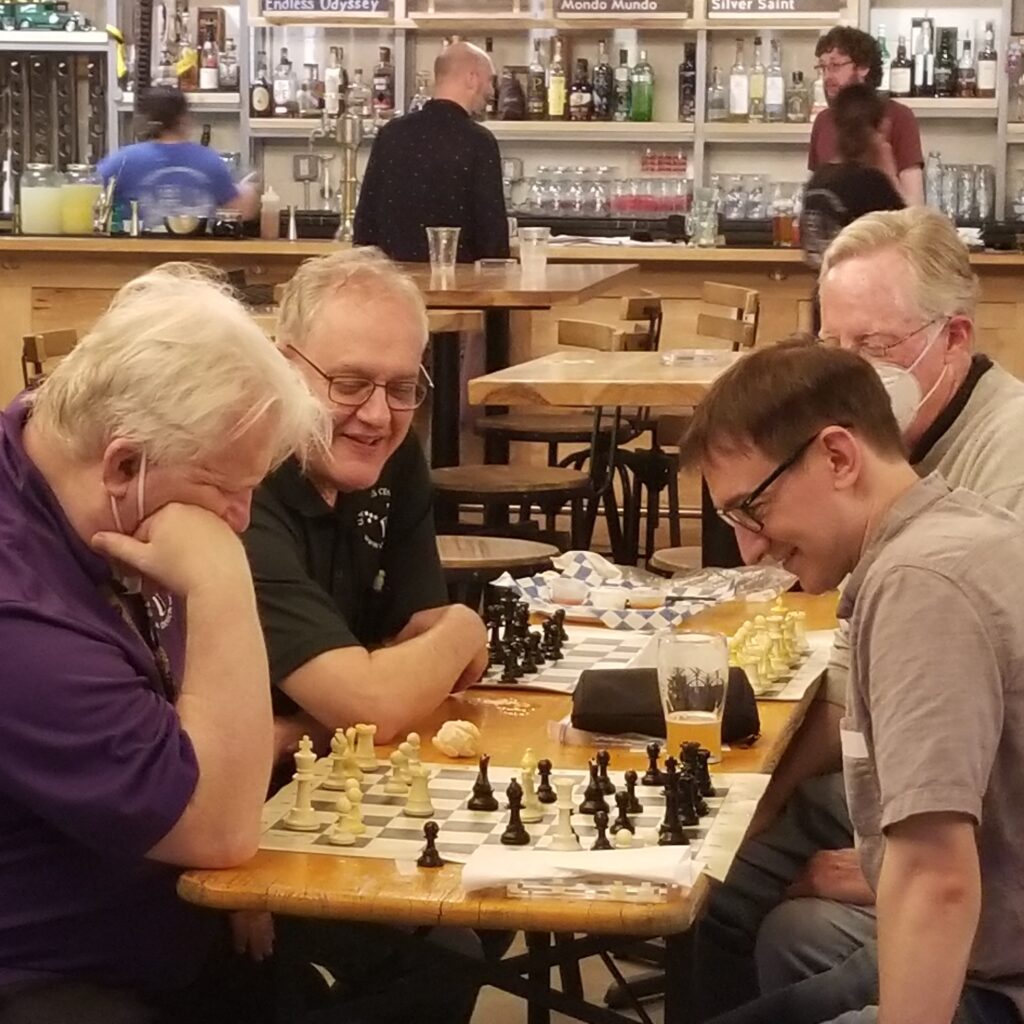
Nearly every Tuesday over the past year, the U.S. Chess Center has hosted Bishops and Beers at Silver Branch Brewery, an evening event for our grown-up clientele to gather in downtown Silver Spring for some good food, good company, good potations and good chess.
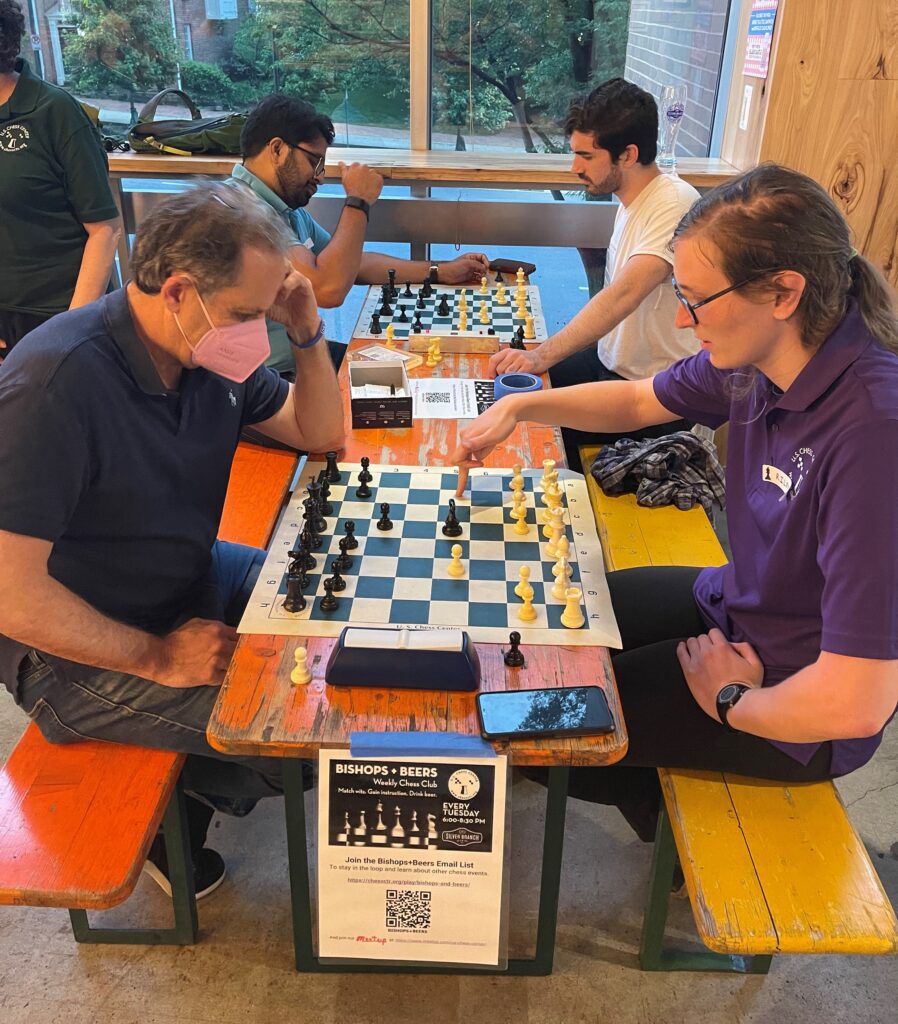
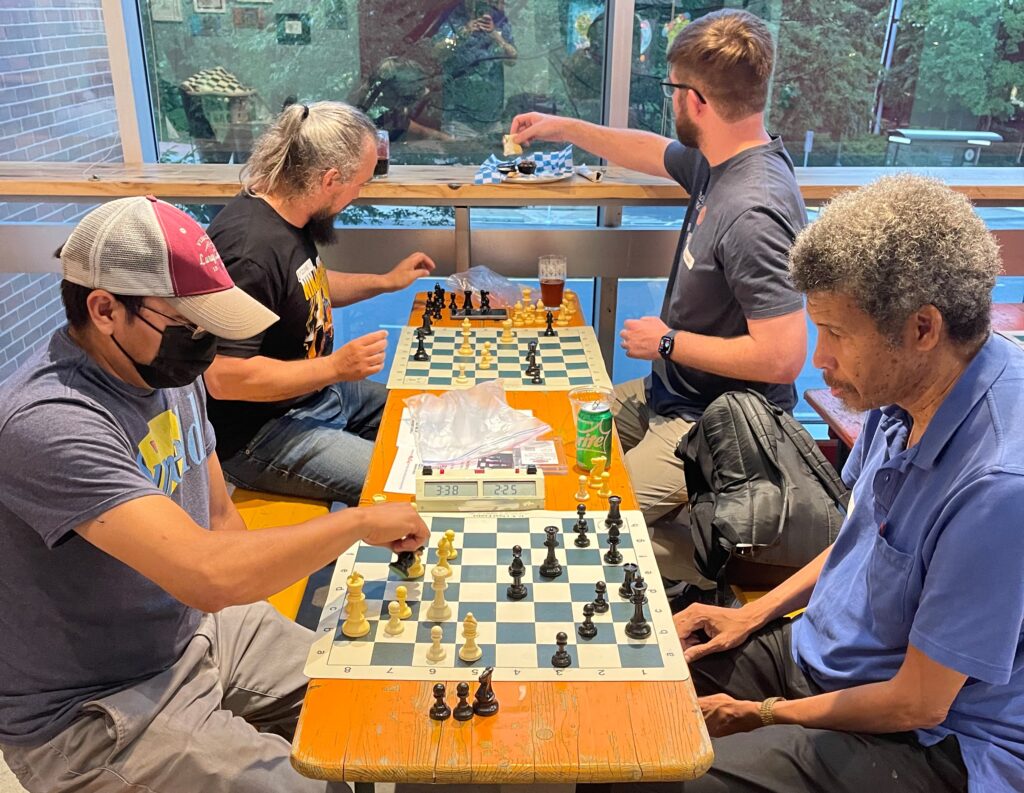
The first week this month, we added a competitive element, with the first Bishops + Beers Blitz Tournament kicking off at 6:30 p.m. on November 7. Our instructor Riley Dosh was on hand to make up the pairings, tally the results, and generally help facilitate the fun.
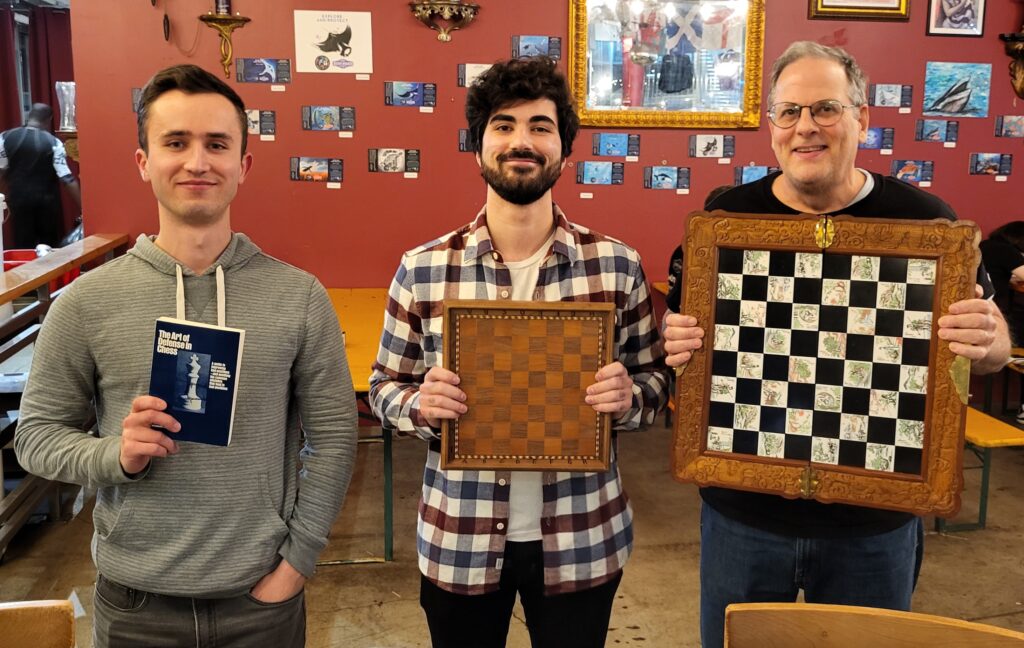
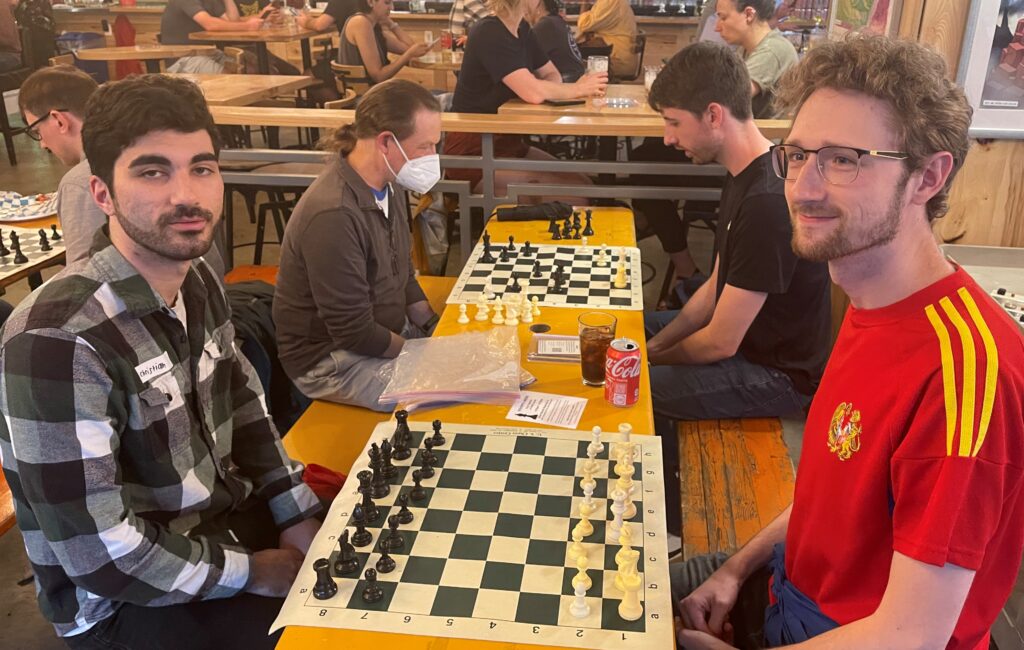
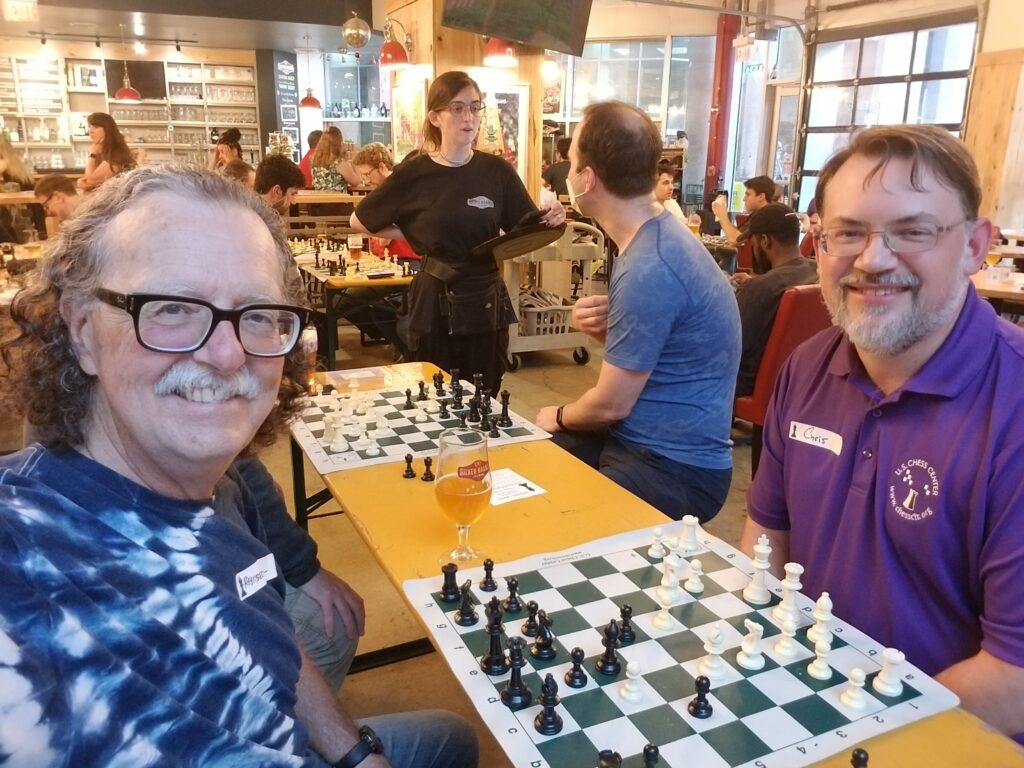
The tournament was well-attended with 16 total players, and the excitement also hooked in a few spectators. Don McLean (pictured below, right) won convincingly with 7.5/9, Christian (pictured middle) came in second place with 6/9, and Jason (pictured left) came in third, losing on tiebreaks to Christian.
Given the general success of the tournament, we’re looking into running more blitz events at future Bishops & Beers outings. If you haven’t come to downtown Silver Spring on Tuesday night (and you’re at least 21), come join the fun!
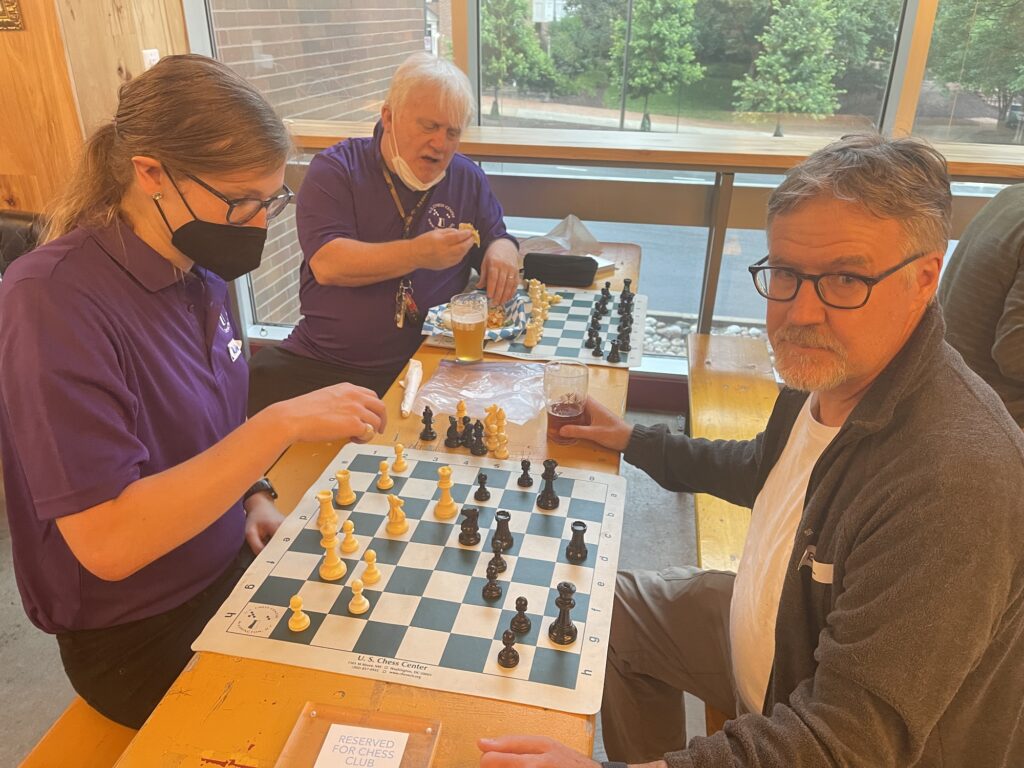
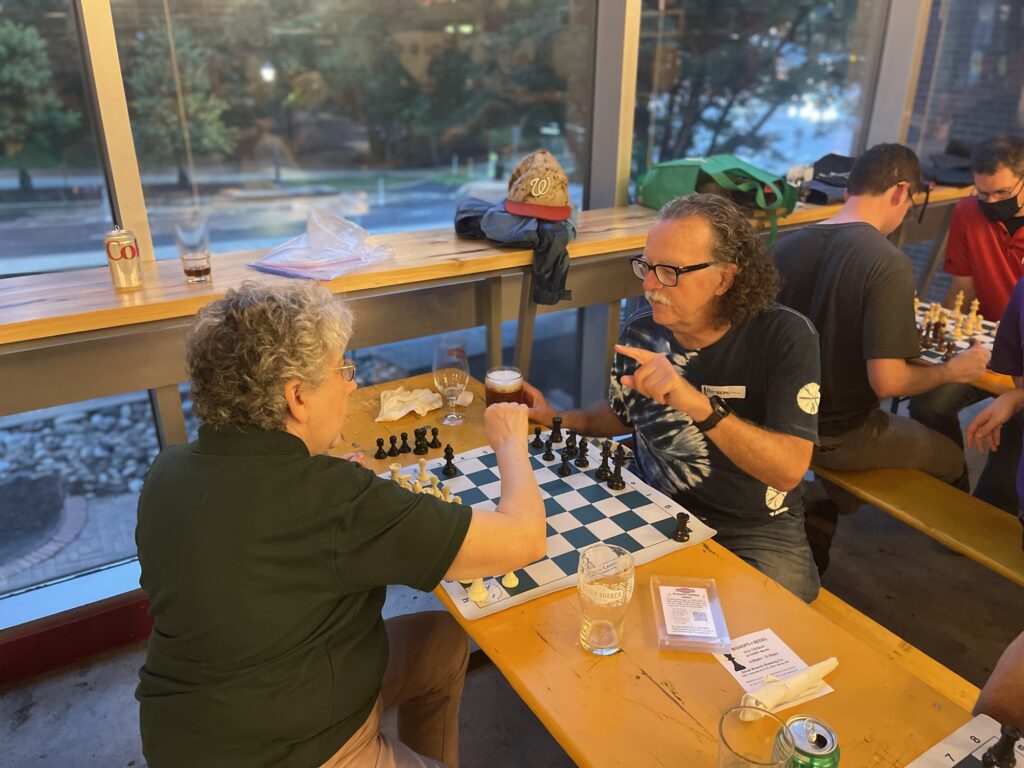
Even with the inclement weather in Silver Spring, Bishops & Beers still brought out chess enthusiasts on Tuesday night. Players turned up to Silver Branch Brewery for some good drinks, good food and good games of chess.
Moving forward, our meetings at the brewery will be a weekly occasion, beginning at 6 p.m. every Tuesday. The next event will be the evening of June 19. Whether you’re a seasoned tournament player or still learning the ropes, we hope you’ll come join us (as long as you’re over 21). Our Meetup group has more information about Bishops & Beers and our other regular activities open to the public.
Bishops and Beers kicked off Tuesday, June 7 at Silver Branch Brewery in Silver Spring. A wide range of players, from novices to experts, showed up to socialize and play.
Silver Branch provided a great atmosphere to meet up with old friends and make new ones over the board, and we’re already looking forward to the next event. To stay abreast of future meetings and see more of the photos from Tuesday night, you can join our Meetup group.
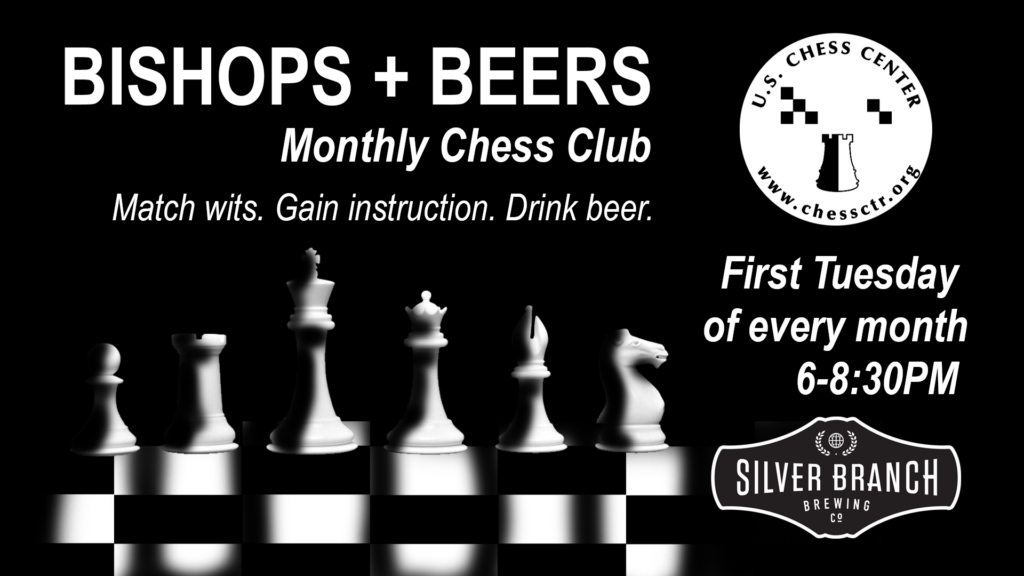
The Chess Center invites all of our grown-up patrons (over 21 years of age) to join us the first Tuesday of each month for Bishops and Beers at Silver Branch Brewing Company.
Starting June 7, participants will be able to come out and play chess while enjoying the beverage offerings at one of Silver Spring’s finest local production breweries. One of our certified U.S. Chess Center instructors will be hosting proceedings. Board, sets, and some clocks for those who wish to play rapid and blitz games will all be provided.
Whether you’re a complete beginner or a seasoned master, you’re welcome to come play with us.